
Finding bed bugs in a Queens apartment, home, hotel, or workplace is stressful, but a clear process can keep the problem from spreading. Bed bugs are not a sign of poor housekeeping. They travel in luggage, clothing, furniture, and other belongings, then hide in protected cracks and seams.
Contact Ace Bedbug Exterminating to arrange a Queens bed bug inspection
Effective bed bug removal Queens residents and businesses can rely on starts with confirming the insect. A sound plan locates activity, selects treatment based on evidence, prepares the property, and includes follow-up monitoring. The goal is not to react to one bite or one visible bug. It is to address the infestation as a connected process.
This guide explains what to expect, what to do before treatment, how residential and commercial properties differ, and which prevention steps help reduce the chance of reinfestation.
How Bed Bug Removal Queens Begins With Inspection
For bed bug removal Queens properties, Ace Bedbug Exterminating starts with a detailed inspection because bites alone cannot confirm an infestation. A trained specialist looks for live insects, eggs, shed skins, spotting, and harborages around beds, furniture, baseboards, cracks, and nearby rooms before recommending treatment.
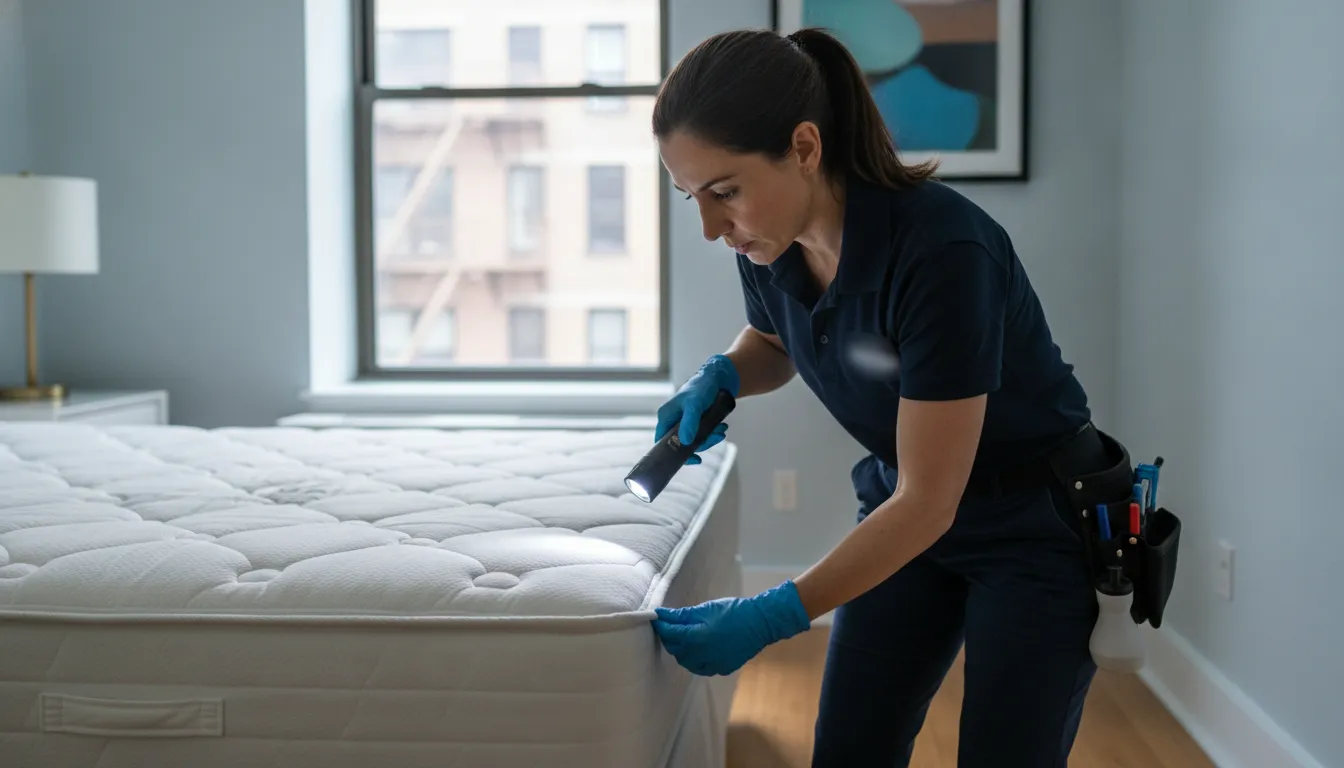
Inspection is the first decision point. A professional may examine mattresses, box springs, bed frames, upholstered furniture, closets, wall edges, and other locations where bed bugs can remain hidden. The inspection should also account for the way people use the property. A bedroom, hotel room, office, shelter, and multi-unit building each present different paths for movement.
Bites are not reliable proof by themselves. Some people do not react visibly, while other insect bites or skin irritations can look similar. The Centers for Disease Control and Prevention explains that bed bugs are small, reddish-brown, wingless insects. Physical evidence is more useful than guessing from a skin reaction.
What does a professional inspection look for?
A specialist looks for more than adult insects. Evidence can include pale eggs, eggshells, shed skins, fecal spotting, and live nymphs. These signs may be tucked into mattress seams, screw holes, furniture joints, behind headboards, or along baseboards. The inspector also considers whether activity appears limited to one room or could involve adjoining spaces.
In Queens apartment buildings, shared walls and neighboring units matter. A property manager may need to coordinate access to nearby units, common areas, or laundry rooms. In a hotel or office, the inspection may include adjacent rooms, furniture storage, employee areas, or spaces where luggage and personal items are placed.
Why should you avoid moving belongings before inspection?
Moving mattresses, furniture, clothing, or bags to another room can spread bed bugs. It may also remove the evidence a specialist needs to locate the main harborages. Keep the space as stable as possible, and tell the technician where bites, sightings, or recent travel occurred. If items must be moved for safety, seal them appropriately and ask for guidance first.
For a closer look at the first stage, review the bed bug inspection services page. The inspection report should guide the next step instead of relying on a one-size-fits-all treatment.
What Should Queens Residents Do Before Treatment?
Before bed bug treatment, Queens residents should reduce clutter without scattering belongings, launder or dry eligible fabrics, secure food and personal items, follow the technician’s preparation instructions, and avoid foggers or unapproved pesticides. Preparation should make harborages accessible while preventing bed bugs from being carried elsewhere.
Preparation is important, but excessive or unsupervised cleaning can make the situation worse. Do not discard furniture unless a professional advises it. Discarded mattresses and sofas can spread bed bugs through hallways, elevators, sidewalks, and neighboring properties. If an item must be removed, wrap and label it according to local disposal rules so another person does not take it.
Practical preparation checklist
- Ask for written instructions that match the planned treatment and the specific property.
- Remove unnecessary items from floors, closets, and under beds so inspection and treatment areas are reachable.
- Place washable bedding, clothing, and other approved fabrics in a dryer or sealed bags as instructed.
- Keep treated and untreated items separated, and do not move them to another room or unit.
- Secure food, medications, pet supplies, and personal items as directed by the technician.
- Vacate the property for the exact period given for the products and methods being used.
Heat from a household dryer can be useful for items that can safely tolerate it, but the correct cycle depends on the item and the treatment plan. Washing detergent is not a substitute for heat. Do not place delicate, wet, or heat-sensitive belongings in a dryer without checking the care label.
What should you not do before an appointment?
Do not use a total-release fogger as a shortcut. Foggers may fail to reach hidden bed bugs and can increase exposure or drive insects into new harborages. The EPA bed bug guidance recommends an integrated approach and careful attention to product directions. Do not apply a pesticide to a surface or item unless the label allows that use.
Which Bed Bug Treatment Works Best in Queens?
The best bed bug treatment for a Queens property depends on inspection findings, construction, access, infestation size, and how the space is occupied. Effective plans may combine targeted biopesticide applications, heat, steam, physical controls, preparation, and monitoring rather than relying on one method for every room.
Ace Bedbug Exterminating uses an Integrated Pest Management approach. IPM means treatment decisions are based on evidence and may combine chemical and non-chemical controls. It also recognizes that monitoring and follow-up are part of removal. A single visible insect after treatment should be evaluated in context, not treated as proof that the entire plan failed. For a closer comparison of two treatment approaches, review the Aprehend treatment versus heat guide.
| Method | Use | Key consideration |
|---|---|---|
| Targeted biopesticide | Harborages, edges, and routes identified during inspection. | Product label, access, and re-entry instructions must be followed. |
| Heat treatment | Appropriate spaces where temperatures can be monitored throughout. | Heat must reach protected areas, not just the center of the room. |
| Steam | Localized cracks, seams, and other accessible surfaces. | Steam loses heat quickly and is not a whole-property solution by itself. |
| Vacuuming and physical controls | Reducing accessible insects, eggs, debris, or hiding places. | Equipment and disposal must be handled so insects do not spread. |
| Monitoring and follow-up | Checking for continuing activity after treatment. | Results should be documented and reviewed over time. |
How are treatment methods selected?
The plan should account for the building’s layout, furnishings, wall voids, temperature control, occupants, pets, and the location of evidence. A treatment suitable for a vacant single-family room may not be suitable for a furnished apartment, hotel, office, or multi-unit building. The specialist should explain what must be removed, what can remain, and when people can safely return.
Residents should tell the technician about children, pets, asthma concerns, mobility needs, recent travel, and rooms that cannot be accessed. Businesses should identify operating hours, sensitive areas, employee schedules, guest turnover, and any neighboring spaces that may need coordination.
Does a natural or eco-friendly treatment mean no preparation?
No. A product’s formulation does not eliminate the need for access, preparation, label compliance, or follow-up. Ace uses EPA-approved products and an IPM approach, but every treatment still requires property-specific instructions. Eco-friendly language should never be taken to mean that a product can be applied without following its label or a professional’s re-entry directions.
How Long Does Bed Bug Removal Queens Take?
Bed bug removal Queens homes and businesses may take more than one visit because success depends on the infestation’s location, life stages, neighboring spaces, treatment method, preparation, and follow-up monitoring. An inspection can happen quickly, but complete resolution is measured by evidence over time, not by one appointment alone. Ace Bedbug Exterminating uses follow-up evidence to guide the next step.
Timing varies from property to property. A small, accessible infestation may require a simpler plan than activity spread through several rooms or units. A commercial property may need treatment scheduled around guests, staff, residents, or operating hours. A multi-unit building may also require communication and access beyond the room where the first insect was found.
What happens during the treatment timeline?
- Inspection: The specialist confirms evidence, maps likely harborages, and evaluates nearby areas.
- Preparation: The occupant or property team completes the instructions needed for safe and effective access.
- Treatment: The selected methods are applied to appropriate areas according to the plan and product labels.
- Re-entry: Occupants return only after the technician provides the required instructions and time.
- Monitoring: Activity is checked through follow-up visits, observations, monitors, or other appropriate controls.
- Adjustment: If evidence remains, the plan is reviewed and additional steps are selected based on the findings.
Do not judge the result only by whether you see a bug the next morning. Residual products may continue working after application, and hidden life stages may not be visible during a quick check. At the same time, continuing activity should not be ignored. Record sightings, save a specimen or clear photo when possible, and report the location and date to the service team.
When can people return to the property?
Re-entry depends on the products, equipment, ventilation, room conditions, and instructions for that appointment. Ask who must leave, how long the space must remain vacant, and whether bedding, food, or other items need special handling. Never rely on a generic online time when the treatment plan gives a specific instruction.
How Can Homes and Businesses Prevent Reinfestation?
Prevention after treatment focuses on limiting new introductions, protecting sleeping and resting areas, reducing unnecessary hiding places, and reporting evidence early. Queens residents and businesses should inspect luggage after travel, avoid bringing discarded furniture indoors, keep belongings organized, and continue any monitoring plan provided by the specialist.
Prevention cannot guarantee that bed bugs will never enter a property. The practical goal is early detection and fewer opportunities for insects to spread. Bed bugs can arrive in clean buildings through visitors, luggage, used furnishings, deliveries, or neighboring units.
Prevention steps for apartments and homes
- Inspect luggage and clothing after travel, and keep travel items away from beds until checked.
- Use a dryer for suitable travel clothing when care instructions permit.
- Inspect secondhand furniture, mattresses, and upholstered items before bringing them indoors.
- Keep beds slightly separated from walls when practical and avoid storing loose items beneath them.
- Use mattress and box spring encasements that are designed for bed bug protection.
- Report new evidence promptly instead of applying random pesticides or moving to another room.
Prevention steps for landlords and businesses
Property managers should establish a reporting process, document inspections, coordinate access, and communicate clearly with occupants. Hotels and offices should train staff to recognize evidence and should have a response plan for rooms, furniture, storage, and adjacent areas. A fast response is easier when employees know whom to contact and what not to move.
Landlords should avoid blaming tenants or assuming that one unit is the only affected area. Shared walls, common spaces, and neighboring apartments can affect the plan. A coordinated response protects residents and reduces repeated introductions between units.
For broader service coverage, see the New York bed bug removal guide and the Ace service area page. These pages provide context about treatment coverage without replacing a property-specific inspection.
When Should You Call a Professional?
Call a professional when you find a live bed bug, repeated evidence, unexplained spotting, or activity that returns after do-it-yourself measures. Professional help is especially important in Queens apartments, hotels, offices, and other shared environments where moving belongings or treating only one room can allow the infestation to spread.
Early advice can prevent common mistakes. A professional can help distinguish bed bug evidence from other pests, identify areas that need access, and explain the preparation and re-entry steps for the selected treatment. Ace focuses exclusively on bed bug detection, treatment, follow-up, and prevention across New York City.
Do not wait for bites to become severe before asking questions. Some people have little or no skin reaction, and visible signs may appear after activity has already spread. If you recently traveled, received used furniture, or learned that a nearby unit has bed bugs, mention that history during the inspection.
It is also important to choose a service based on the plan, not just a promise of an instant result. Ask how the property will be inspected, which areas need access, what preparation is required, how re-entry works, and how follow-up will be handled. A clear process helps residents and businesses make informed decisions.
Contact Ace Bedbug Exterminating before the infestation spreads through your Queens property
Frequently Asked Questions About Bed Bug Removal Queens
How do I know if I have bed bugs in my Queens home?
Look for live insects, eggs, shed skins, fecal spotting, or evidence in mattress seams, furniture joints, bed frames, baseboards, and nearby cracks. Bites alone do not confirm bed bugs. A professional inspection is the most reliable way to identify the insect and locate activity.
Can bed bugs live in a clean apartment?
Yes. Cleanliness does not prevent bed bugs from entering or hiding in a property. They can arrive in luggage, clothing, furniture, or other belongings and can live in well-maintained apartments, hotels, offices, and homes. Cleaning and reducing clutter can improve access, but neither replaces inspection nor treatment.
Should I throw away my mattress before treatment?
Usually, do not discard a mattress or upholstered item without professional guidance. Throwing out furniture can spread bed bugs through a building and may remove a treatable item. Ask whether an encasement, treatment, or other control is appropriate. If disposal is necessary, follow safe wrapping and local disposal instructions.
Are bed bug sprays and foggers effective?
Foggers and random sprays are not dependable solutions for hidden bed bugs and may create safety or spreading concerns. Use only products labeled for the intended site and pest, and follow every label direction. An IPM plan combines inspection, targeted controls, preparation, and monitoring instead of relying on one application.
How soon can I return after bed bug treatment?
Return timing depends on the method, products, room conditions, ventilation, and the technician’s instructions. Ask for the exact re-entry time before treatment begins. Do not use a generic time from another property because different treatments and spaces can require different precautions.
Can bed bugs spread from one Queens apartment to another?
They can move through belongings and may spread between connected or nearby spaces. Shared walls, hallways, laundry areas, visitors, and furniture can create pathways. When activity is found in an apartment building, property managers should ask whether adjacent units and common areas need inspection or coordination.