
Bed Bugs in Hotel Room What to Do: An NYC Traveler’s Plan
Finding a suspected bed bug in a hotel room is unsettling. Your next few actions can sharply reduce the chance of bringing one home. Stop unpacking, isolate your belongings on a hard surface, photograph what you found, and notify the hotel. Then keep every potentially exposed item contained until you can inspect or heat-treat it safely. Ace provides professional bed bug removal services across Manhattan, Brooklyn, Queens, the Bronx, and Staten Island.
If you need a quick bed bugs in hotel room what to do plan, close your luggage, move it into the bathroom, photograph the suspected bug and room number, notify hotel management, and request a room away from the affected room. Keep exposed belongings sealed until they can be inspected and cleaned.
This guide focuses on practical containment, not legal advice or a promise that every small mark is a bed bug. Ace Bed Bug Exterminating has focused exclusively on bed bugs for more than 12 years, so the steps below reflect the same basic principle used during professional work: contain first, identify carefully, then choose the right response.
Bed bugs in hotel room: what to do immediately
Do not move loose belongings through the room. Close your bags, place them in the bathtub or on another hard surface, take clear photographs, and contact hotel staff. Avoid spraying pesticides or crushing the specimen, since both can make identification and documentation harder.
Stay calm and keep your movements deliberate. Bed bugs do not jump or fly, but they can hide in seams, folds, zipper tracks, and other narrow spaces. Moving an open suitcase from the bed to a fabric chair can create another opportunity for a hitchhiker to get inside.
- Stop unpacking. Zip luggage closed and leave clothing where it is.
- Move belongings to a hard surface. A dry bathtub is often the simplest temporary staging area.
- Photograph the evidence. Capture the suspected insect, nearby spots or shed skins, and the room number.
- Save a specimen when practical. Use clear tape or a sealed container without handling it directly.
- Notify hotel management. Ask for a written record of your report.
- Inspect any replacement room before unpacking. Request a room that is not adjacent to, directly above, or directly below the original room.
Do not apply a retail pesticide to the room or your luggage. It may scatter hidden insects, expose people to a product used outside its label directions, or complicate the hotel’s professional response.
How can you confirm and document the signs?
Check mattress piping, sheet folds, the headboard, luggage rack joints, and nearby furniture with a flashlight. Look for live reddish-brown insects, pale shed skins, tiny eggs, or clustered dark spots. Photograph each sign in context and close up, but do not dismantle hotel furniture.
A single itchy mark cannot confirm bed bugs. Skin reactions vary, may appear later, and can have many causes. Physical evidence is more useful. Start with the sleep area because bed bugs typically hide near where people rest, then check the luggage rack before placing anything on it.
Inspect without spreading belongings
Keep your suitcase zipped in the bathroom while you look. Pull back the top sheet enough to view mattress piping and corners. Shine a light behind the accessible edge of the headboard and into the joints of the luggage rack. Do not place removed bedding on your clothes or bags.
For a more detailed inspection sequence, use Ace’s guide on how to check for bed bugs. It explains what to examine and which signs deserve closer attention.
Create a useful record
Take both close and wide photographs so the evidence and its location are clear. Include the date, hotel name, and room number in your notes. Record when you spoke with the front desk, the name or role of the person who responded, and what the hotel offered. Keep receipts for any expenses related to changing rooms or cleaning belongings.
A clear record helps the hotel investigate and helps a pest professional understand your exposure. It does not establish a legal claim or guarantee a refund, so keep your requests factual and follow the hotel’s written process.
What should you ask the hotel to do?
Ask the hotel to document your report, inspect the room, and explain the available options. You can request another room or decide to leave, depending on the situation and hotel policy. If you accept another room, ask for one away from the original room and inspect it before opening your bags.
Keep the conversation factual
Show the manager your photographs or sealed specimen. Explain where and when you found it. Ask for written confirmation that you reported the issue. You may ask about a refund, reimbursement, laundry support, or another room, but the response depends on hotel policy and local rules. Avoid making unsupported legal claims or assuming that a skin reaction proves the room has bed bugs.
Do not let uncontained items move between rooms
Before hotel staff transfers your belongings, seal loose items in plastic bags. Keep clean and exposed items separate. If the hotel offers laundering, ask how items will be contained during transport and whether the drying process will use the highest heat permitted by each item’s care label.
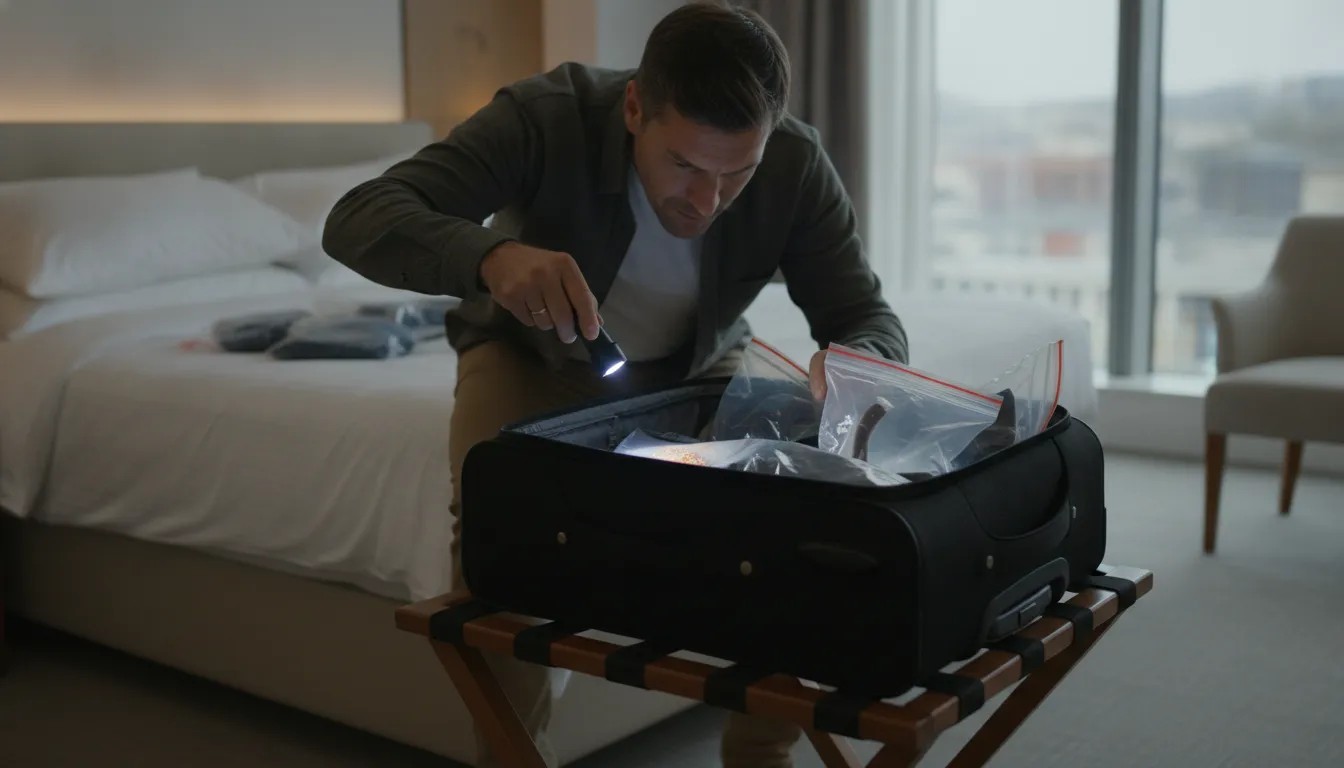
How do you isolate luggage and belongings safely?
Sort belongings by how they can be treated, seal each group in a separate bag, and keep everything away from beds and upholstered furniture. Label bags for dryer-safe clothing, delicate items, electronics, and luggage. Do not reopen a bag until you are ready to inspect or treat its contents.
Containment gives you control. Clear, sturdy bags are useful because you can see the contents without reopening them. Double-bag items if the first bag could tear during travel. Keep each bag sealed until you reach the place where that group will be inspected or cleaned.
| Item group | Travel containment | At-home next step |
|---|---|---|
| Dryer-safe clothing | Seal separately in sturdy bags | Transfer directly into dryer and use the highest heat the care label permits |
| Delicate or dry-clean-only items | Seal and label separately | Tell the cleaner about possible bed bug exposure before drop-off |
| Shoes and hard items | Place in clear sealed bags | Inspect seams, treads, and crevices under bright light |
| Electronics | Seal separately when not needed | Ask a professional before applying heat or products |
| Suitcase | Zip closed and enclose in a large bag | Inspect seams, pockets, liner, handles, and wheels |
Avoid risky DIY shortcuts
Do not put electronics, plastics, or delicate belongings into a hot dryer. Do not spray pesticide into luggage unless the product label explicitly allows that use. Do not leave exposed bags in a shared hallway, where a hidden insect could move into another unit. When an item cannot be treated safely at home, keep it sealed and ask a trained professional for guidance.
How can you avoid bringing hotel bed bugs home to NYC?
Before entering your living space, keep luggage sealed and stage it on a hard, easy-to-inspect surface. Move dryer-safe items directly from sealed bags into the dryer, inspect the empty suitcase carefully, and avoid placing travel items on beds, sofas, rugs, or inside closets.
Containment matters even more in a New York apartment, where space is tight and walls may be shared with neighboring units. Do not open luggage in the bedroom or spread clothes across the floor. If possible, stage sealed bags in a bathroom or another hard-surface area away from sleeping and sitting spaces.
Process clothing without creating a trail
Carry sealed bags directly to the laundry area. Empty dryer-safe contents into the machine without placing them on a counter or floor, then discard the empty containment bag outside the home. Use the highest dryer heat permitted by the garment care labels. Washing alone should not be treated as a substitute for an appropriate drying process.
Inspect the suitcase and non-washable items
Under bright light, examine zipper tracks, piping, pockets, liner folds, handles, and wheels. Vacuuming can remove visible material, but immediately seal and discard the vacuum contents outside. Keep any uncertain item contained. Ace Bed Bug Exterminating’s trained specialists inspect for different life stages and hiding locations, which is useful when a visual DIY check leaves doubt.
Get a professional bed bug inspection in NYC before a suspected hitchhiker becomes a larger problem.
When should you call a bed bug professional?
Request professional help if you find a live suspected bed bug at home, see repeated physical signs, or cannot safely inspect and process exposed belongings. Early identification is valuable because it lets you respond to evidence instead of repeatedly treating on suspicion.
Signs that justify an inspection
- A live insect or specimen that may be a bed bug
- New dark spotting, shed skins, or eggs near a sleeping area
- Repeated signs after travel, especially in more than one room
- Possible exposure in a multi-unit building where spread is a concern
- Uncertainty about treating luggage, electronics, or delicate items safely
Ace Bed Bug Exterminating is a bed bug-only specialist serving all five boroughs and surrounding areas. Its service process begins with a detailed inspection, followed by a treatment plan based on the findings and post-treatment monitoring when needed. That inspection-first approach helps avoid unnecessary treatment and identifies hiding spots a traveler may miss.
If an infestation is confirmed, learn how Ace approaches professional bed bug removal. Treatment selection should depend on the property, the extent of the problem, and the inspection findings rather than a one-size-fits-all DIY tactic.
How can you reduce risk on your next hotel stay?
A short arrival routine can reduce risk without turning every trip into a major inspection. Place luggage in the bathroom or on a checked metal rack, examine the mattress seams and accessible headboard edges, and keep clothing in your suitcase or sealed organizers rather than hotel drawers.
Use a five-minute arrival check
- Keep bags off the bed and upholstered furniture.
- Inspect the mattress piping, sheet corners, headboard, and rack joints.
- Look for live insects, dark clustered spots, shed skins, or eggs.
- Keep worn clothing contained instead of scattered around the room.
- Repeat the luggage-isolation routine when you return home.
Bed bugs can appear in any type of lodging, so a hotel’s price or cleanliness does not replace inspection. The goal is not panic. It is a repeatable routine that makes hitchhiking less likely and gives you a plan if you find evidence.
Frequently asked questions
Can you get a refund from a hotel for bed bugs?
You can ask the hotel about a refund, room change, cleaning support, or reimbursement, but the outcome depends on its policies and the circumstances. Document what you found and your conversations. This article does not provide legal advice or guarantee compensation.
How soon do bed bug bites appear?
Skin reactions vary widely. Some people notice marks quickly, others notice them later, and some have no visible reaction. Bites alone cannot confirm bed bugs, so look for physical signs and request an inspection when evidence or concern persists.
Should you throw away your suitcase after hotel exposure?
Not automatically. Keep it sealed, inspect every seam and pocket, and ask a professional about safe treatment if you find evidence or cannot confidently clear it. Discarding an exposed suitcase without containing it can spread bugs through a building.
Can bed bugs travel home on clothes?
Yes. Bed bugs can hide in folds, seams, and packed belongings. Keep exposed clothing contained and move dryer-safe items directly into a suitable high-heat drying cycle, following each garment’s care label.
Should you sleep in another room after returning home?
Do not relocate based only on worry. Moving sleeping locations can complicate monitoring if bed bugs are present. Keep travel items contained and request an inspection if you find signs or need a clear assessment.
Protect your NYC home after a hotel encounter
A hotel bed bug sighting does not have to become a home infestation. Contain luggage, document evidence, process belongings carefully, and monitor for physical signs. If you find a suspected bug or want confidence before unpacking, Ace Bed Bug Exterminating can provide an inspection-led response based on more than 12 years of specialized bed bug work.
Request an NYC bed bug inspection from Ace Bed Bug Exterminating.
One Response