
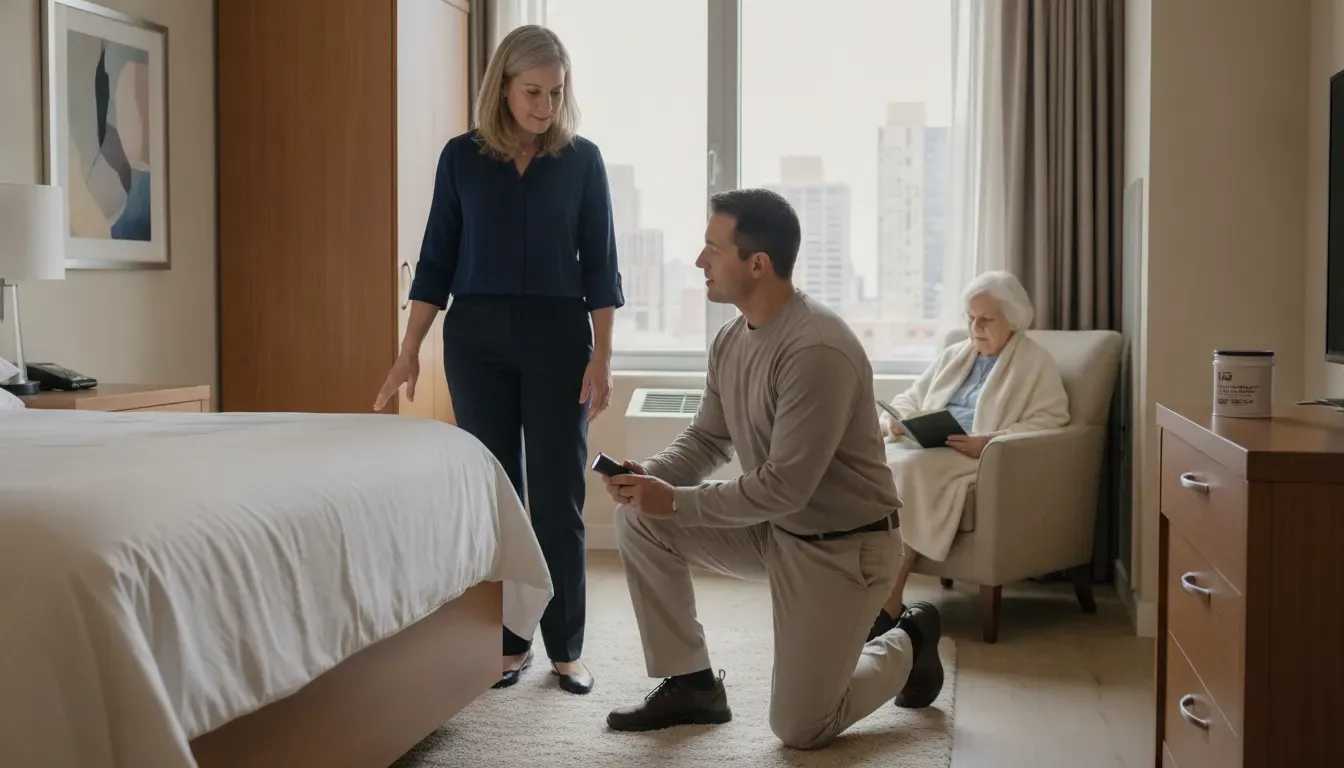
A bed bug concern in a nursing home or assisted living community needs a calm, coordinated response. Residents may need help moving safely, staff need clear reporting responsibilities, and families need accurate updates without blame or alarm. A written process helps the facility protect dignity, limit unnecessary movement, coordinate qualified treatment, and document each decision.
Contact Ace Bed Bug Exterminating to discuss a senior-care bed bug response plan
A practical bed bug protocol for nursing homes and assisted living facilities should define who reports a suspected pest, how the resident and belongings are protected, which rooms and equipment are inspected, how treatment is coordinated, what records are kept, how follow-up is scheduled, and how families receive respectful, factual updates. Facility policy and qualified professionals should guide each case.
Why nursing homes and assisted living communities need a written protocol
Bed bugs are not a sign of poor housekeeping, and they can enter a care setting in luggage, clothing, bedding, furniture, or personal belongings. In a senior-care community, however, a suspected infestation can affect a resident’s room, mobility equipment, laundry flow, shared spaces, staff routines, and family visits at the same time. The CDC explains that bed bugs are not known to spread disease, but bites can cause itching, loss of sleep, anxiety, and occasional allergic reactions.
A written protocol turns an emotional event into a series of controlled decisions. It prevents well-intended staff from applying unapproved products, moving furniture through hallways, transferring a resident without a belongings plan, or closing more of the community than necessary. It also gives administrators a consistent way to communicate with the resident, responsible party, employees, visitors, clinicians, environmental services, laundry staff, and the pest management professional.
The National Pest Management Association’s bed bug guidance for medical facilities recommends a written action plan with defined procedures and responsibilities. Its audience includes long-term care, assisted living, and other healthcare settings. Use that public guidance as a best-practice reference, then align the final protocol with the community’s own clinical, environmental services, emergency, privacy, and incident-reporting policies.
Who should do what when bed bugs are suspected?
Clear ownership is the foundation of a usable protocol. The first employee who notices a bug, stain, shed skin, or resident concern should not be expected to diagnose the full incident or choose a treatment. That employee should report promptly through the designated chain, preserve useful information, and avoid actions that could spread the pest.
| Role | Protocol responsibility |
|---|---|
| Resident care staff | Listen to the resident, report signs promptly, support dignity and comfort, and coordinate clinical assessment of itching or skin concerns through the facility’s normal care process. |
| Environmental services | Secure the affected area according to facility policy, preserve or bag potential evidence, coordinate cleaning and laundry steps, and avoid carrying uninspected items to another room. |
| Laundry staff | Keep suspected textiles contained and separate from clean items while following the community’s approved high-heat laundering and transport procedures. |
| Administrator or incident lead | Open the incident record, notify internal leaders, contact a qualified pest management professional, coordinate room access, and approve external communications. |
| Infection prevention or clinical lead | Review resident safety, clinical questions, equipment handling, precautions, and any treatment or re-entry conditions that involve care operations. |
| Pest management professional | Confirm the pest, inspect the affected and related areas, define the treatment scope, provide preparation instructions, apply approved methods, and document follow-up recommendations. |
Staff training should include nurses, aides, environmental services, maintenance, laundry, admissions, administrators, and other workers who enter resident rooms. Families and regular visitors can also receive prevention information. Training should focus on recognizing evidence, reporting quickly, handling belongings carefully, and avoiding stigma. The goal is not to make every employee a pest expert. The goal is to ensure that a concern reaches the right person before it becomes a larger movement problem.
What should staff do during the first response?
The first response should contain movement while protecting the resident’s dignity. A suspected bite alone does not confirm bed bugs because skin reactions vary and can have other causes. Staff should report observations rather than announce a diagnosis, and a qualified professional should identify the pest before the facility chooses a treatment plan.
- Listen and reassure. Thank the resident or staff member for reporting the concern. Avoid language that suggests the resident, family, or employee caused the problem.
- Notify the designated lead. Follow the facility’s incident-reporting chain immediately. Record the time, room or area, reporter, visible evidence, and any recent movement of belongings or equipment.
- Limit unnecessary movement. Do not move beds, upholstered furniture, luggage, clothing, mobility equipment, or personal items to another room until they have been assessed and a handling plan is in place.
- Preserve a specimen when safe. If a live insect can be captured without risk, secure it in a small sealed container or use clear photographs. Do not handle it with bare hands or delay resident care to collect it.
- Support the resident through normal care channels. Nursing staff should address bathing, clothing changes, symptoms, mobility, privacy, and room placement using the facility’s existing care plan and clinical policies.
- Arrange professional inspection. Contact a qualified pest management provider for identification and scope assessment. Ask the provider to explain what should happen to the room, belongings, equipment, and nearby areas before any treatment begins.
- Communicate only confirmed facts. Tell staff and the resident’s authorized contact what is known, what is being checked, and when the next update is expected. Do not speculate about where the bed bug came from.
Do not allow untrained employees to spray insecticides. Do not fog a room, apply a household product, or use an improvised space-heater setup. The U.S. Environmental Protection Agency recommends confirming the pest, considering Integrated Pest Management, and using pesticides only according to their labels or through a professional. Its bed bug control tips also warn that ordinary thermostats and space heaters do not provide a safe, reliable whole-room heat treatment.
How should a facility coordinate inspection and treatment?
Inspection should extend beyond the location where a person noticed a bite or found one insect. The provider and facility incident lead should decide which resident room, adjacent rooms, rooms above and below, common areas, laundry spaces, storage areas, and mobile equipment need inspection. The scope should reflect the building layout, resident movement, staff movement, shared furnishings, and any items that left the original room.
The AHCA/NCAL infection prevention tip sheet recommends professional inspection and treatment of suspected areas plus adjacent rooms and floors above and below. It also identifies wheelchairs, medication carts, food carts, waiting areas, visitor lounges, laundry rooms, and other shared spaces as areas that may need regular inspection. These are general healthcare best practices, not a statement of New York law. Facility leaders should confirm any New York-specific requirements with the applicable regulator or counsel.
Use an Integrated Pest Management approach
Integrated Pest Management, or IPM, combines accurate identification, monitoring, housekeeping, physical controls, preparation, and carefully selected treatment methods. It is especially useful in a setting where residents may be medically vulnerable and where the facility must maintain essential care. Treatment selection should consider the room’s occupants, ventilation, equipment, evacuation or relocation needs, product label directions, re-entry requirements, and the facility’s approval process.
Possible components may include targeted vacuuming, steam, heat for suitable articles or equipment, mattress and box-spring encasements, laundering, harborage reduction, monitoring devices, and a professionally applied product when appropriate. No single method should be presented as guaranteed for every room. The provider should explain what it can address, what preparation is required, what staff must not move, and how success will be assessed.
Room closure should be proportionate to the evidence and treatment plan. The NPMA guidance says there is rarely a need to close an entire medical facility for a bed bug incident, but the affected area should be controlled and treated promptly. A facility should never reopen a room solely because visible activity stopped for a short time. Re-entry should follow the treatment provider’s written recommendation and the facility’s own safety process.
How should staff prepare a resident room and belongings?
Preparation should be written for the exact treatment method and the resident’s care needs. A generic checklist can cause harm if it tells staff to move too much, discard useful items, or remove equipment without a safe destination. The incident lead should obtain written preparation instructions from the provider, review them with nursing and environmental services, and assign one person to coordinate completion.
- Keep suspected clothing, bedding, bags, and soft goods contained until the provider or facility laundry lead gives handling instructions.
- Use sealed bags or containers during transport. Do not carry loose textiles through hallways or place them with clean laundry.
- Use the approved wash and high-heat drying process for items that can safely tolerate it. The AHCA/NCAL guidance specifically recommends removing and sealing belongings and high-heat drying clothing for at least 20 minutes, but the facility should follow the provider’s written instructions and the item’s care requirements.
- Inspect wheelchairs, walkers, medical devices, carts, and other equipment before moving them from the affected room. Cleaning or disinfection alone does not establish that an item is free of bed bugs.
- Do not discard mattresses, furniture, or resident possessions automatically. The EPA notes that many items can be treated and saved, while careless disposal can spread bed bugs to another location.
- Keep clean and suspected dirty laundry separated. Avoid placing potentially infested items in a clean linen room or transporting them on a cart used for clean textiles.
- Give the provider access to mattress seams, bed frames, baseboards, upholstered furniture, closets, and other likely harborages without compromising resident privacy.
Resident relocation requires more than assigning a new room. Before a move, the care team should consider bathing or showering, fresh clothing, personal items, mobility equipment, medications, assistive devices, privacy, roommate needs, and the destination room’s inspection status. A move can spread the problem if the resident’s belongings and equipment are transferred without a plan. Whenever possible, the pest professional and clinical lead should coordinate the sequence.
What should the incident documentation include?
Good records make the response safer and easier to evaluate. Documentation should distinguish a report, a suspected finding, a confirmed identification, a treatment action, and a follow-up result. It should not label a resident as the source or include unnecessary medical details. Store records according to the facility’s privacy, incident, and retention policies.
| Record area | Examples of useful details |
|---|---|
| Initial report | Date and time, reporter, location, observed evidence, resident or staff concern, and immediate containment step. |
| Identification | Specimen or photo status, identifying professional, identification result, inspection date, and confidence or limitations. |
| Scope | Rooms, floors, common areas, equipment, laundry spaces, belongings, and recent movements included in the inspection. |
| Resident support | Care coordination, room status, clothing or belongings handling, mobility equipment plan, authorized-contact updates, and clinical referrals when needed. |
| Treatment | Provider, method, product or equipment when applicable, preparation completed, room status, re-entry instructions, and staff responsibilities. |
| Follow-up | Inspection dates, monitoring results, live or fresh evidence, repeat service decisions, final clearance decision, and prevention changes. |
Documentation is also the foundation for a useful debrief. After the incident, the administrator can ask whether the report reached the right person, whether laundry and equipment moved safely, whether families received consistent information, whether staff needed more training, and whether monitoring should be expanded. A debrief should improve the protocol, not assign blame.
How should a facility communicate with families and visitors?
Communication should be prompt, factual, respectful, and appropriate to the recipient’s authorization. Residents and their representatives deserve to know what was observed, what the facility is doing, what they should or should not do with belongings, and when they will receive another update. Employees and visitors need practical instructions without being encouraged to inspect or treat the facility themselves.
A useful message can include five points: a suspected or confirmed finding and its location at the level of detail appropriate for privacy; the fact that a professional assessment is being arranged or has occurred; immediate steps being taken to protect residents and limit spread; what the recipient should do with clothing, bags, or visits; and the next planned update. Do not identify the resident publicly, imply fault, promise a treatment outcome, or claim that a room is clear before the agreed inspection and follow-up process is complete.
Families may be worried that bed bugs transmit disease or that a loved one did something wrong. The CDC states that bed bugs are not known to spread disease, while also noting that bites may cause itching, loss of sleep, anxiety, or rare allergic reactions. A family communication should acknowledge the disruption and direct health questions to the resident’s healthcare provider. It should direct treatment questions to the facility incident lead or pest management professional.
For New York City facilities, public guidance can differ by setting. The NYC bed bug prevention and control resource discusses prevention, safe elimination, and certain housing-related requirements. It should not be treated as a complete rulebook for nursing homes or assisted living communities. Confirm the facility’s obligations with its governing policies and applicable New York authorities.
What does follow-up look like after treatment?
Follow-up is part of treatment, not an optional administrative step. The facility should schedule the next inspection before the initial service is considered complete, keep the affected room or items in the status directed by the provider, and record what would trigger another service. The AHCA/NCAL guidance recommends follow-up inspection, re-service as needed, a final inspection, and inspection of affected and adjacent areas over the following months.
A follow-up plan should identify the dates or triggers for room checks, who performs them, which evidence is recorded, how common areas and equipment are included, and who can authorize re-entry. It should also address new resident admissions, transfers, visitors, laundry, stored furniture, and staff lockers when those pathways are relevant to the building. The exact duration and frequency should be set with the qualified pest professional and facility leadership rather than copied as a universal promise.
A final review should answer three questions. Is there current evidence of bed bugs? Were all required rooms, items, and equipment inspected? Has the resident, authorized contact, and care team received the next-step instructions? If the answer to any question is unclear, keep the item under the facility’s control process and obtain clarification before declaring the incident closed.
Contact Ace Bed Bug Exterminating to coordinate a documented NYC facility inspection
Frequently asked questions about nursing home bed bug protocols
Should a nursing home close the entire facility if one resident room has bed bugs?
Usually, a single suspected or confirmed room does not by itself mean the entire facility must close. Control the affected area, obtain professional inspection, assess nearby rooms and shared pathways, and follow the provider’s written treatment and re-entry recommendations. The facility should make its own decision using its policies, resident safety needs, and applicable requirements.
Should a resident be moved immediately when bed bugs are suspected?
Not automatically. An unplanned move can spread bed bugs if clothing, bedding, mobility equipment, or personal items travel with the resident. The care team should protect the resident’s dignity and essential care while the incident lead and pest professional coordinate the safest room, belongings, and equipment sequence.
Can facility staff spray insecticide in a resident room?
Staff should not apply insecticides unless they are specifically trained, authorized, and acting within the facility’s approved process and product label requirements. Senior-care settings require careful consideration of resident health, room occupancy, ventilation, equipment, and re-entry. Arrange inspection and treatment through a qualified pest management professional.
How should a facility handle clothing and laundry during a bed bug incident?
Keep suspected items contained and separate from clean laundry. Use sealed bags or containers and follow written instructions from the facility laundry lead and pest professional. High-heat drying can kill bed bugs when the item and process support it, but loose items should not be carried through the building or placed in a clean linen area.
How long should a facility monitor after treatment?
There is no single monitoring period that fits every building or treatment. Follow-up should continue according to the pest professional’s written plan and the facility’s policy, with attention to the affected room, adjacent rooms, nearby floors, common areas, equipment, and any new evidence. Keep clear records and repeat service when the plan calls for it.
What should a family member do if they are worried about bringing bed bugs home?
Ask the facility for its current instructions before carrying bags, coats, or other belongings away. Follow the recommended containment and laundering steps, avoid moving items between homes, and seek professional advice if signs appear. Families should not blame the resident or attempt an improvised chemical or heat treatment.
Final checklist for a usable facility protocol
A strong protocol is short enough to use during a stressful event and detailed enough to prevent avoidable spread. Review it with administrators, nursing, environmental services, laundry, maintenance, infection prevention, and the facility’s pest management partner. At minimum, it should answer these questions:
- Who receives the first report, and how quickly?
- Who confirms the pest and defines the inspection scope?
- How will the resident’s privacy, care, clothing, belongings, and equipment be protected?
- Which rooms, common spaces, floors, laundry areas, and mobile items will be inspected?
- What products and methods are approved, and who can apply them?
- What preparation, room status, and re-entry instructions must staff follow?
- What facts belong in the incident record, and who can access it?
- When and how will residents, families, staff, and visitors receive updates?
- What follow-up checks, monitoring, and final clearance steps close the incident?
Facilities that prepare these answers before an incident can respond with less confusion and more respect for residents. A specialized bed bug protocol is not a substitute for clinical judgment, facility policy, or New York guidance. It is a practical coordination tool that helps the right people act quickly, safely, and consistently.