
Finding bed bugs on mattress seams can make you want to throw out the bed immediately. Stop before moving anything. An unsealed mattress can drop bugs and eggs through your home, turning one affected sleeping area into a much larger problem.
Request a professional bed bug inspection before moving the mattress or applying a DIY pesticide.
The safest first response is to contain the room, document the evidence, and arrange a professional inspection. You can often keep a mattress after proper treatment. The steps below explain what to do before a technician arrives, what not to do, and how to prepare without spreading bed bugs through a New York City apartment.
Bed bugs on mattress: take these steps first
If you find bed bugs on a mattress, leave the bed and nearby belongings in place, photograph the evidence, carefully bag removable bedding, and contact a specialist. These actions preserve useful evidence and reduce the chance of carrying bugs into another room.
- Keep sleeping in the same room unless a professional advises otherwise. Moving to a sofa or another bedroom may draw bed bugs into a new area.
- Do not carry the mattress through the home. Leave the mattress, box spring, frame, and nearby furniture where they are.
- Photograph what you found. Clear photos and a captured specimen in a sealed container can help an inspector confirm the pest.
- Remove bedding carefully. Place sheets, blankets, and sleepwear directly into sealed bags before carrying them to the laundry.
- Contact a bed bug specialist. A mattress sighting can indicate activity in the frame, headboard, baseboards, or nearby furniture.
Avoid foggers, bug bombs, rubbing alcohol, and unapproved pesticide applications. These approaches can create safety risks or push bed bugs into deeper cracks without solving the infestation. If you live in a multi-unit building, tell building management promptly so any required coordination can begin.
How to confirm the bugs are bed bugs
Adult bed bugs are small, flat, reddish-brown insects. Younger bugs can be pale and harder to see. A careful inspection of mattress seams and the surrounding bed structure can reveal live insects, spotting, shed skins, or eggs, but a professional identification is the most reliable next step.
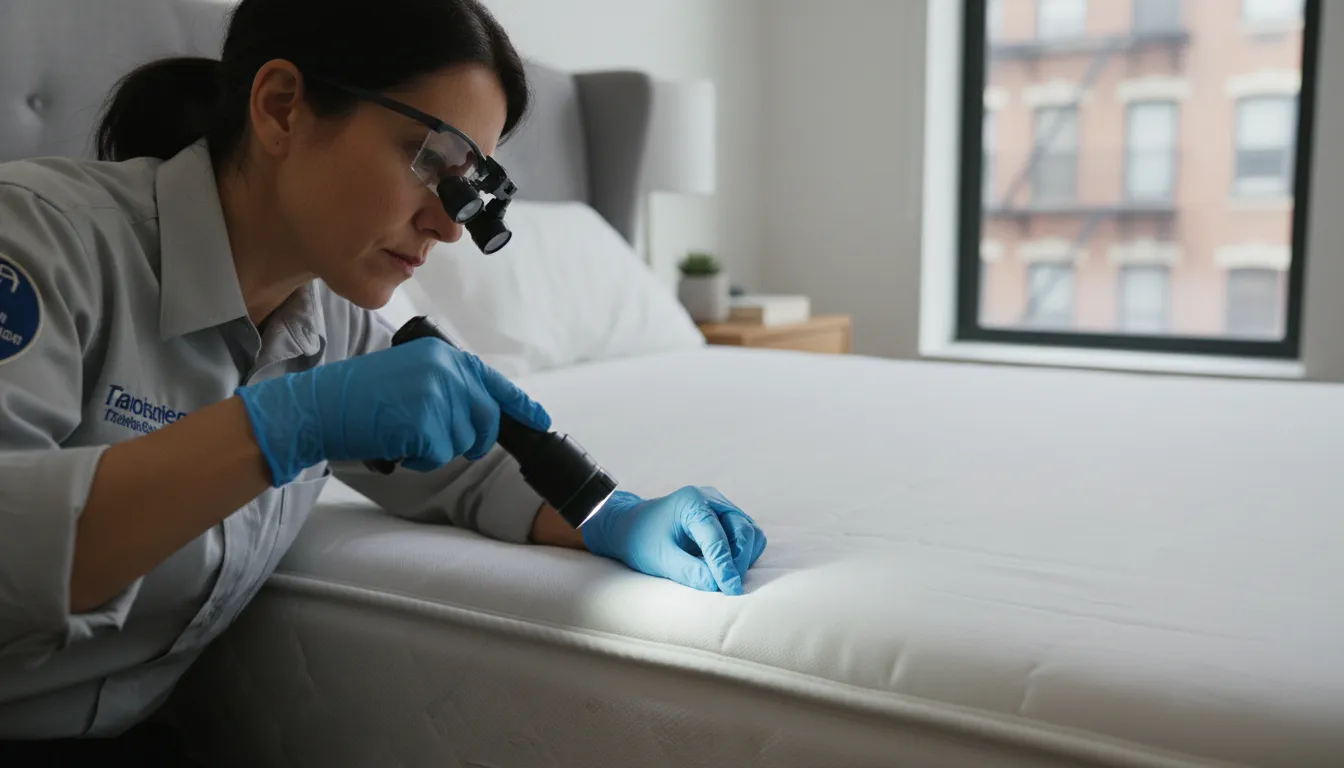
Use a bright flashlight to inspect the piping, labels, seams, folds, and tufts of the mattress. Then check the box spring fabric, screw holes, joints in the frame, the back of the headboard, and the edges of nearby nightstands. Work slowly so you do not disturb or scatter possible evidence.
Signs to look for around the bed
- Live insects hiding in seams or narrow gaps
- Dark spotting that resembles ink dots
- Pale shed skins or tiny whitish eggs
- Small blood marks on sheets
Bites alone cannot confirm bed bugs because skin reactions vary and other conditions can look similar. If you are uncertain, save a specimen or a clear photo for professional identification. Inspect beyond the mattress as well. Bed bugs hide close to where people rest, but they are not limited to the bed itself.
What not to do before bed bug treatment
The most important rule is not to spread the problem while trying to solve it. Avoid moving loose belongings, discarding an exposed mattress, switching bedrooms, or applying random pesticides. A stable room gives an inspector a clearer picture of where activity is concentrated.
Well-intended cleanup can make treatment harder. Do not move loose belongings into another room. Do not donate furniture, and do not place an unwrapped mattress in a hallway or at the curb. In a multi-unit building, careless movement can expose neighbors and common areas.
Do not spray random products on the mattress. Products have specific label directions, and many are not approved for sleeping surfaces. Applying the wrong product can expose occupants to unnecessary chemicals while scattering surviving bugs. Also avoid deep cleaning every trace of evidence before the inspection. Photograph or save specimens first so the technician can understand where activity was found.
Review Ace’s bed bug removal service and get treatment guidance matched to your home.
How to prepare bedding and laundry safely
Safe laundry preparation means containing items before they leave the affected room and keeping cleaned items isolated afterward. Follow the exact instructions provided by your exterminator because preparation requirements depend on the treatment plan, fabrics, room conditions, and extent of activity.
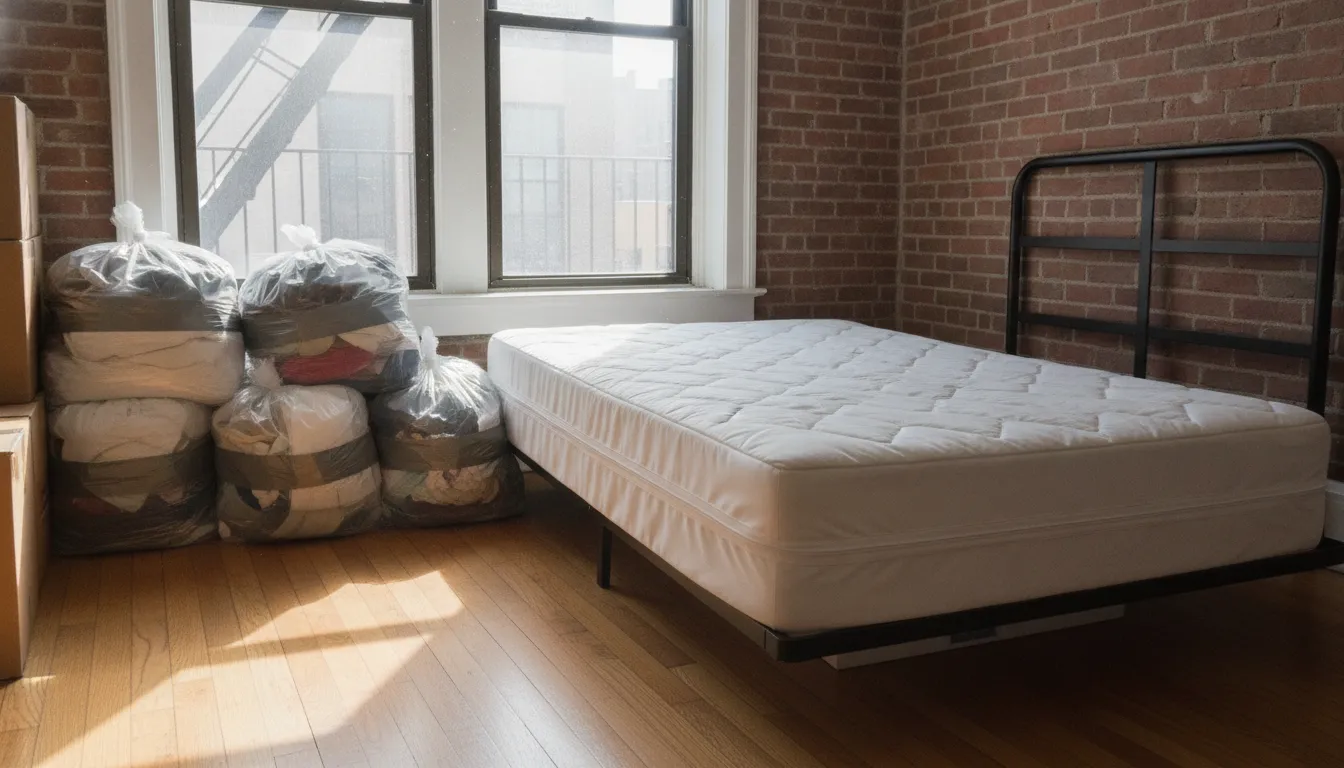
For washable bedding and clothing from the affected room, place items into sturdy bags before moving them. Seal the bags inside the room, carry them directly to the laundry, and avoid setting them on upholstered furniture. Do not automatically empty every closet or dresser. Excess preparation can spread bugs and create unnecessary work if the technician did not request it.
A practical laundry workflow
- Separate washable items from belongings that need different handling.
- Bag items in the affected room and label each bag.
- Use a dryer cycle appropriate for the fabric and follow professional instructions.
- Move completed items into new, clean bags or sealed containers.
- Keep cleaned items sealed until your technician says the room is ready.
Do not overfill bags or containers. A torn bag can undo careful preparation. At a shared NYC laundry room or laundromat, keep bags sealed until items go into the machine. Put finished items directly into clean bags rather than reusing the original bags.
Should you throw away a mattress with bed bugs?
Usually, finding bed bugs does not automatically mean the mattress must be discarded. A structurally sound mattress may be treatable and protected with a bed bug-rated encasement as part of a broader plan. Disposal may be appropriate when a mattress is badly damaged or a professional determines it cannot be treated effectively.
| Consider keeping the mattress | Discuss disposal with a professional |
|---|---|
| It is in good physical condition | It is badly damaged or torn |
| It can be treated and fully encased | It cannot be safely treated or encased |
| You can follow monitoring instructions | A technician recommends replacement |
Encasement versus a standard mattress protector
A bed bug-rated encasement fully surrounds the mattress and closes with a secured zipper. A standard protector often covers only the top and sides, so it does not isolate the entire mattress. Choose an encasement designed for bed bug management, fit it to the mattress depth, and check it regularly for tears or an open zipper.
If disposal is necessary, ask the pest professional and building management about the correct process before moving anything. Securely wrap the mattress before it leaves the room and clearly mark it so nobody takes it home. Never move an exposed infested mattress through a building, and check current local disposal instructions before placing it for collection.
Why treating only the mattress is not enough
The mattress is only one part of a bed bug hiding network. Bed bugs may stay in the box spring, frame, headboard, nightstand, baseboards, wall gaps, or upholstered furniture. A plan that targets only the visible mattress can miss hidden activity and allow the infestation to continue.
A professional inspection evaluates the whole sleeping area and adjacent spaces. In an apartment, the inspection may also account for shared walls and nearby units. Ace Bedbug Exterminating focuses exclusively on bed bug work and provides service throughout the five New York City boroughs.
How Aprehend fits into a professional plan
Ace offers Aprehend biopesticide treatment among its bed bug-focused service options. The right treatment still depends on inspection findings, room conditions, building layout, and the technician’s judgment. Preparation and follow-up instructions matter because even a carefully selected treatment works best when the sleeping area remains accessible and monitored.
A trained specialist can also distinguish active evidence from old signs and explain which belongings need attention. Learn more about Ace’s bed bug-only background and credentials on the About Us page.
NYC apartment and borough-specific considerations
Bed bug preparation in New York City often requires extra care because apartments share walls, hallways, laundry areas, and elevators. Residents should avoid carrying unsealed items through common spaces and should follow building procedures for reporting activity, scheduling access, and disposing of furniture.
Room size and building design can also change the inspection path. A compact Brooklyn apartment may have storage close to the bed, while a Bronx multi-family home may require coordination across more than one sleeping area. Ace provides local service for residents seeking a Brooklyn bed bug exterminator, a Bronx bed bug exterminator, or help with bed bugs in Staten Island.
Coordinate without spreading belongings
Tell the technician about adjacent rooms, recently moved furniture, visitors, or neighboring units with reported activity. Keep hallways and access points clear, but do not relocate bedroom contents unless instructed. For disposal, confirm the current process with the building and appropriate local authority before setting out a mattress or upholstered item.
What to do with the mattress after treatment
After treatment, keep the room arranged according to the technician’s instructions and continue monitoring. Do not remove an encasement, move the bed, or return sealed belongings early unless the specialist confirms it is appropriate. Follow-up observations help show whether control is working.
A properly fitted bed bug encasement can make future inspection easier and help isolate activity associated with the mattress. Check it periodically for tears and make sure the zipper remains fully secured. Keep the bed slightly separated from walls and prevent blankets from touching the floor when instructed.
Interceptor devices under bed legs may help with monitoring, but they do not replace treatment. Continue scheduled follow-ups even when you stop seeing bugs. Inspect luggage, used furniture, and items returning to the home before placing them near the bed.
When should you call a bed bug professional?
Call promptly when you find a live bug, repeated spotting, shed skins, or evidence in more than one location. Professional help is especially important in multi-unit housing, where the problem may extend beyond one mattress or apartment. Early guidance helps you avoid actions that scatter bed bugs.
A specialist can identify the pest, map activity, and give preparation instructions matched to the treatment. Before carrying furniture out of the room or applying a DIY pesticide, request guidance so your first actions support the treatment instead of spreading the infestation.
Contact Ace Bedbug Exterminating for an inspection and a clear preparation plan.
Frequently asked questions
Can bed bugs live inside a mattress?
Bed bugs commonly hide along seams, folds, labels, and openings or damaged areas. Much of an infestation can also be outside the mattress in the frame, box spring, headboard, and nearby cracks.
Can I sleep on a mattress that has bed bugs?
Ask your pest professional for instructions. Moving to a different room can spread activity, so specialists often advise occupants not to change sleeping locations without a treatment plan.
Will a mattress encasement get rid of bed bugs?
An encasement can be useful within a complete treatment and monitoring plan. It does not eliminate bugs hiding elsewhere in the room, so it should not be treated as a stand-alone solution.
Should I vacuum the mattress before the inspection?
Contact the inspector first. Vacuuming can remove some visible bugs, but it may also remove evidence that helps identify activity. If instructed to vacuum, follow directions for safely containing and disposing of the vacuum contents.
Get help with bed bugs on your mattress
Finding bed bugs on a mattress calls for fast, careful action, not panic. Ace Bedbug Exterminating can inspect the sleeping area and explain the right next steps for your mattress, bedroom, and nearby spaces.
One Response