
Eco-friendly bed bug treatment is not a single spray or a promise that every product is harmless. In a New York City apartment, hotel, office, or home, the safer and more practical approach starts with identifying where bed bugs are hiding. The response then matches the infestation. It may include inspection, monitoring, heat, careful steam work, a targeted biopesticide, or a properly labeled desiccant dust. Preparation and follow-up matter because eggs and neighboring units can keep an infestation active.
Schedule a professional bed bug treatment evaluation
So, how does eco friendly bed bug treatment work? It uses Integrated Pest Management, or IPM, to combine nonchemical methods and targeted EPA-registered products with the least practical hazard to people, property, and the environment. The right plan depends on what the inspection finds, not on a one-size-fits-all label.
That distinction makes the methods easier to understand. The next step is defining what eco-friendly means in bed bug control and where IPM fits.
What Does Eco-Friendly Bed Bug Treatment Mean?
Eco-friendly bed bug treatment does not mean using a product that is automatically harmless, or skipping treatment because a method sounds natural. It means choosing a targeted plan that manages bed bugs while reducing unnecessary exposure to people, pets, property, and the surrounding environment. The plan should match the infestation, the building, and the people who live or work there.
The framework behind that approach is Integrated Pest Management, or IPM. The U.S. Environmental Protection Agency explains IPM as an environmentally sensitive method that combines knowledge of pest biology with available control options. For bed bugs, that can include inspection, monitoring, heat, steam, encasements, laundering, targeted biopesticides, and desiccant products. Pesticides can still have a place in an eco-friendly plan when they are appropriate, legally registered for bed bugs, and used according to the label.
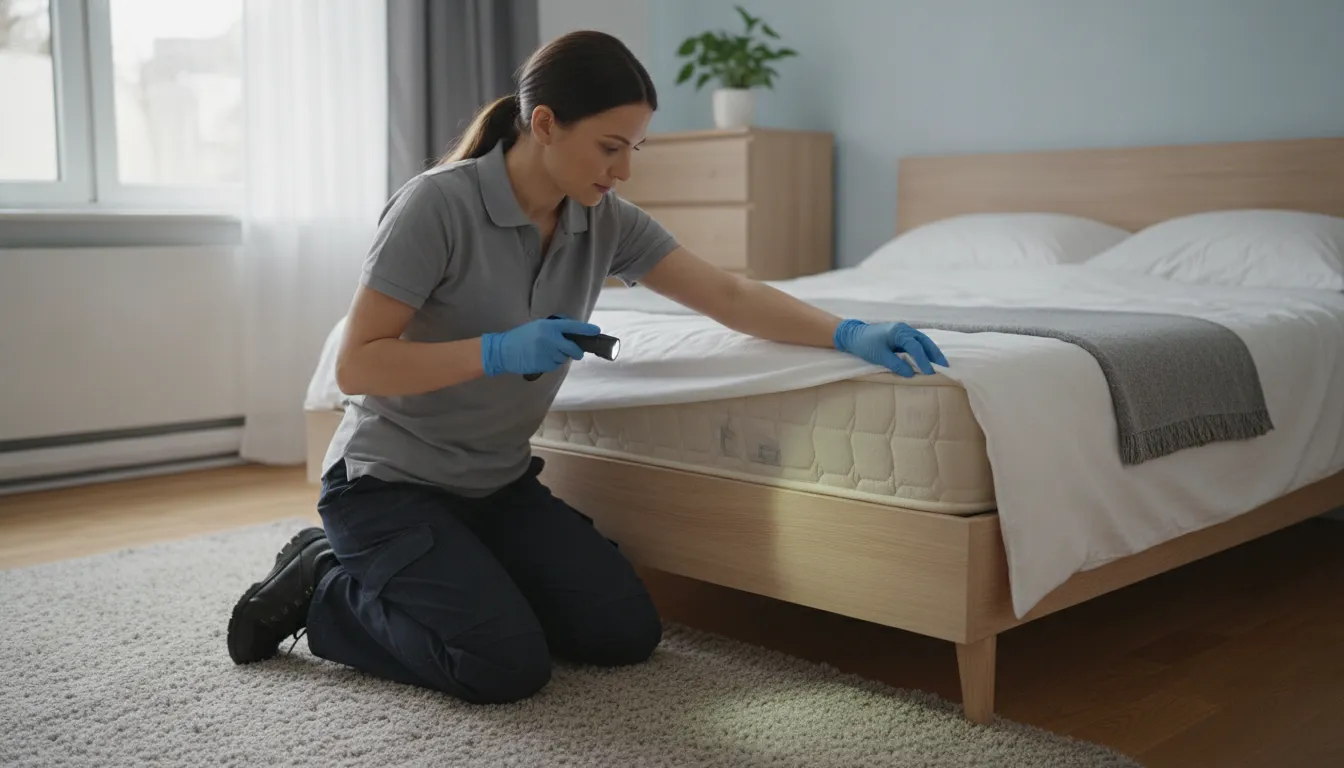
Inspection is what keeps IPM from becoming a generic product choice. A technician looks for live bugs, eggs, shed skins, fecal spotting, and hiding areas around mattresses, box springs, furniture, cracks, and crevices. The findings help determine whether a room needs localized treatment, broader heat or steam work, a targeted residual application, or a combination of methods. In a New York City apartment or multi-unit property, the plan may also need to account for neighboring units and cooperation from residents or building management.
Eco-friendly also does not mean that one treatment will always be enough. Bed bug eggs can survive methods that affect exposed insects, and hidden bugs can remain beyond the first treatment area. EPA guidance notes that bed bug control takes time and patience, and that diligent participation by residents is important. Preparation, monitoring, and follow-up are therefore part of responsible treatment rather than optional extras.
In practical terms, the goal is precise control: use the least hazardous effective combination of methods. Apply products only where they belong, and give residents clear instructions about preparation and re-entry. A professional should explain what is being used, why it was selected, and what safety steps must be followed. That is how does eco friendly bed bug treatment work in a real home or business: not as a promise of zero risk. But as a measured process built around inspection, targeted action, and verification.
How Does Eco Friendly Bed Bug Treatment Work in Practice?
Eco-friendly treatment is not a single product or a promise that every method is harmless. In practice, it is a coordinated process that combines inspection, preparation, physical controls, carefully selected products, monitoring, and follow-up. The treatment plan should match the building, the level of activity, and the locations where bed bugs are hiding.
- Inspect the property carefully. A trained technician looks for live bugs, eggs, shed skins, fecal spotting, and conditions that can support an infestation. The inspection covers mattresses, box springs, furniture, cracks, crevices, and other likely hiding areas. It also helps identify the life stages present and determine whether nearby rooms or units need attention. Renters should notify their landlord promptly, while property managers should coordinate treatment with a pest management professional. The New York bed bug removal guide explains how inspection fits into the broader process.
- Prepare the space according to written instructions. Preparation may include reducing clutter, moving items so technicians can reach hiding places, laundering or containing textiles, and arranging access to adjoining areas when necessary. Follow the technician’s instructions rather than improvising with sprays or moving infested belongings between rooms. The University of Minnesota Extension notes that following professional preparation and treatment directions supports the best possible treatment performance: bed bug preparation and control guidance.
- Use physical controls where they fit. Vacuuming, encasements, interceptors, laundering, steam, or carefully managed heat may reduce activity or expose hiding places. These tools have specific limits. For example, EPA guidance says steam should reach at least 130 degrees Fahrenheit and should not have forceful airflow that could scatter bed bugs: EPA bed bug control guidance. Physical controls support the plan but do not automatically replace a complete inspection.
- Apply a targeted method. Based on the findings, a professional may use an EPA-registered product labeled for bed bugs, a fungal biopesticide application, heat, steam, desiccant dust, or a combination of methods. Products must be used according to their labels, with attention to people, pets, surfaces, ventilation, and re-entry instructions. The goal is to treat bed bug travel routes and hiding areas without unnecessary application.
- Monitor for remaining activity. Bed bug control requires observation after the initial service. Interceptor traps, visual inspections, resident reports, and documentation can help show whether activity is declining or whether another area needs attention. EPA recommends inspecting at least every seven days when eggs may remain, including monitoring interceptor traps when applicable.
- Follow up and adjust the plan. Follow-up is not a formality. The technician reviews monitoring results, checks previously treated areas, answers preparation or re-entry questions, and determines whether additional treatment is appropriate. In apartments, hotels, offices, and multi-unit buildings, communication with residents or staff can also help identify activity that is not visible during the first visit. This measured process avoids unsupported guarantees while keeping treatment focused on evidence.
How Aprehend Uses a Biopesticide to Control Bed Bugs
Aprehend is a targeted fungal biopesticide used within an Integrated Pest Management plan. Its active ingredient, Beauveria bassiana, is a naturally occurring fungus formulated for bed bug control. Rather than relying on a broad spray across every surface. A trained technician applies the product where bed bugs are likely to travel, hide, or cross while moving between harborages and a host.
How the fungal treatment affects bed bugs
When a bed bug contacts a treated surface, fungal spores can attach to its outer body. Under suitable conditions, the fungus can grow through the insect’s protective exterior and ultimately kill it. The bed bug may also carry spores back toward other harborages, which is one reason careful placement matters. This is a biological mode of action, not a repellent barrier that forces bed bugs into another room.
The product works over time rather than producing an instant knockdown. That timing makes inspection, preparation, monitoring, and follow-up important parts of the plan. It also means residents should not judge the treatment by whether every visible insect disappears immediately. Any use must follow the current product label and applicable directions. The EPA advises choosing pesticides registered for bed bug use and checking that bed bugs appear on the label: EPA bed bug control guidance.
Why placement and surface condition matter
Aprehend is most useful when it is placed along likely bed bug travel routes, such as selected edges, cracks, crevices, and other locations identified during inspection. It is not a reason to coat every household surface, saturate bedding, or apply product inside places where the label does not permit it. The technician must account for furniture configuration, wall and floor junctions, clutter, occupant activity, and areas that bed bugs can reach.
Residual activity should also be described carefully. Ace’s treatment information describes an Aprehend barrier as continuing to work for up to three months. But the actual result depends on label-compliant application, surface conditions, disturbance, and the infestation. A residual product does not replace monitoring or guarantee that hidden eggs, untreated harborages, or movement from another unit will not create new activity. In an NYC apartment, hotel, office, or multi-unit building, coordination and follow-up can be just as important as the initial application.
How Heat and Steam Kill Bed Bugs Without Residual Spray
Heat and steam are nonchemical tools that can fit into an eco-friendly bed bug plan, but they work in different ways. Whole-room heat aims to warm the full treatment space, including hiding places. Steam delivers concentrated heat to surfaces and seams. Neither method replaces careful inspection, preparation, coverage, or follow-up.
Whole-room treatment depends on more than the heater’s output. Technicians must account for the size and layout of the property, heater placement, air movement, and the time needed for heat to reach cracks and crevices. Rooms farther from the equipment may take longer to reach the required lethal temperature, and some areas may need a longer hold time. Virginia Tech Extension also identifies the focused attention of a trained technician as an important factor in treatment performance. Read the Virginia Tech heat-treatment guidance.
| Consideration | Whole-room heat | Targeted steam |
|---|---|---|
| Primary action | Raises temperatures throughout a prepared treatment area so heat can reach bed bug hiding places. | Applies high heat directly to seams, cracks, crevices, and other localized areas. |
| Coverage challenge | Every relevant crack and crevice must reach the needed temperature, with adequate hold time and air movement. | Only the surfaces and voids reached by the steam receive treatment, so slow, controlled passes matter. |
| Main limitation | Large or complex structures may heat unevenly, and duration cannot be assumed from a standard appointment length. | Forceful airflow can scatter bed bugs, and steam may not reach deeply hidden insects. |
| Safety focus | Remove or protect heat-sensitive items and follow the technician’s preparation and re-entry instructions. | Use equipment carefully around electricity, moisture-sensitive materials, children, and pets. |
Steam requires particular technique. The EPA states that steam used for bed bugs must reach at least 130 degrees Fahrenheit. And the machine should not produce a forceful airflow that could scatter insects. A slow pass over a mattress seam is different from waving a steamer around a room. Steam also has no lasting residual effect, so untreated hiding places or later introductions can create a new problem.
For either method, safety means more than avoiding a conventional spray. Heat, hot equipment, moisture, and damaged materials can create their own hazards. Professional treatment should be matched to the structure and infestation, with monitoring afterward. In an apartment, hotel, or office, coordination with occupants and neighboring units can be just as important as the treatment method itself.
Where Does Diatomaceous Earth Fit in Bed Bug Control?
Diatomaceous earth is a desiccant dust that can serve as one carefully controlled tool in an Integrated Pest Management plan. It is not a plant-based spray, a repellent, or a substitute for finding the infestation. The particles can abrade the waxy outer layer of a bed bug and contribute to dehydration after contact. That action depends on the insect crossing a treated area, so placement matters as much as the product itself.
How the dust works
Unlike a conventional contact insecticide, diatomaceous earth does not need to be absorbed as a liquid. A bed bug may pick up particles while moving through a crack, crevice, or other hiding route. The dust can damage the insect’s protective surface, allowing moisture loss over time. It therefore works gradually and cannot be expected to kill every bed bug immediately, especially when insects remain inside inaccessible furniture, walls, or other protected spaces.
Why thin, targeted placement matters
More dust is not better. Thick piles can be avoided by bed bugs, become airborne during cleaning or movement, and make a treatment area harder to manage. A professional selects an EPA-registered pesticide labeled for bed bugs and applies it only where the label permits. Typically in a thin layer at appropriate voids or travel routes. The EPA specifically advises using only registered desiccant products for bed bug control: EPA bed bug control guidance.
Residents should not scatter food-grade or unlabeled dust around sleeping areas. Any airborne powder can irritate the eyes and respiratory system, and label directions govern protective equipment, application, ventilation, and re-entry. Keep children, pets, and other occupants away from treated areas as instructed. For a broader look at lower-toxicity choices, see these non-toxic treatment options.
Diatomaceous earth also has practical limits. It cannot inspect a room, reach every harbor, treat adjacent units, or confirm that eggs and hidden insects are gone. It fits best alongside inspection, monitoring, laundering or heat where appropriate, targeted applications, and follow-up. Treating only visible edges with dust may leave the underlying infestation untouched. Which is why product selection and placement should follow the full treatment plan rather than a one-product DIY approach.
Are Eco-Friendly Treatments as Effective as Traditional Chemicals?
Effectiveness depends less on whether a treatment is described as eco-friendly and more on whether the method fits the infestation. A targeted biopesticide, heat, steam, desiccant dust, or conventional pesticide may each have a useful role, but none replaces a careful inspection. Bed bugs can hide in mattresses, furniture, cracks, and wall voids, so a method that reaches only visible insects may leave the underlying problem untouched.
Access is one of the clearest differences between methods. Heat can address many areas at once, but success depends on getting lethal temperatures into cracks and crevices throughout the structure. The heating system, room size, heating time, air movement, and technician attention all affect coverage, according to Virginia Cooperative Extension guidance on bed bug heat treatment. Steam is more localized. It can be useful along seams and other surfaces when applied correctly. But forceful airflow can scatter bed bugs, and the EPA says steam should reach at least 130 degrees Fahrenheit.
Resistance also matters when selecting a chemical approach. Repeatedly applying an unsuitable product can waste time and increase exposure without solving the infestation. Professional treatment should use only products registered for bed bugs and follow the label. In an IPM plan, nonchemical controls and targeted applications can be combined rather than relying on broad, repeated spraying. This is why a lower-toxicity plan should be designed around inspection findings, not chosen from a single product claim. For homes with children or pets, review the available non-toxic treatment options while keeping label directions and re-entry instructions central.
Follow-up is another measure of effectiveness. Eggs or concealed insects may remain after an initial visit, and the EPA recommends continued inspection. Including monitoring interceptor traps when applicable, at least every seven days when eggs may remain. Preparation, monitoring, and follow-up help reveal whether the selected method reached the problem areas and whether additional action is needed. The University of Minnesota Extension notes that bed bug control is difficult to manage alone and recommends working with a professional to identify and treat the problem: bed bug control guidance.
In practice, the strongest comparison is not eco-friendly versus chemical. It is an evidence-based plan versus an incomplete application. The right method is the one that can safely reach the hiding places, suits the property and occupants, and includes monitoring after treatment.
What Should NYC Residents and Businesses Expect?
Eco-friendly bed bug treatment is a coordinated process, not a single product applied everywhere. In a New York City apartment, hotel room, office, or other commercial space. The service should begin with an inspection to identify activity, hiding places, life stages, and the extent of the problem. That information determines whether the plan uses targeted biopesticide treatment, heat, steam, desiccant dust, monitoring, or a combination of methods.
Before treatment: inspection, preparation, and access
Residents should expect clear preparation instructions before the technician arrives. Those instructions may address clothing, bedding, furniture, clutter, and access to mattresses, box springs, baseboards, closets, wall gaps, and other potential harborage areas. Renters should notify their landlord promptly, while landlords and property managers should coordinate treatment across affected units when appropriate. The University of Minnesota Extension recommends professional identification and treatment, along with following the provider’s preparation directions closely: bed bug preparation and control guidance.
Hotels, offices, and facilities should also plan for technician access, privacy, staff communication, and the temporary removal or protection of sensitive items. The more complete the access, the easier it is to inspect and treat the places bed bugs actually use.
After treatment: re-entry and monitoring
Re-entry timing depends on the method used, the products applied, ventilation needs, and the technician’s written instructions. Do not return people, pets, or belongings until the treatment professional says it is appropriate. Monitoring remains important after service. EPA guidance recommends inspecting for bed bugs, including monitoring interceptor traps when applicable, at least every seven days when eggs may remain: EPA bed bug control guidance.
For property-specific planning, review the NYC bed bug removal service and the New York bed bug removal guide. Ace serves residential and commercial properties across all five boroughs and surrounding service areas, with the treatment plan shaped by inspection findings rather than a one-size-fits-all schedule.
Contact Ace Bedbug Exterminating to plan a professional treatment evaluation.
Frequently Asked Questions
Is eco-friendly bed bug treatment safe for children and pets?
Eco-friendly does not mean risk-free. A professional should choose methods for the space, keep people and animals away when required, and follow every product label. EPA describes IPM as using appropriate methods with the least possible hazard to people, property, and the environment, including careful pesticide use when needed: EPA IPM guidance.
Does steam kill bed bugs and their eggs?
Steam can kill bed bugs on surfaces when the heat reaches them directly. The EPA says steam for bed bug control must reach at least 130 degrees Fahrenheit and should not have forceful airflow, which can scatter bed bugs. Steam may miss insects deep inside furniture, walls, or clutter, so it is usually one part of a broader plan: EPA treatment guidance.
Is diatomaceous earth a safe way to eliminate bed bugs?
Diatomaceous earth is a desiccant that can help when placed thinly in appropriate cracks and voids. But loose dust can create an inhalation hazard and heavy piles are less useful. Use only a product registered by the EPA as a pesticide and follow its bed bug label. It should not replace inspection and monitoring.
Can Aprehend or heat treatment eliminate an infestation in one visit?
No method should be presented as an automatic one-visit guarantee. Heat performance depends on reaching lethal temperatures throughout cracks and crevices, as well as equipment, structure size, heating time, airflow, and technician attention. Aprehend, heat, steam, and desiccants may be combined according to site conditions, followed by monitoring and any needed follow-up.
Should I sleep in my bed after bed bug treatment?
Follow the treating professional’s re-entry instructions rather than moving to another room. Leaving the treated area can make monitoring and control more difficult, while entering too soon can create a safety problem. Renters should notify their landlord promptly, and residents should complete the preparation and follow-up steps they receive.