
New York welcomes over 60 million visitors each year, and with that volume of travel comes a hidden risk. Bed bugs are among the most common unwanted souvenirs travelers bring home. These tiny insects hide in mattress seams, headboards, and luggage racks, waiting for a chance to crawl into your suitcase and follow you home. The good news is that with the right knowledge, you can virtually eliminate that risk.
Call (347) 378-7070 to schedule a professional bed bug inspection before or after your trip. Our team at Ace Bed Bug Exterminating has served NYC for over 12 years and knows exactly what to look for.
How to prevent bed bugs when traveling starts with three core habits: inspect your hotel room before you unpack, keep your luggage off the floor and bed, and quarantine your belongings when you return home. Bed bugs cannot fly or jump according to the EPA. They rely entirely on crawling into your bags, clothes, and shoes. A five-minute room check and a few smart packing choices can prevent an infestation that would cost thousands to treat.
Understanding how these pests travel is the first line of defense. Once you know their playbook, every trip becomes safer.
How to Prevent Bed Bugs When Traveling: How Bed Bugs Hitchhike on Travelers and Their Belongings
How do bed bugs end up in your luggage? Bed bugs are nocturnal and hide in dark crevices during the day. When you place your suitcase on a hotel bed, carpet, or upholstered chair, you create a bridge they can crawl across. According to Purdue University Extension, bed bugs can survive for months without feeding, which means they can hide in your luggage through a multi-leg trip without detection.
Many travelers assume bed bugs only infest dirty rooms. That is a dangerous misconception. Bed bugs spread through luggage regardless of cleanliness. Five-star hotels report outbreaks just as often as budget motels. The key difference is whether a guest unknowingly transports them to a new location.
How Bed Bugs Get Into Your Belongings
Bed bugs are attracted to carbon dioxide and body heat, not filth. They emerge at night to feed, then retreat to cracks and crevices. When your suitcase is within a few feet of an infested bed or sofa, they will investigate it as a potential harborage. The seams, zippers, and pockets of luggage offer the same dark protection they find in mattress tufts. A single pregnant female bed bug can start a new infestation within weeks, which is why early detection matters.
Common Hitchhiking Hotspots in Hotels
Bed bugs do not limit themselves to mattresses. Common hiding spots in hotel rooms include headboards (especially behind screw-holes or fabric panels). Nightstand drawers, curtain folds, upholstered chairs, baseboards near the bed, and luggage racks with fabric straps. The CDC notes that bed bugs can also travel through wall outlets and plumbing chases between adjoining rooms. Meaning even a clean room can be exposed by a neighboring infested unit.
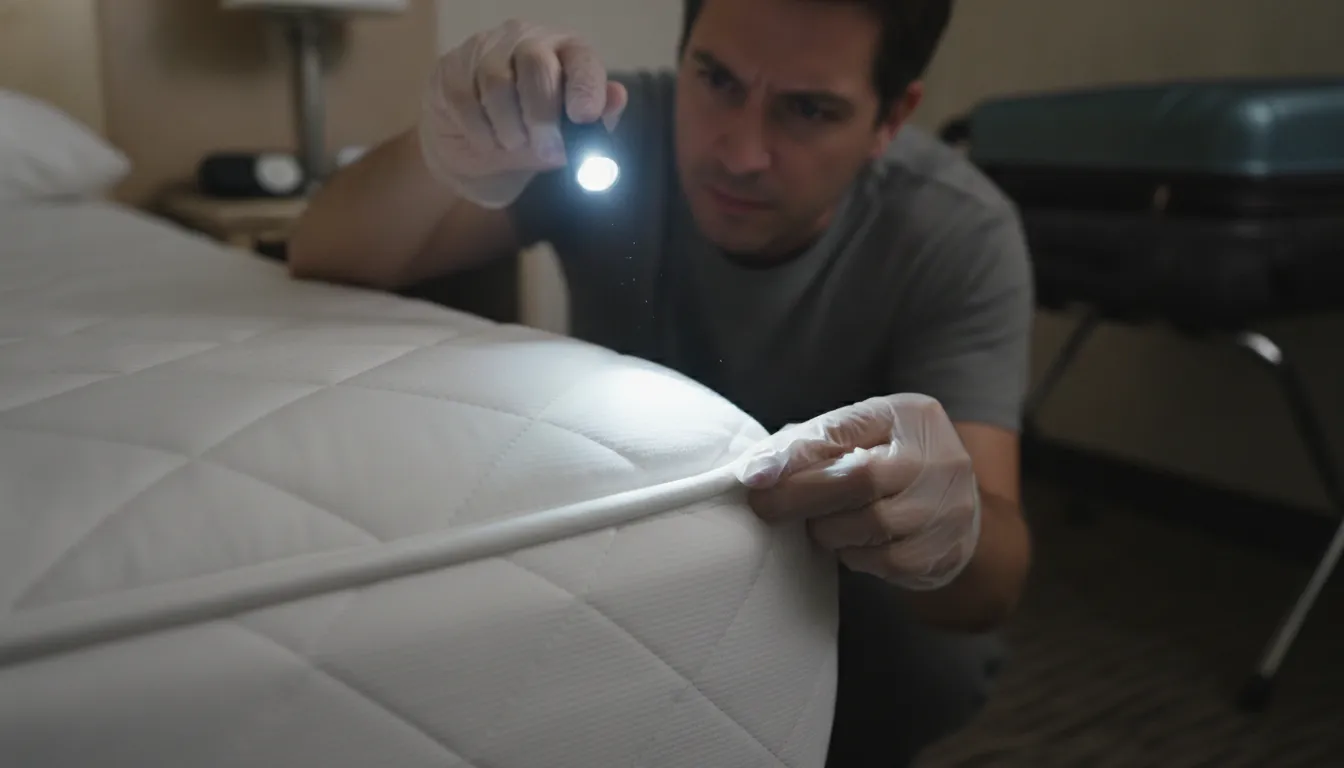
When checking in, keep your luggage in the bathroom or on a hard luggage rack while you inspect. This one step dramatically reduces your risk before you unpack a single item.
How to Inspect Your Hotel or Airbnb Room for Bed Bugs
What is the fastest way to check a hotel room for bed bugs? Start by pulling back the sheets and examining the mattress seams, especially the piping around the edges. Look for live bugs (rusty-red, apple-seed-sized), dark fecal spots, shed skins, or tiny white eggs. Check behind the headboard if it is movable. Use a flashlight or your phone light. Do this before you bring your suitcase near the bed.
The Five-Minute Hotel Room Inspection Checklist
- Mattress and box spring: Lift the sheets and run a fingernail along the mattress piping. Look for dark streaks or tiny blood spots.
- Headboard: If possible, tilt the headboard away from the wall. Check the back panel, screw holes, and mounting brackets.
- Bed frame: Examine wooden slats and joints. Bed bugs often hide where wood meets wood.
- Nearby furniture: Open nightstand drawers and inspect the corners. Check upholstered chairs and couch seams.
- Luggage rack: If the rack has fabric straps, inspect the stitching and fold points where bugs can hide.
This inspection takes less time than scrolling through your phone and covers the primary hiding zones that pest control professionals target during professional bed bug inspections.
What to Do If You See Signs
If you find any evidence of bed bugs during your inspection, request a different room immediately. Ask for a room that is not adjacent to or directly above or below the infested room, as bed bugs can spread through wall voids. The EPA recommends changing rooms to avoid these pests entirely rather than attempting to stay and isolate your belongings.
Packing Strategies That Prevent Bed Bugs
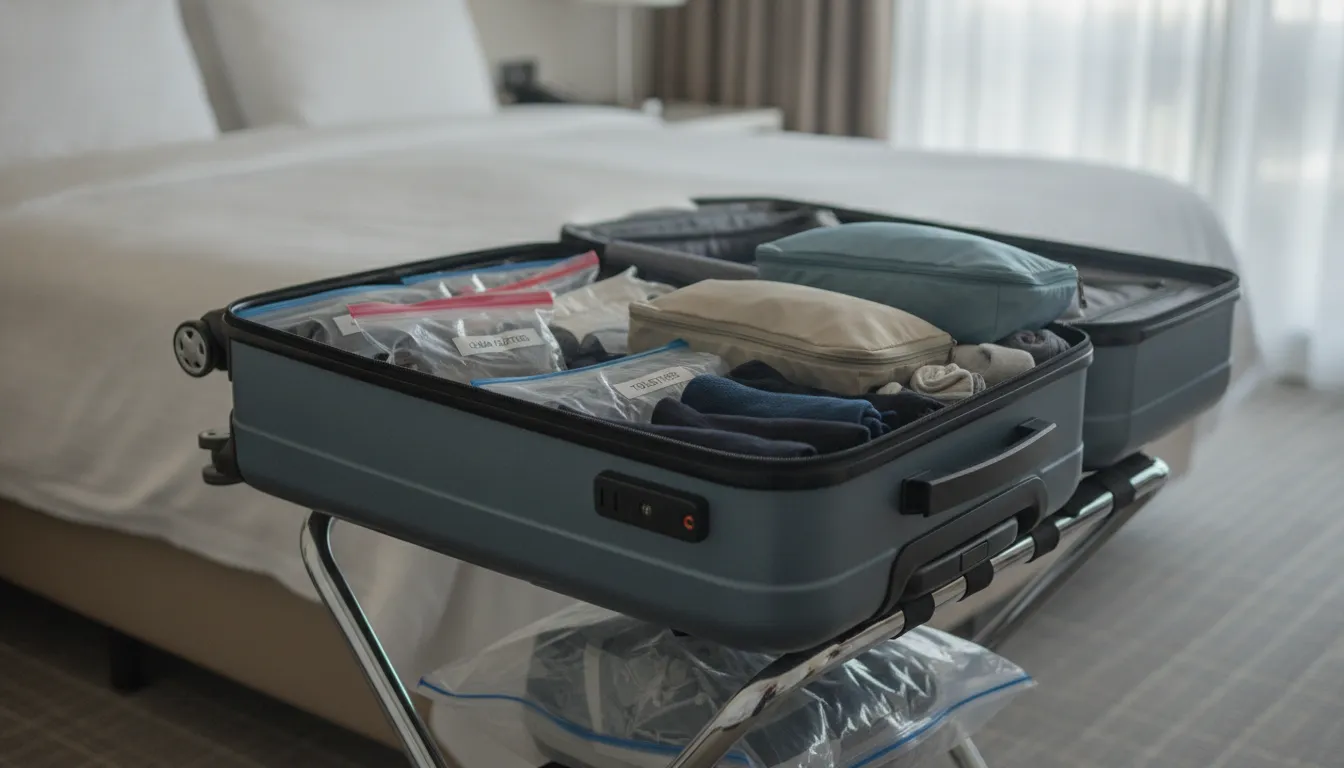
What is the best luggage for preventing bed bugs? Hard-shell luggage with a smooth exterior provides fewer hiding spots for bed bugs compared to soft-sided fabric bags. Inside your suitcase, use sealed packing cubes and resealable plastic bags for clothing. Bed bugs are drawn to the scent of worn clothes, so always store dirty laundry in sealed bags separate from clean items.
Luggage Choices That Reduce Risk
Hard-sided suitcases leave bed bugs fewer places to grip and hide. A smooth polycarbonate or aluminum shell has no fabric seams, no webbing, and no lining for bed bugs to crawl into. If you travel with a soft-sided bag, consider using a luggage encasement designed to seal the entire bag when not in use.
| Feature | Hard-Shell Luggage | Soft-Sided Luggage |
|---|---|---|
| Bed bug hiding spots | Minimal (smooth surface) | Many (seams, webbing, fabric folds) |
| Ease of visual inspection | Quick glance covers entire surface | Must check every pocket and lining seam |
| Cleaning and sanitation | Wipes clean with disinfectant | Fabric absorbs sprays, harder to sanitize |
| Surface grip for bed bugs | None (smooth non-porous shell) | Fabric seams give bugs purchase to climb |
| Overall risk rating | Low | Moderate to high |
Packing Cubes and Sealed Bags
Packing cubes add an extra barrier. While they are not insect-proof. They make it harder for bed bugs to reach your clothes and give you an organized way to transfer items directly into a dryer upon returning home. For maximum protection, seal shoes in individual plastic bags and store them at the top of your suitcase rather than the bottom where they touch hotel floors.
Bed Bug Safety Habits During Your Stay
How can you avoid bed bugs during a hotel stay? Never place your luggage on the bed, carpet, or upholstered furniture. Use the metal luggage rack in the bathroom or on the hard tiled floor. Hang clothing in the closet instead of leaving it in dresser drawers. Check the bed and surrounding area each morning for fresh signs of activity.
Daily Quick Checks
Spend 30 seconds each morning pulling back the sheets and examining the mattress piping. Bed bugs that were dormant during the day may have emerged while you slept, leaving fresh fecal spots or blood smears. Catching a problem mid-stay lets you change rooms before the bugs reach your luggage.
Laundry Management
Never leave worn clothes on the floor or bed. Store them in sealed plastic bags inside your suitcase. The scent of sweat and skin oils attracts bed bugs, so keeping worn items contained removes one of the primary chemical signals they use to locate a host.
Post-Trip: How to Avoid Bringing Bed Bugs Home
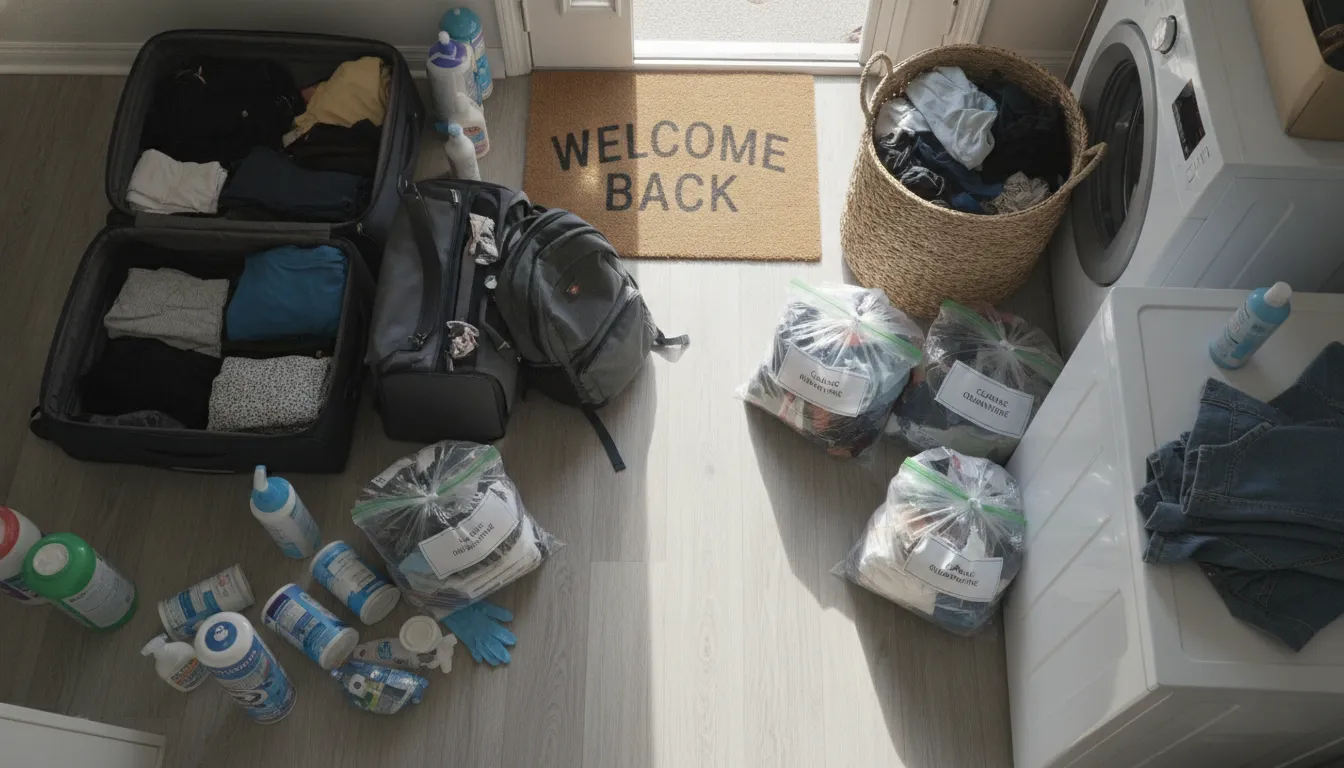
What should you do when you return from a trip to prevent bed bugs? Unpack your luggage in the garage, balcony, or bathroom rather than on your bedroom floor. Immediately place all clothes (worn and unworn) in a dryer on high heat for 30 minutes. Vacuum your suitcase inside and out. Store empty luggage away from bedrooms, ideally in sealed bins or large plastic bags.
The Dryer Is Your Best Tool
Heat kills bed bugs at all life stages. According to the Purdue University Extension, placing clothes in a dryer on high heat for at least 30 minutes kills adult bed bugs, nymphs, and eggs. This works whether the clothes are clean or dirty. Washing alone does not reliably kill bed bugs because the water temperature may not reach the lethal threshold of 118 degrees Fahrenheit throughout the cycle.
Luggage Quarantine
Store suitcases in a plastic garbage bag or sealed bin for at least two weeks after a trip. Bed bugs that survived the initial unpacking will die within that period without a blood meal. Never store luggage under your bed or inside a closet near your sleeping area. If you travel frequently, consider dedicating a garage or storage area for luggage only.
What to Do If You Find Bed Bugs in Your Home After Traveling
What is the first step if you suspect bed bugs after a trip? Isolate the affected area. Do not move items from the suspected room to other parts of your home, as this spreads the infestation. Launder and heat-dry all potentially exposed fabrics. Schedule a professional inspection promptly. Early intervention is far less expensive than treating a full-blown infestation.
Signs That Travel-Related Bed Bugs Have Settled In
Common early signs include waking up with small, itchy bites in a line or cluster. Finding tiny blood spots on your sheets, or noticing dark specks on your mattress. If you experience these symptoms within a week of returning from a trip, the source is likely travel-related. Check your mattress seams, box spring, and bed frame using the same inspection method you would use in a hotel. For a more detailed walkthrough, our bed bug identification guide covers every sign to look for.
When Professional Treatment Becomes Necessary
A small, caught-early infestation may respond to thorough cleaning, heat treatment, and mattress encasements. But if you find bed bugs in multiple rooms, see live bugs during the day (a sign of high population). Or have tried DIY methods without success, it is time to call a professional. Ace Bed Bug Exterminating has treated thousands of NYC homes using heat treatment and Aprehend biopesticide, both of which target bed bugs at every life stage. Our bed bug extermination cost guide explains what to expect for NYC pricing.
Call (347) 378-7070 now to schedule a professional inspection. Same-day appointments are available for NYC residents who need fast answers after a trip.
Frequently Asked Questions
How likely is it to get bed bugs from traveling?
The risk depends on your destination and habits. Hotels and Airbnbs in high-density travel hubs like New York City have higher turnover and more opportunities for bed bug introduction. Following a consistent inspection and packing protocol reduces your risk to near zero.
Do bed bugs stay on your body or in your luggage?
Bed bugs do not live on the human body like lice or ticks. They feed and then retreat to a hiding spot. They prefer dark crevices in mattresses, furniture, and luggage. This is why luggage inspection and quarantine are more effective than body checks for preventing spread.
Can bed bugs survive the washer and dryer?
Washing alone may not kill bed bugs if the water temperature does not reach 118 degrees Fahrenheit. However, a dryer on high heat for 30 minutes kills bed bugs at all life stages, including eggs. Heat is the most reliable at-home method for eliminating bed bugs from clothing.
How long after a trip would I see bed bug bites?
Bite reactions vary widely. Some people develop red, itchy welts within 24 hours. Others show no reaction for up to two weeks, and roughly 30 percent of people do not react to bed bug bites at all. The absence of bites does not mean the absence of bed bugs.
What is the most effective way to kill bed bugs?
Professional heat treatment and biopesticides like Aprehend are the most effective methods for eliminating bed bugs. Heat treatment raises the room temperature above 120 degrees Fahrenheit, killing all life stages in a single session. Aprehend uses a fungal biopesticide that bed bugs carry back to their hiding spots, spreading the treatment to areas that heat cannot reach.
Ready to travel without the fear of bed bugs? Call (347) 378-7070 to schedule a professional inspection or treatment today. Ace Bed Bug Exterminating serves all five boroughs of New York City with family-owned, science-based pest control since 1966.