
Bed bugs can move through an office, apartment building, hotel, or shared facility without being noticed at first. They may hide in upholstered seating, cubicle seams, electrical outlets, and other narrow spaces, so a quick visual check is not always enough.
The clearest signs of bed bugs in a commercial building include live insects, rust-colored spots on fabric, shed skins, eggs, or unexplained bite marks. The EPA recommends looking closely at furniture seams and nearby crevices, then arranging a professional inspection when evidence is found or reports continue.
Early identification helps limit disruption, protect staff and visitors, and reduce the chance of a larger infestation. In one office outbreak study, working in a cubicle where a canine inspection identified bed bugs was associated with reported symptoms (PubMed: 24749221). Knowing what to look for makes the response faster and more measured.
Schedule a commercial bed bug inspection.
Start by checking the locations and evidence most likely to reveal activity before it spreads to additional rooms or shared furnishings.
The Common Signs of Bed Bugs in a Commercial Building and Where to Check
Bed bugs rarely announce themselves in a commercial building. They can arrive on clothing, luggage, or moved furniture, then retreat into narrow hiding places while employees and visitors use the space. A careful inspection should look for more than bites. Check seating, cubicle panels, desk joints, upholstered furniture, baseboards, and nearby cracks for physical evidence of activity.
The five signs below can help facilities managers, landlords, and staff identify a problem early:
- Live bed bugs. Look for small, flat, reddish-brown insects around seams, screw holes, furniture joints, and other protected edges. You may also find them in cubicle walls, electrical outlets, or crevices in shared furniture. Do not assume a sighting is isolated simply because only one bug is visible. Commercial offices, hospitals, hotels, and other workplaces have all been affected by infestations, according to a study indexed by PubMed.
- Rust-colored fecal spots. Small reddish or brown marks on upholstery, mattress-like nap areas, fabric chairs, or employee lounge cushions can be digested blood left behind after feeding. Inspect seams and folds with a flashlight, especially where fabric meets a frame. These spots may look like ordinary stains, so their location and pattern matter.
- Shed skins, or exoskeletons. As bed bugs mature, they leave behind pale, translucent shells. Check beneath furniture edges, behind loose upholstery, along cubicle seams, and inside cracks. Finding several cast skins in one protected area suggests that bed bugs have been developing there, not merely passing through.
- Pale eggs or eggshells. Bed bug eggs are tiny, pale, and easy to overlook. Look for them in clusters or attached to rough, protected surfaces near other evidence. Because eggs and young nymphs can be much harder to see than adults, a clean-looking surface does not rule out an infestation.
- Bite marks. New, itchy marks on employees or visitors may be a warning, particularly when multiple people using the same room report similar irritation. However, bites alone cannot confirm bed bugs. The lesions in an office-related case study were consistent with arthropod bites, and skin reactions can resemble mosquito bites or other conditions. Use bite reports as a reason to inspect, not as proof of the source.
The U.S. Environmental Protection Agency identifies bite marks, rust-colored spots, and shed skins among the common signs of bed bugs. Its guidance also emphasizes checking the tiny spaces where these insects hide. In a shared office or other busy facility, inspect both the reported location and adjacent areas, including nearby chairs, cubicles, break-room seating, and belongings storage. Early identification gives the building team a better chance to contain the issue before it becomes a larger outbreak.
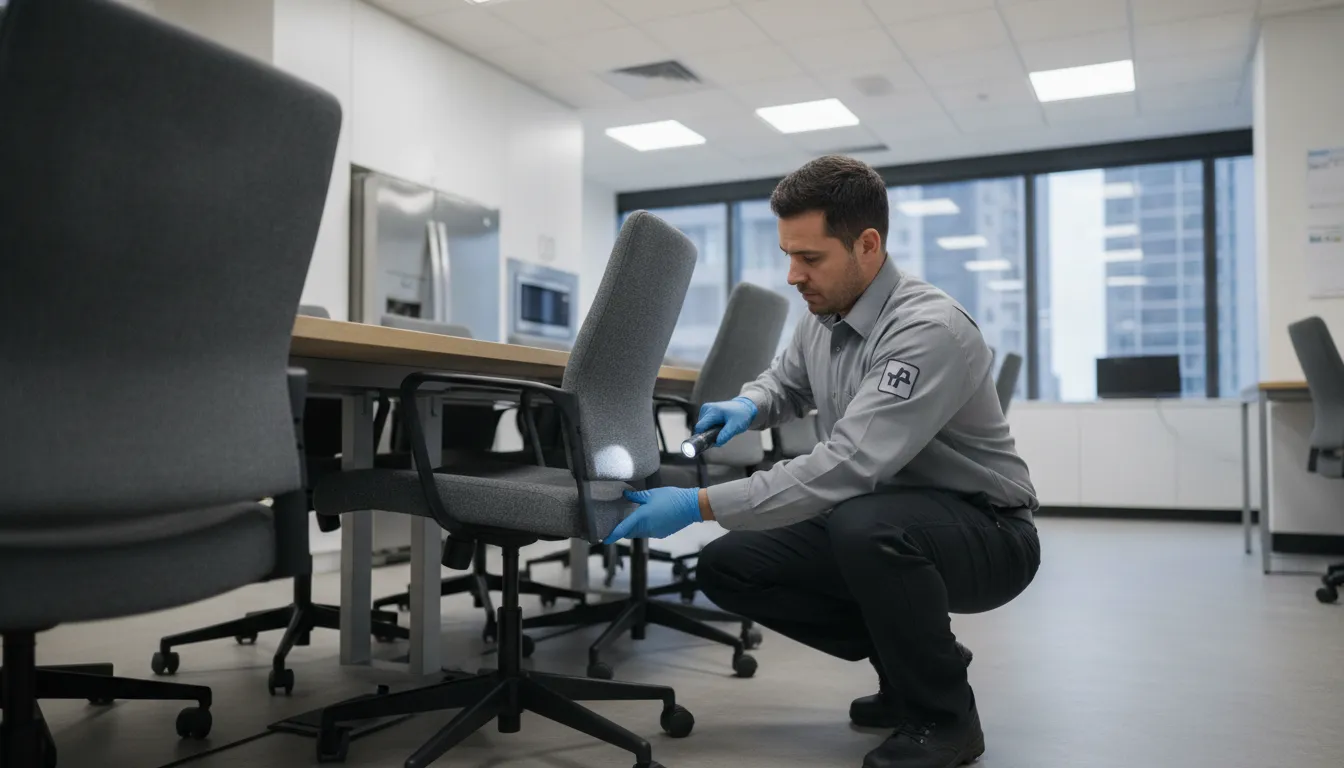
Why Early Detection Matters for Facilities Managers and Landlords
For a facilities manager, landlord, or business owner, a single suspected bed bug should be treated as an operational signal, not a minor housekeeping complaint. Bed bugs can move through clothing, luggage, and furniture, allowing an isolated finding to become a problem across offices, tenant spaces, waiting areas, or shared seating. Early identification gives you a chance to investigate the source, limit movement, and respond before employees, tenants, or visitors begin reporting activity in multiple locations.
Health concerns are only one part of the risk
Bed bugs do not transmit disease, but their bites can be intensely irritating and are often mistaken for mosquito bites or other skin conditions. The consequences extend beyond the bite itself. A study of an office outbreak described bed bugs as having clinical, psychological, and financial impacts. In that investigation, working in a cubicle where a canine inspection identified bed bugs was associated with symptoms at a risk ratio of 1.8. With a 95% confidence interval of 1.3 to 3.6. Read the PubMed study.
That finding does not mean every employee with an itchy mark has been exposed to bed bugs. It does show why facilities teams should take reports seriously, investigate systematically, and avoid dismissing concerns before an inspection. Prompt action also reduces anxiety. Clear communication, a documented plan, and a professional assessment are more useful than speculation or broad, disruptive treatment.
Reputation and daily operations can suffer
Commercial bed bug incidents can interrupt work, complicate tenant relationships. And create avoidable reputational damage when people learn about an issue through rumors or social media instead of an organized response. Moving desks, discarding furniture, closing rooms, or arranging repeated inspections can affect schedules and budgets. A targeted response based on evidence helps protect business continuity while identifying where containment is actually needed.
Early detection is especially important in buildings with high foot traffic, shared cubicles, frequent furniture movement, or multiple tenants. Managers should record the date, location, reported signs, inspection findings, photographs, and treatment recommendations. In New York City, property owners and managers should also understand the recurring bed bug management requirements associated with Local Laws 69 and 55. Maintaining inspection and treatment records supports compliance and gives the team a reliable history when future reports arise. For a practical inspection process, see our NYC bed bug inspection service.
The most dependable approach combines employee reporting, prompt inspection, and a documented integrated pest management plan. Finding activity early does not guarantee that disruption will be zero, but it can make the response narrower, faster, and easier to explain to everyone affected.
What Bed Bugs Look Like and Where They Hide in an Office
Adult bed bugs are small, oval, wingless insects, typically about 10 mm long. Their color is usually rusty brown, although recently fed bugs may appear darker or more reddish. They are flat before feeding and can become more swollen afterward. Because they can fit into very narrow spaces and are most active when people are away from direct observation. A quick visual scan of an office rarely rules them out. The Canadian Centre for Occupational Health and Safety describes bed bugs as small, oval, wingless insects, while the U.S. Environmental Protection Agency notes that they hide in cracks and crevices.
Look for more than a live insect. Rust-colored or dark fecal spots may appear on upholstery, seams, or nearby fabric. Shed skins, tiny pale eggs, or eggshells can collect in protected corners. A bite mark on an employee or visitor is not proof by itself, since bites can resemble mosquito bites or other skin irritation. However, unexplained bites combined with spotting or insect evidence deserve prompt inspection.
In an office or commercial building, the most likely hiding places are close to areas where people sit, rest belongings, or spend extended periods. Check the seams, undersides, joints, and screw holes of upholstered chairs and sofas. Waiting-area seating, conference-room chairs, and break-room furniture can provide multiple folds and crevices where bugs or eggs remain concealed. Pay particular attention to furniture that is shared, moved between rooms, or brought in from another location.
Bed bugs can also hide around cubicle construction, including gaps between panels, baseboards, wall trim, and cable-management openings. Electrical outlets and other wall penetrations should be assessed carefully by a qualified professional rather than opened casually. Inspect nearby desks, drawer joints, filing furniture, coat storage, and the floor-wall junction when evidence is found near a workstation. A single sighting may not show the full extent of activity because bed bugs can remain hidden in adjacent furniture or wall voids.
These inspection points are especially useful when documenting the signs of bed bugs in a commercial building. Photograph suspected evidence without disturbing it, note the room and furniture location, and restrict unnecessary movement of affected items. A licensed inspection can then trace likely harborage areas and determine whether the finding is isolated or part of a wider problem.
How Can You Tell if a Building Has Bed Bugs?
Determining whether a commercial building has bed bugs requires more than finding an itchy bite or spotting one suspicious mark. Bed bugs are small, hide in narrow crevices, and may be present before anyone sees a live insect. A practical first check can identify clues, but a professional inspection is often the safer way to assess offices, apartment common areas, waiting rooms, and other connected spaces.
| Inspection approach | What it can identify | Limitations |
|---|---|---|
| DIY visual inspection | Live bugs, rusty or reddish-brown fecal spots on fabric, shed skins, eggs, and activity around seams, cracks, furniture joints, and cubicle components. | Small or hidden infestations can be missed. Stains may have other causes, and bite marks cannot confirm an infestation. |
| Professional inspection | A trained inspector can examine likely harborages throughout connected rooms, furniture, wall gaps, and other areas where bed bugs may spread. | It requires specialized knowledge and a systematic inspection, especially when signs are scattered across a large facility. |
| Certified canine inspection | Certified dogs can help locate live bed bugs in large, complex buildings, including activity that is difficult to find visually. | Results should be interpreted by qualified professionals and followed by confirmation and a documented treatment plan when needed. |
Separate bed bug evidence from ordinary stains
Rust-colored or reddish-brown spots on upholstery, mattresses, fabric chairs, and other textiles may be fecal spotting, particularly when several marks appear near seams or protected edges. However, food, ink, rust, and crushed insects can leave similar discoloration. Look for a pattern of clues rather than treating one stain as proof. Shed skins, pale eggs or eggshells, dark spotting near a furniture joint, and a live insect together provide a stronger indication. The U.S. Environmental Protection Agency lists fecal spots, shed skins, and bite marks among common signs.
Do not use bites as the only test
Bite marks can support a concern, but they cannot establish where exposure occurred. Bed bug bites are often mistaken for mosquito bites or other skin conditions, and some people show little or no visible reaction. Research on an office outbreak documented workers associated with a cubicle where a canine identified bed bugs, underscoring why visual symptoms alone are not enough. The same research notes that bed bugs do not transmit disease, although bites can be irritating. See the commercial bed bug inspection service for a building-wide assessment when evidence is unclear or activity may involve multiple rooms.
When the suspected area is part of a larger facility, avoid moving furniture or belongings between rooms while the inspection is pending. A systematic professional or certified canine evaluation can locate hidden activity, define the affected area, and help management respond before the problem expands.
What to Do When You Find Bed Bugs in a Commercial Building
Finding a suspected bed bug in an office, hotel, healthcare facility, or shared commercial space calls for a calm, documented response. Do not rely on bites alone, since they can resemble mosquito bites or other skin irritation. Look for stronger evidence, such as live insects, rust-colored spots, shed skins, or activity around furniture seams and crevices. The U.S. Environmental Protection Agency recommends having a clear reporting and response protocol, because early action can help prevent a wider outbreak. EPA guidance on bed bugs provides additional information for property managers.
- Contain the immediate area. Close off the specific workstation, room, seating area, or storage zone where the suspected activity was found. Limit unnecessary movement through the area, and do not move desks, chairs, cushions, boxes, or personal belongings to another part of the building. Bed bugs can travel on clothing, luggage, and furniture, so moving items can spread the problem. If practical, place a temporary notice for facilities staff without identifying or blaming an employee.
- Photograph the evidence and secure the sample. Take clear, close photographs before disturbing the insect or suspected signs. Include a wider image showing where it was found, followed by detailed images of the insect, fecal spotting, shed skin, or eggs. If a physical sample is available, place it in a sealed plastic bag or rigid container and label it with the date. Time, exact location, and name of the person who collected it. Avoid crushing or discarding the sample, since accurate identification matters.
- Notify the designated decision-maker. Report the finding promptly to the facility manager, building owner, property manager, or the person responsible for environmental health and safety. Follow the building’s written incident procedure and record who was notified and when. Managers should coordinate with a pest control professional rather than treating isolated furniture with unapproved sprays. A clear chain of communication reduces confusion and helps protect normal operations.
- Quarantine upholstered furniture and movable items. Keep suspected chairs, sofas, cushions, mattresses, and other upholstered items in place when possible, and mark them as unavailable. Do not donate, sell, or relocate them. If an item must be moved for safety or repair, wrap and seal it before transport and document its original location. Facilities staff should also avoid storing employees’ bags or coats beside the affected area while the inspection is pending.
- Call a licensed bed bug professional. Arrange a commercial inspection that evaluates the affected area and adjacent spaces, including cubicles, furniture joints, wall voids, and other likely harborages. Effective inspection must account for all life stages, not just visible adults. In large or complex buildings, a qualified canine inspection may help locate live bed bugs that are difficult to find visually. A professional can then recommend an integrated plan using inspection, physical removal, and carefully selected treatment methods.
- Document the incident for compliance and liability. Preserve photographs, sample labels, inspection findings, treatment records, employee or tenant reports, affected-room maps, and follow-up dates in one secure file. In New York City, Local Laws 69 and 55 create recurring requirements for property owners related to bed bug management. Requirements can vary by property and situation, so confirm the current obligations with the appropriate building or housing authority and your licensed pest professional. Documentation also supports a consistent response if questions arise later.
- Communicate calmly and factually with staff. Tell employees what area is being evaluated, what they should avoid moving, how to report additional signs, and when the next update will come. Do not identify a suspected source or imply that a person caused the issue. Bed bugs are disruptive, but a prompt, professional response is more useful than panic. Employee training can help staff recognize and report signs early, limiting disruption while the building follows its documented plan.
How to Prevent Bed Bugs From Spreading in a Commercial Facility
Prevention works best when it is part of the facility’s routine, not an emergency response after several people report bites. Bed bugs can enter on clothing, luggage, and furniture, so a commercial building needs clear procedures for recognizing, reporting, and containing possible activity. The EPA recommends employee education and prompt reporting because early identification helps prevent a small problem from becoming a large-scale outbreak.
Train employees to recognize and report signs
Staff do not need to diagnose an infestation, but they should know what to report. Training can cover live insects, rust-colored spots on fabric, shed skins, and insects or evidence around chairs, couches, cubicle seams, and other upholstered areas. Bite marks alone are not proof of bed bugs, since they can resemble mosquito bites or other skin conditions. Employees should be told not to squash, move, or discard a suspected insect before it can be photographed or collected safely. A simple reporting process should identify who receives the report, how quickly a manager responds, and how the affected area is documented.
Make the process non-punitive and discreet. Bed bugs are a building-management issue, not a reason to blame an employee, visitor, or tenant. A calm response increases the chance that people will report a concern early rather than conceal it.
Inspect items that move into the building
Include visual checks when used furniture, donated seating, employee lockers, bags, or laundry enter the facility. Pay particular attention to seams, joints, folds, undersides, and cracks. Shared laundry should move in sealed bags or containers, and clean items should remain protected until they are used. Facilities that provide uniforms, linens, or guest supplies should establish a documented inspection and storage routine.
Travel-bag policies can reduce opportunities for introduction. Encourage employees and visitors to keep luggage off upholstered furniture when practical. And provide a designated area for bags in high-risk settings such as hospitality, healthcare, and residential services. Policies should be practical and communicated as routine prevention, not as a response to a particular person.
Use Integrated Pest Management for ongoing protection
Integrated Pest Management, or IPM, combines regular inspection, physical removal or isolation, and judicious pesticide use rather than relying on repeated blanket applications. The EPA describes IPM as a coordinated approach that supports safer, more targeted control. In a commercial facility, the plan should include inspection schedules, reporting records, furniture-management procedures, and coordination with a qualified pest professional when evidence is found.
When appropriate for the site, Ace Bed Bug Exterminating also uses Aprehend biopesticide, which provides 90-day residual protection according to the company’s customer guidance. Treatment selection should follow a professional inspection and account for the building’s occupants, operations, and affected materials. Keeping inspection and treatment records supports continuity between facility managers and helps maintain a long-term prevention strategy.
Sources: U.S. Environmental Protection Agency bed bug guidance and Ace Bed Bug Exterminating service information.
How Likely Is It to Get Bed Bugs From Work?
The risk is real, but getting bed bugs from work is not inevitable. Bed bugs do not live on people like lice, and an office is not automatically infested because one employee notices bites. They are more likely to move when an infested coat, bag, upholstered chair, or other personal item is carried into a shared environment. Clothing, luggage, and furniture can transport them between locations, according to the U.S. Environmental Protection Agency.
Shared offices can still create opportunities for exposure. In a published investigation of an office outbreak, symptoms were associated with working in a cubicle where a canine inspection identified bed bugs. The study reported a risk ratio of 1.8, with a 95% confidence interval of 1.3 to 3.6. That finding does not mean every cubicle is dangerous, or that a person with itchy skin definitely has bed bugs. It does show why a suspected case should be reported and investigated rather than dismissed. Read the study on PubMed.
What does exposure mean for employees?
Bed bugs are not known to transmit disease, but their bites can be intensely irritating and may be mistaken for mosquito bites or other skin conditions. Some people develop no visible reaction, while others experience itching and concern that affects comfort, concentration, or attendance. Skin symptoms alone cannot confirm an infestation. Look for physical evidence, including rust-colored spots on fabric, shed skins, or a live insect in furniture seams and other sheltered spaces.
How can a workplace reduce the risk?
The most effective response is organized, early, and calm. Train employees and supervisors to recognize the early signs of bed bugs and provide a simple confidential reporting process. Facilities staff should know which areas to inspect, including cubicles, lounge seating, lockers, waiting areas, and other upholstered furniture. A clear protocol should explain how to isolate a suspect item, avoid moving it through the building, document the observation, and contact a qualified pest professional.
Routine inspection and prompt investigation limit the chance that a single introduction becomes a building-wide problem. Integrated Pest Management can combine inspection, physical removal, monitoring, and carefully selected treatment instead of relying on guesswork or panic. If employees report related sightings or unexplained signs in more than one area, arrange a professional commercial bed bug inspection so the building team can act on evidence.
Schedule a professional bed bug inspection of your building today.
Frequently Asked Questions
How can you tell if a commercial building has bed bugs?
Look for live insects, pale eggs, shed skins, or rust-colored fecal spots on upholstery, mattresses, fabric chairs, and other sheltered surfaces. Bite marks alone do not confirm an infestation because they can resemble mosquito bites or other skin conditions. Check furniture seams, cubicle walls, crevices, and nearby electrical outlets, then have a qualified professional inspect the area. The EPA lists fecal spots, shed skins, and bites among common signs of bed bugs: EPA bed bug guidance.
How likely is it to get bed bugs from work?
The risk is real, especially where employees share cubicles, seating, lockers, or break-room furniture, but it is manageable. Bed bugs can travel on clothing, luggage, and furniture, so a reported sighting should be taken seriously without assuming the entire building is infested. Prompt reporting, targeted inspection, and practical staff education can limit spread. Bed bugs do not transmit disease, although bites may be irritating: office outbreak research.
What should employees do if they find a bed bug at work?
Do not crush it into upholstery or move furniture to another area. If possible, preserve the insect in a sealed container or photograph it clearly, note the exact location, and report it to the designated manager immediately. Avoid carrying personal bags or coats through multiple work areas until the building’s response team provides instructions.
Can a professional inspection find bed bugs that employees miss?
Yes. A professional inspection checks all life stages and likely harborage points rather than relying on bites or a single visible insect. In large or complex buildings, certified bed bug detection dogs may help locate live activity that is difficult to find during a visual search. A documented inspection also gives facility managers a clearer basis for targeted treatment and follow-up.