
A bed bug sighting in a clean NYC apartment is not a housekeeping failure. The urgent task is finding the entry route and stopping the spread quickly.
Contact Ace Bed Bug Exterminating for help identifying the source and planning the next step for your NYC apartment.
What causes bed bugs is introduction from an infested place, not poor hygiene. They hide in luggage, clothing, bedding, backpacks, or used furniture and ride into an apartment unnoticed. In multi-unit NYC buildings, they can also move between homes through wall voids, electrical outlets, and pipes.
If you are asking where the problem started, the answer may involve your belongings, a neighboring unit, or both. The next section, “What causes bed bugs in NYC apartments?”, breaks down the common routes so you can judge the risk and respond fast. The path begins with:
What causes bed bugs in NYC apartments?
The main cause of bed bugs is an introduction from another infested place. They do not appear because an apartment is dirty. The CDC explains that bed bugs spread by hiding in belongings, including luggage, folded clothes, bedding, and furniture. In NYC, one small hitchhiker can enter with an everyday item.
Common ways bed bugs enter an apartment
Bed bugs have flat bodies and hide in small spaces. A suitcase, overnight bag, backpack, coat, or piece of used furniture can carry them indoors. Upholstered items need special care because seams and cracks provide hiding spots. An item may look clean while still holding a bed bug.
Travel is one route, but an overnight trip is not required. A guest can bring an unnoticed bug inside with a bag or clothing. Used mattresses, couches, and bed frames also deserve caution. This is why a tidy apartment can still develop an infestation.
- Inspect luggage after travel and before storing it near a bed.
- Check used furniture closely before bringing it indoors.
- Keep bags and clothing away from beds when possible.
Why cleanliness is not the cause
Bed bugs feed on blood, not crumbs or household dirt. The EPA notes that bed bugs can be hard to find because they are small and tend to stay hidden. Clutter may create more hiding spots, but it does not create bed bugs.
This point matters for NYC renters. Cleaning can support an inspection, yet it cannot explain where the first bug came from. The useful question is not whether a home is spotless. Ask which item, visit, or nearby unit may have brought in the pest.
Introduction versus spread in an apartment building
The first bed bug usually arrives from an infested location. Later spread is a separate problem. In a multi-unit building, bed bugs may move through wall voids, electrical outlets, or along pipes. That can make the source harder to trace after activity begins.
Do not assume every sighting started inside your unit. A careful Bed Bug Inspection can help check hiding areas and look for signs of spread. This step is useful before choosing treatment. Neighboring units may also need attention.
How do bed bugs get into an apartment?
The short answer to what causes bed bugs is an introduction from another infested place. Cleanliness is not the cause. The CDC explains that bed bugs spread in luggage, folded clothes, bedding, furniture, and other hiding places. In an NYC apartment, a single unnoticed hitchhiker can arrive with an everyday item.
Five common ways bed bugs arrive
- Travel luggage: A suitcase, overnight bag, or backpack can carry bed bugs home from a hotel or another sleeping space. Check seams before bringing luggage into the bedroom. Unpack away from the bed, and keep bags off upholstered furniture.
- Guests and visitors: A visitor may unknowingly bring a bed bug in a coat, purse, or backpack. This does not mean the person has a dirty home. If you have concerns, place bags away from beds and sofas.
- Used furniture: Secondhand couches, mattresses, bed frames, and upholstered chairs need close inspection before entering the building. Bed bugs can hide in seams and cracks. Avoid curbside furniture, even when the piece looks clean.
- Shared laundry and bags: Laundry carts, reusable bags, gym bags, and folded clothes can move between apartments and shared spaces. Carry clean laundry in a sealed bag. Do not place baskets on hallway floors or shared seating.
- Moves and deliveries: Moving blankets, boxes, storage items, and used delivery materials may pass through several buildings. Inspect items before they enter your apartment. Keep packed boxes away from sleeping areas until you have checked them.
Why apartment buildings need a wider check
The first route into a unit is often a bag or piece of furniture. In a multi-unit building, the problem may not stay in that apartment. The EPA notes that bed bugs can move through wall voids, outlets, and pipes. That makes nearby units part of the inspection plan.
Renters should tell the landlord or property manager as soon as they notice signs. Owners and managers should avoid treating one unit as an isolated case. Ask whether adjacent apartments need inspection, especially when residents share walls, hallways, or laundry rooms.
What to do after a possible introduction
Do not move bags, bedding, or furniture from room to room. That can spread hidden bugs before anyone checks the source. Save photos of suspicious spots and note where each item traveled. Queens residents who find signs can request professional bed bug extermination and ask for a focused inspection plan.
A prompt inspection helps separate a suspected exposure from an active infestation. It also gives renters, owners, and managers a clear next step before moving belongings or choosing treatment.
Can bed bugs spread from another apartment?
Yes. In an apartment building, bed bugs may reach a unit from a nearby infestation. They can also arrive on a resident’s belongings after contact with an infested place. This is one reason the answer to what causes bed bugs is not always simple.
Routes between nearby units
Bed bugs can move through connected parts of a multi-unit building. The EPA notes that bed bugs can travel through wall voids, electrical outlets, and along pipes. These routes can link apartments that look separate from the hallway.
Shared walls are not the only concern. A neighboring infestation may also affect how the building responds. Residents often carry bags, coats, and laundry through hallways and common areas. If an item contains bed bugs, this ordinary movement can carry them farther.
Belongings moving through the building
A bed bug does not need to crawl directly from one front door to another. The CDC explains that bed bugs spread by hiding in luggage, folded clothes, bedding, furniture, and similar items. Bags, coats, used furniture, and laundry can move through an apartment building during an ordinary day.
This does not mean every shared hallway or laundry trip spreads bed bugs. It means residents should handle suspected items with care. Avoid moving loose belongings from an affected room into another apartment. Do not discard furniture in a common area without a plan for wrapping and removal.
A coordinated building response
When one apartment has signs of bed bugs, checking only that unit may miss nearby activity. Ask the property manager how adjacent units will be assessed. That includes apartments beside the affected unit, plus units above and below it when the building layout makes them relevant.
Residents should report signs early and avoid moving items between units during the review. A trained inspector can check likely hiding places and help separate a neighboring-unit issue from a new introduction. For local help, review options for professional bed bug extermination before moving belongings or choosing a treatment plan.
Are bed bugs caused by poor hygiene?
No. Poor hygiene does not cause bed bugs. The key to understanding what causes bed bugs is knowing how they enter a home. The CDC explains that everyone is at risk after visiting an infested area.
A clean apartment can still have bed bugs. They move into homes from other infested places. They can hide in the seams and folds of luggage, clothing, bedding, and furniture.
Facts versus misconceptions
Bed bugs are not drawn to dirt. They seek the conditions that help them reach a host. The EPA notes that clutter provides more hiding spots, but clutter does not create an infestation.
| Misconception | Fact | Practical response |
|---|---|---|
| Bed bugs start in dirty homes. | They are brought in from infested places. | Check likely entry points and hiding spots. |
| A spotless home cannot get bed bugs. | Any home can receive a hitchhiking bed bug. | Inspect luggage, clothing, and used furniture. |
| Clutter causes bed bugs. | Clutter gives them more places to hide. | Reduce clutter before inspection and control. |
| Cleaning alone removes an infestation. | Control may require several methods. | Use inspection findings to guide the next step. |
Why clutter still matters
Clutter is a control issue, not the root cause. Extra bags, boxes, and loose items can create more seams, folds, and gaps. Those hiding spots can make a visual check slower. They can also make it harder to track where activity is centered.
A focused cleanup helps by making key areas easier to reach. Start near beds, upholstered furniture, and the room edges. Avoid moving unchecked items into another room. That can spread the problem beyond the original area.
Practical next steps
Look for signs before blaming housekeeping. Check mattress seams, bed frames, nearby furniture, and recently used travel items. If the source or hiding spots remain unclear, schedule a Bed Bug Inspection. A careful inspection helps define the scope before treatment starts.
Keep the focus on spread and control. Shame delays action and does not solve the problem. Clear access, careful checks, and a plan based on evidence are more useful than aggressive cleaning alone.
How did I get bed bugs if I have not traveled?
Travel is only one way bed bugs reach a home. They do not appear because a home is dirty. The CDC explains that bed bugs are brought in from infested areas, often while hidden in belongings. If you have not taken a trip, the source may be closer to home.
Everyday hitchhiking routes
A guest can bring a bed bug inside on a coat, bag, or other item without knowing it. The same can happen after time at work, school, a waiting room, or on a commute. Bed bugs can be picked up in public spaces, then carried indoors on belongings.
This does not mean every shared seat poses a threat. It means a bed bug needs a ride, not a vacation. A used couch, bed frame, or mattress can also bring one indoors. Check secondhand upholstered items with care before they enter your home.
Spread between apartments
In a multi-unit NYC building, the source may be another apartment. Bed bugs can move through wall voids, electrical outlets, and along pipes, according to the EPA guidance on bed bugs. Shared walls can make the path hard to spot.
Tell your landlord or property manager when you find signs of an infestation. Neighboring units may need inspection as well. Moving items into a hallway or another room can spread the issue. Keep the area stable until an inspection shows where activity is present.
An earlier introduction
The first bed bug may have arrived before you noticed any signs. Bed bugs are small and tend to stay hidden, so early activity can be easy to miss. A past visitor, delivery, secondhand item, or brief public-space exposure may explain the timing.
Focus on confirming the infestation instead of trying to prove one exact route. Look for live bugs, shed skins, or spotting around mattress seams and nearby furniture. A professional Bed Bug Inspection can help locate activity and guide the next step.
What are the early signs of bed bugs?
Early bed bug signs are often small and easy to miss. Do not wait for a large infestation before checking the apartment. A quick inspection can help you find clues while the bugs are still hard to spot.
A practical early-sign checklist
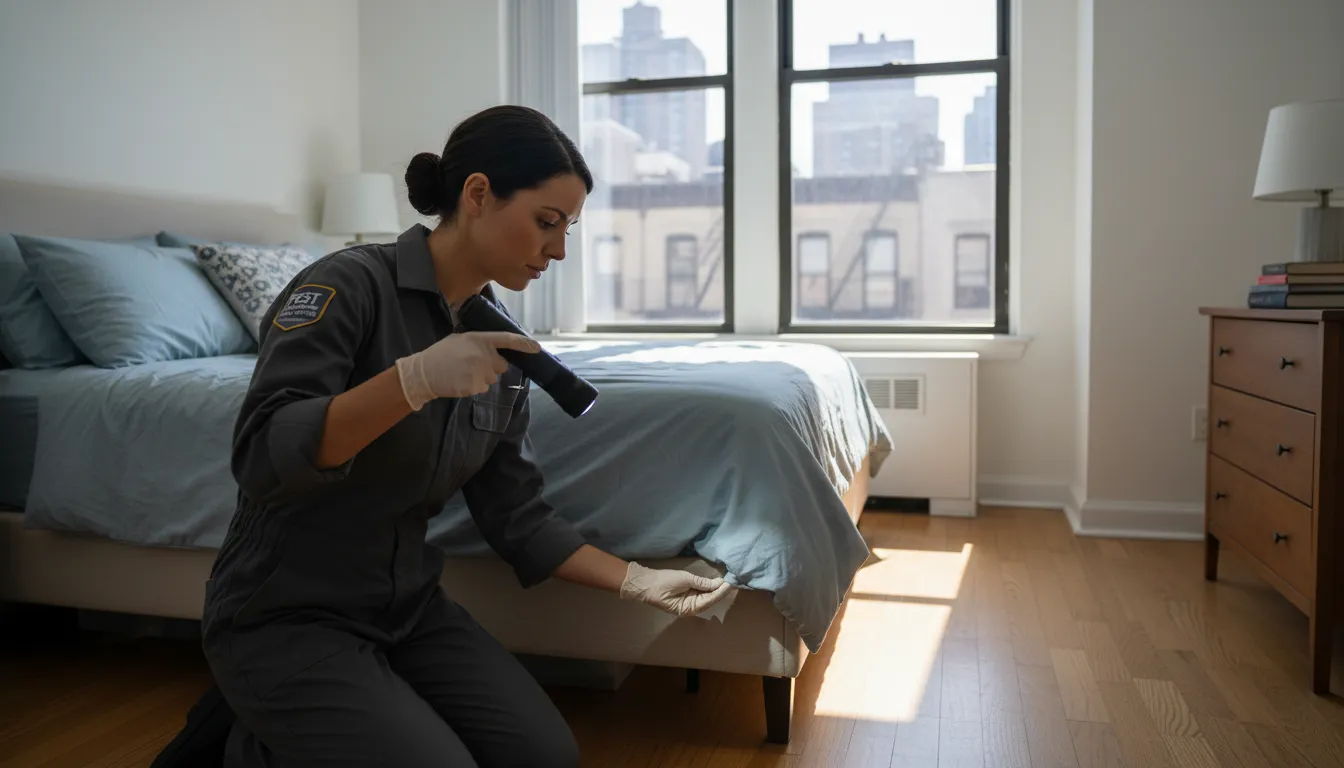
Start with the places where people sleep or rest. Bed bugs stay hidden in small spaces. The CDC describes them as reddish-brown, wingless bugs that can range from 1 mm to 7 mm. Use a flashlight and look closely rather than relying on a quick glance.
- Live bugs: Check for flat, oval bugs in mattress seams, bed frames, and nearby furniture.
- Shed skins: Look for pale, empty skins in seams, cracks, and corners.
- Dark spotting or stains: Check sheets, mattresses, and upholstered furniture for small marks that need a closer look.
- Eggs: Watch for tiny, pale eggs or egg-like material tucked into protected gaps.
- Bites: Treat new itchy marks as a reason to inspect, not as proof on their own.
Bites alone do not confirm bed bugs. The CDC notes that bites can look like mosquito or flea bites. Marks may also appear days after the bite occurs. Look for physical clues before deciding what caused the skin reaction.
Where to inspect in an apartment
Begin at the mattress seams, box spring, bed frame, and headboard. Then check nightstands, baseboards, couch seams, chair seams, and cracks near resting areas. The EPA notes that bed bugs often hide in the seams and cracks of upholstered furniture.
In an apartment, do not limit the search to the bed. Inspect wall edges and gaps near pipes or outlets if signs appear in more than one room. Keep the search focused and avoid moving items into a clean room. Moving belongings can make the inspection harder.
When to request an inspection
Request professional help if you find a live bug, several physical clues, or repeated bite-like marks with no clear cause. A trained inspection is also prudent when clues appear in more than one area. Ace offers a bed bug inspection for apartments that need a closer review.
If bed bugs are confirmed, the next step is a treatment plan based on the apartment and the extent of the activity. Avoid treating a single clue as a full diagnosis. Professional bed bug removal starts with a careful inspection and a clear record of what was found.
What should you do after finding bed bugs?
Once you find a likely bed bug, act with care rather than panic. Bed bugs often spread by hiding in luggage, folded clothes, bedding, and furniture. A clear response plan can limit movement while you arrange a proper inspection.
Your first response
- Save the evidence. If possible, place the bug in a sealed clear container or sealed bag. Take clear photos of the bug and the area where you found it. Note the room, date, and nearby furniture.
- Contain the affected area. Do not carry loose bedding, clothes, or furniture through your apartment or building hallway. Place washable items in sealed bags before moving them. Avoid sleeping in another room, since that can spread the problem to a new area.
- Tell the right people. If you rent, notify your landlord or building manager soon. Share your photos and ask about the next steps for your apartment and nearby units. Building communication matters because one apartment may not be the only area that needs attention.
- Arrange an inspection. Bed bugs can be hard to find because they are small and stay hidden. A careful Bed Bug Inspection can help confirm the issue and guide the right response.
- Avoid DIY guesswork. Do not start spraying random products or throw furniture into a shared hallway. The EPA notes that there is no chemical-only quick fix. Effective control uses both non-chemical and chemical methods.
Travel and secondhand furniture habits

Prevention also matters after treatment. Before unpacking at a hotel, check mattress seams and the headboard. Keep luggage off the floor and away from the bed. When you return home, inspect your bag before placing it near sleeping areas.
Use caution with secondhand furniture, especially mattresses, couches, and bed frames. Inspect seams, cracks, and upholstered folds before bringing an item inside. If you cannot inspect it with confidence, leave it out. A free item can become a costly problem.
Help from a bed bug specialist
DIY steps can help with containment, but they should not replace a treatment plan. Ace focuses only on bed bugs, with 12+ years of specialist experience and 9,567+ customers served across the NYC metro area. The team uses options such as Aprehend biopesticide as part of a plan based on the property and inspection findings. Learn more about professional bed bug removal, review the NYC service area, or contact Ace’s bed bug specialists to discuss the next step.
Frequently Asked Questions
What is the main cause of bed bugs?
Bed bugs usually reach a home by hitchhiking from an infested place. The CDC explains that they hide in seams and folds of luggage, clothing, bedding, and furniture. In NYC, an infestation may begin after travel, a visitor, a delivery, or a move. Poor housekeeping does not create bed bugs.
How do bed bugs get into my apartment?
Bed bugs can enter an apartment on bags, clothing, furniture, or other belongings. In a multi-unit NYC building, they can also move between nearby apartments through wall voids, electrical outlets, or pipes. Report suspected activity promptly and arrange an inspection, since checking only one room may miss hidden bugs or a nearby source.
Are bed bugs attracted to dirty homes?
No. Bed bugs are not caused by dirt, and a clean apartment can still develop an infestation. The CDC notes that bed bugs can be found in five-star hotels and resorts. Reducing clutter is still useful because it removes hiding places and makes inspection and treatment easier.
Can used furniture cause a bed bug infestation?
Yes. Used mattresses, couches, bed frames, and upholstered furniture can carry hidden bed bugs into an apartment. Bed bugs fit into small seams, folds, and cracks, so a quick surface check is not enough. Inspect secondhand items carefully before bringing them indoors. Avoid taking discarded furniture from a sidewalk or building trash area.
How can I avoid bringing bed bugs home from travel?
Inspect mattress seams and headboards before unpacking, and keep luggage away from the bed and floor. When returning home, unpack carefully and dry clothing on high heat. The EPA recommends combining prevention with careful inspection because bed bugs are skilled at hiding in small spaces.
Ready to Address Bed Bugs in Your NYC Apartment?
Waiting can give bed bugs more time to move through an apartment and reach nearby units in a shared building. Starting now can help you document the problem sooner, limit added disruption, and choose a clear response for your household or property. Whether you rent one apartment or manage several units, early action and calling an experienced NYC bed bug exterminator gives you a better timeline for inspection and practical next steps.
Ready to discuss the problem? Contact Ace Bed Bug Exterminating to request help with an NYC apartment bed bug problem. Share what you have noticed and ask about the next step for your apartment, household, or building. Provide your location, explain the signs you found, and ask what information will help prepare for the conversation.