
Choosing a bed bug exterminator Suffolk County NY residents can rely on starts with more than a quick quote. A careful inspection, a clear treatment plan, realistic preparation instructions, and follow-up expectations all matter. This guide explains what property owners and residents can ask before scheduling, what a service visit may involve, and how to request a plan based on the actual property—not assumptions about a neighborhood or building type.
Request a site-specific bed bug assessment
What should Suffolk County residents expect from an inspection?
Bed bugs are good at staying out of sight. A bite alone does not confirm an infestation, and a quick look at the center of a mattress may miss evidence in nearby seams, furniture joints, or other resting places. An inspection should connect what the inspector sees with the next practical step, whether that is more monitoring, treatment, or a recommendation to investigate another cause.
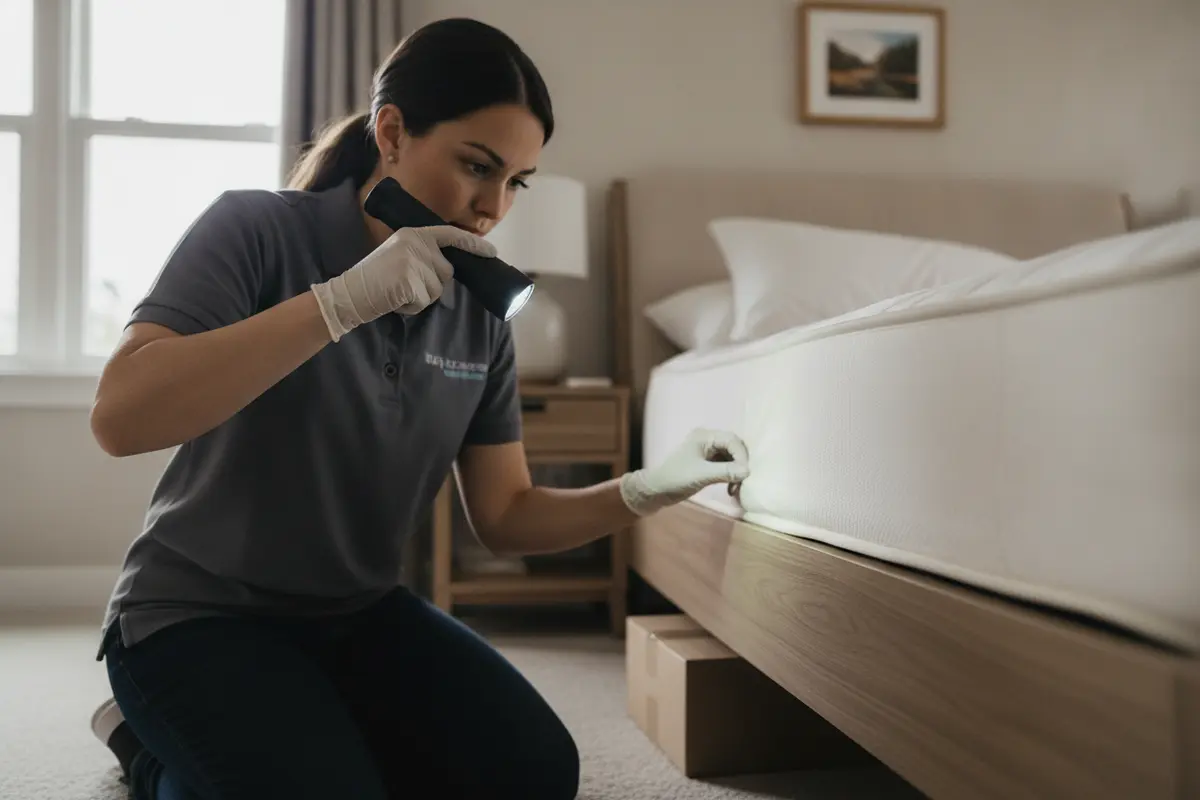
Ask what areas will be checked and what findings would count as evidence. A thorough assessment may include the mattress and box spring, bed frame, headboard, nearby furniture, baseboards, and other likely harborages in the room. The inspector should explain any access limits, such as heavy furniture that cannot safely be moved. If you want to prepare in advance, see this overview of a bed bug inspection and the guide to common bed bug hiding spots.
Share the timeline and details that may help focus the visit: when you first noticed possible signs, which rooms are affected, whether anyone saw an insect, and whether there have been recent trips or used furnishings. Photos can help document what you found, but they do not replace an on-site assessment. Avoid moving suspected items from room to room before the inspection; movement can make it harder to understand where the issue began or how far it may have spread.
For a multi-unit property, tell the provider whether adjacent apartments, shared laundry areas, or common spaces may be relevant. That is a reason to discuss coordination and inspection scope, not a basis to assume every unit is affected. In a detached home, the focus may be a bedroom or another room where evidence was reported. The inspection plan should fit the property and evidence.
For a useful visit, make a simple room-by-room note before the inspector arrives. Mark where signs were seen, when they appeared, and whether the concern is based on a captured insect, a stain, shed material, or skin marks alone. Mention rooms where no signs have appeared as well. This helps keep the conversation grounded in observations and can prevent attention from being fixed only on the bed. Ask whether the inspector will share findings by room, explain uncertain evidence, and identify areas that could not be accessed. If the visit is limited to one room, confirm whether that limitation changes the recommendation or follow-up plan.
How can you compare treatment methods and plans?
There is no single treatment approach that can be chosen responsibly without considering inspection findings, the structure, and the items involved. Ask the provider to explain which method or combination is being recommended and why it suits the conditions found. A useful conversation is specific to your home or building, not just a description of a product or a promise of a fast result.
| Plan element | What to ask | What a clear answer should cover |
|---|---|---|
| Inspection | What rooms and likely hiding places will be checked? | Scope, evidence observed, access limits, and any uncertainty |
| Treatment method | Why is this method appropriate for the findings? | Where it will be used, key limitations, and any alternative considered |
| Preparation | What must residents do before the visit? | Room-by-room actions, handling of belongings, and what not to move |
| Re-entry and safety | When may people and pets return to treated areas? | Product-specific directions and any precautions for the specific treatment |
| Follow-up | How will progress be evaluated? | Monitoring or return-visit plan, timing, and how to report new evidence |
Possible approaches may include targeted applications, heat, steam, or integrated pest management steps. Each has conditions and limits. Ask what preparation and access are needed, whether belongings or sensitive materials require special handling, and how the provider will address locations that cannot be treated in the same way. Ace describes using a multi-method approach, with Aprehend as a primary option and other methods such as heat, steam, or IPM when appropriate. Read the company’s explanation of Aprehend treatment, its guide to heat treatment, and this comparison of heat and chemical approaches to prepare questions—not to self-select treatment without an inspection.
When comparing methods, separate the method name from the whole service plan. Ask which rooms and items the plan addresses, what has to be moved or left in place, and what the method may not reach. A treatment can require access to specific areas or different handling for belongings; the provider should explain those practical details before the appointment. Ask how the technician will know whether the work is complete and how any inaccessible area will be considered. If a recommendation changes after inspection, request an explanation of what new finding led to the change. This gives you a clearer basis for comparing proposals than a broad promise or a label such as “chemical” or “heat” alone.
Before any pesticide application, ask which product is being used, where it will be applied, and what precautions apply to people and pets. Follow the technician’s written instructions and the product label; do not add household sprays or foggers unless the provider specifically says they are compatible with the plan. The U.S. Environmental Protection Agency provides general pesticide information at its official website. A product or method should never be described as risk-free simply because it is used by a professional.
What preparation should you ask about before treatment?
Preparation can affect access to the areas that need attention, but more preparation is not always better. Follow the provider’s specific written instructions rather than relying on a generic online checklist. The right steps depend on the inspection findings and treatment plan.
- Get the instructions in writing. Confirm which rooms are included, what to do with bedding and clothing, and when preparation should be completed. Ask whom to contact if an instruction is unclear.
- Keep items organized. If laundering or bagging is requested, use the method and storage instructions supplied by the provider. Do not carry uncontained items through the home or place them on untreated furniture.
- Make treatment areas accessible. Ask whether furniture needs to be moved and how much clearance is needed. Do not lift heavy items or disconnect appliances if doing so may cause injury or damage.
- Protect people and pets according to the plan. Ask about departure and re-entry timing, aquariums, pet bedding, and any special circumstances such as a person with respiratory sensitivity. Follow the product label and the technician’s directions.
- Leave uncertain belongings alone until you ask. Discarding furniture or moving possessions without a plan can spread items unnecessarily and may not address the source. Ask how to handle anything that cannot be washed or treated normally.
Preparation instructions should be concrete enough to follow. If told to bag items, ask which items, what type of bag or container is suitable, where to store it, and when items may be taken out. If laundering is part of the plan, clarify which textiles need attention and how clean items should be kept separate from untreated belongings. Avoid adding steps from a checklist meant for a different treatment; unnecessary movement can make rooms harder to assess and may create extra work without solving the underlying issue.
Before the appointment, walk through the affected rooms with the written directions and note any step you cannot complete. For example, a heavy bed, crowded closet, mobility limitation, or item that cannot be laundered may change what access is practical. Tell the provider ahead of time rather than improvising or risking an injury. Ask whether the technician can explain an alternative, whether the item should remain undisturbed, and whether the plan needs to be adjusted. When multiple residents share a home, make sure everyone knows which items are being handled and where prepared belongings should stay.
Keep a short record of what you did and any items that could not be prepared as requested. This helps the technician understand access constraints and adjust the work plan. If you are unsure whether a mark, insect, or shed skin is relevant, document it and share the photo or sample-handling question with the provider rather than treating the entire room based on a guess. The site’s bed bug checking guide and article on early signs offer additional background for organizing your observations.
How do service-area expectations work in Suffolk County?
Suffolk County is a broad service area, and travel distance, access, property layout, and urgency can affect scheduling. Do not assume a provider has a local office in your town or that every address receives the same arrival window. Confirm directly whether your exact address is within the current service area, whether the provider can inspect the property, and what appointment options are available.
A county-wide coverage listing does not answer every practical scheduling question. When you call or submit an inquiry, provide the town or ZIP code, type of property, and any access details such as a gate, building entry procedure, or limited parking. Ask whether the appointment window is confirmed or estimated and whether someone must be present to provide entry. For a rental or managed property, find out who can authorize access and whether the owner or manager needs to be involved. These details help clarify what can be arranged without assuming a nearby office or a guaranteed arrival time.
Ace Bed Bug Exterminating lists Suffolk County among its extended coverage areas, in addition to the five New York City boroughs and other surrounding counties. That does not establish a storefront or office in Suffolk County, nor does it guarantee a particular appointment time. Check the current service area information and provide your town or ZIP code when you contact the company. The company’s about page also explains its specialized bed bug focus.
When requesting availability, be ready to describe the property type, affected rooms, signs observed, and any access or parking considerations. Ask whether the visit is an inspection, treatment, or both; whether an adult needs to be present; and what happens if the inspector finds evidence beyond the reported room. If timing is urgent, explain the situation and ask what can realistically be arranged. The company’s service details are available on its bed bug removal page.
For apartments, clarify whether the person arranging the visit can approve access to only one unit or to shared areas as well. A tenant may need to notify a landlord or building manager, while a property manager may need to coordinate entry with residents. Ask the service provider what information is useful and who should receive the findings. This is not a reason to assume other units are affected; it is a way to make sure the inspection scope and permissions are clear before anyone arrives. For a detached home, identify any locked rooms, storage areas, or outbuildings only if they are relevant to the reported evidence.
What should happen after the first treatment?
Treatment is not the end of the plan. Ask how the provider will check progress and what signs should prompt a follow-up call. Depending on the treatment and property, a plan may include monitoring, a return visit, or instructions for reporting renewed activity. Get the expected timing in writing and clarify which observations are meaningful. A single bite or a vague skin reaction does not, by itself, prove that bed bugs remain.
Keep following preparation and post-service directions, and avoid introducing unapproved sprays or moving potentially affected belongings between rooms. If you see an insect, capture a clear photo or ask how to preserve a sample safely. Note the date and exact location. This kind of record can help the provider distinguish a new finding from an old concern and determine whether another inspection is warranted.
Follow-up expectations should be specific, not just “call if you have a problem.” Ask whom to contact, what information to provide, and how quickly the provider expects to review a new observation. If monitoring devices are part of the plan, ask where they should remain and whether you should check them yourself or wait for a technician. Keep the original service instructions accessible so you can avoid actions that conflict with the treatment. In a multi-unit building, agree on a point of contact for reports so observations are not scattered across residents and management without a clear timeline.
Ask what follow-up coverage means in the written agreement. Confirm whether a return visit is included, what conditions apply, and whom to contact if evidence appears. Do not rely on verbal assumptions about a warranty or guarantee; terms should be clear before work begins. For background on what professional service may involve, see the company’s guide to working with a bed bug professional and its broader New York bed bug removal guide.
What questions should you ask before choosing a provider?
A short conversation can reveal whether the proposed service is based on the actual site and whether expectations are clear. Consider asking:
- Will you inspect before recommending treatment, and what locations are part of the inspection?
- What evidence did you find, and what remains uncertain?
- Why does the proposed treatment fit this property and the evidence?
- What will I need to prepare, and can I receive the instructions in writing?
- What precautions and re-entry directions apply to residents and pets?
- How will follow-up be handled, and what should I document between visits?
- Do you currently service my Suffolk County address, and what scheduling options are available?
- What does the written price cover, and are there circumstances that could change the scope?
As you compare responses, listen for a clear connection between the inspection and recommendation. A provider should be able to say what was observed, what remains uncertain, and why the proposed work addresses those findings. Ask for the scope in writing, including included rooms, preparation responsibilities, safety instructions, and follow-up steps. If two proposals differ, compare the actual work and conditions rather than assuming that a longer list of methods is automatically better. For more context on evaluating providers, read questions to consider when choosing bed bug pest control.
Price questions are also easier to assess when the scope is clear. Ask whether the estimate reflects an inspection, treatment, or both, and whether it covers the rooms discussed. Confirm what could affect the final scope, such as new findings or access restrictions. Do not treat a low or high quote as proof of quality by itself. A written proposal that explains the work and conditions gives you a more useful comparison and helps prevent misunderstandings about what was agreed.
Contact Ace to discuss your Suffolk County property
Frequently Asked Questions
Does Ace Bed Bug Exterminating serve Suffolk County?
Suffolk County is listed among the company’s extended coverage areas. Confirm that your exact address is currently serviceable and ask about appointment availability before making plans; coverage information does not guarantee a specific schedule.
Can I get a treatment recommendation without an inspection?
You can describe the concern and ask what information is needed to arrange service, but the appropriate plan depends on the property and findings. An inspection helps identify likely locations, assess severity, and determine which approach fits.
Should I throw away a mattress if I suspect bed bugs?
Do not discard or move furniture solely on suspicion. Ask the inspector whether the item can be treated and how to handle it safely. Moving an item through the home without containment can complicate the response.
How much does bed bug extermination cost in Suffolk County?
There is no price in this guide because the work can depend on the inspection, property, and treatment scope. Request a written, site-specific quote that explains what is included and ask what could change the cost. The company’s bed bug removal cost information provides additional questions to consider.
What should I do if I find new evidence after treatment?
Record the date and location, take a clear photo if possible, and contact the provider using the follow-up instructions. Avoid adding products or moving items before you receive guidance, since those actions may affect the planned evaluation.
Choose a plan built around the property
The strongest starting point is a careful inspection and a direct conversation about treatment, preparation, safety, and follow-up. Share what you have observed, confirm service for your Suffolk County address, and ask for the scope and expectations in writing. A site-specific plan gives you a clearer basis for deciding what to do next.