
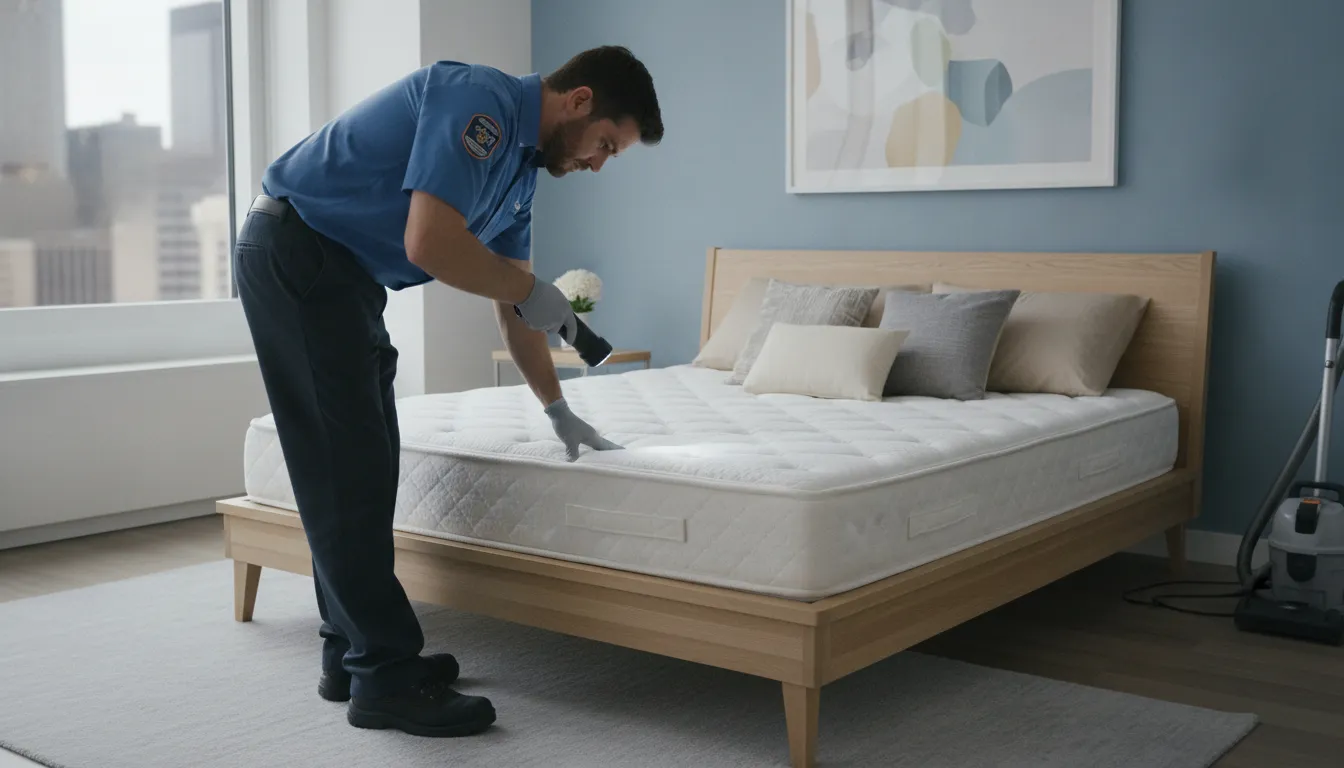
Bed bugs rarely stay in the open. In a New York City apartment, they can settle into narrow seams, folds. And cracks close to where people sleep, then move through wall gaps or shared building pathways when an infestation grows. Because they are small and active mostly at night, finding one requires more than checking the top of a mattress.
Contact Ace Bed Bug Exterminating for a professional inspection if you suspect bed bugs.
The most common bed bug hiding spots are mattress seams, box springs, bed-frame joints, headboards, baseboards, and nearby furniture. Bed bugs can fit into crevices as thin as a credit card and often remain within about eight feet of a sleeping area. The EPA recommends using a flashlight to inspect tight cracks and looking for dark spots, shed skins, eggs, or live bugs.
Start with the bed, where evidence is often easiest to connect to feeding activity. A careful inspection of seams, tufts, folds, the underside of the box spring. And frame attachment points can reveal where the insects are established before you check the surrounding room.
Where Bed Bugs Hide Around the Bed and Mattress
The bed is usually the first place to inspect because it provides close access to a sleeping host. According to the CDC, bed bugs commonly hide in mattress seams, tufts, folds, and box springs. They can also fit into crevices as thin as a credit card. So a quick glance across the top of a mattress is not enough to rule out activity.
Mattress seams, tufts, and folds
Start with the mattress piping and work around every edge, including the corners and the area beneath the attached label. Pull back each seam and inspect the stitching, tufts, handles, and folds where fabric overlaps. Look closely at both sides of the mattress, especially the underside near the bed frame. These protected areas may contain live bugs, pale shed skins, tiny eggs, or dark spotting.
Dark marks on the mattress or sheets can be fecal matter and may indicate that a hiding place is nearby. The EPA inspection guide recommends looking carefully around these signs rather than assuming every stain has the same cause. Use a bright flashlight and move slowly. Bed bugs are small, flat, and easy to miss when they are pressed into a seam.
Box springs and bed frames
Remove the mattress only when you can do so without dragging it across the room. Inspect the top, sides, corners, and underside of the box spring. Pay particular attention to the fabric edge, staples, wooden joints, and any torn or loose areas. EPA guidance specifically calls for checking the underside of box springs and the points where the frame attaches.
Continue along the bed frame, including screw holes, joints, caster sockets, slats, and cracks in wood or metal. If the frame has a hollow section or removable panel, inspect the opening and its edges. Do not rely on the absence of bugs on exposed surfaces. A colony may be tucked into a narrow joint while feeding activity occurs several inches away.
Headboards and nearby furniture
Inspect both sides of the headboard, its mounting hardware, and the wall-facing edge. Upholstered headboards deserve extra attention because seams, buttons, and folds create additional shelter. Keep the inspection focused on the area around the bed first. Bed bugs typically remain within about 8 feet of where people sleep, according to the EPA, so check nearby nightstands, chairs, and dressers after the bed itself. Understanding how bed bugs bite around the bed can also help you tie clues back to a likely hiding area.
In a New York City home, finding activity around the bed is a reason to inspect thoroughly, not a reason to panic. For a structured evaluation and NYC bed bug removal, professional technicians can examine hiding places that are difficult to reach without spreading bugs to another room.
Beyond the Bed: Furniture, Walls, and Everyday Hiding Spots
Once bed bugs move beyond the mattress, they do not need a large or obvious space. They can settle into protected seams, joints, cracks, and gaps close to where people rest. Baseboards deserve special attention because they can provide both a hiding place and a travel path between rooms. In an apartment, nearby furniture and wall features may also connect the sleeping area to adjacent spaces.
| Location | Why they hide there | How to check |
|---|---|---|
| Baseboards and wall gaps | Edges offer narrow, protected spaces, and gaps can help bugs travel. | Shine a flashlight along seams, corners, and loose trim. Look for live bugs, shed skins, or dark spotting. |
| Electrical outlets and nearby wiring | Outlet plates and wall penetrations create concealed openings. | Inspect the surrounding wall and plate edges visually. Do not remove covers or place liquids inside outlets. |
| Wallpaper, picture frames, and wall hangings | Loose wallpaper and protected areas behind decorations can shield bugs close to a bed or chair. | Check lifted wallpaper edges, frame backs, hanging hardware, and the wall surface behind them. |
| Clock radios and bedside electronics | Warm, undisturbed housings can contain small gaps near a sleeping area. | Inspect exterior seams and the surface beneath the device. Do not open or disturb electrical equipment unless qualified. |
| Nightstands, chairs, and dressers | Drawers, joints, screw holes, folds, and upholstery provide sheltered spaces within reach of a host. | Empty drawers, examine corners and hardware, and inspect chair seams and undersides with a flashlight. |
| Secondhand furniture joints and upholstery | Even clean-looking used furniture can conceal bugs in joints, seams, and fabric layers. | Inspect before bringing it indoors, including the underside and all joints. Follow this guide to inspect secondhand furniture for bed bugs. |
The EPA recommends examining areas where bed bugs may hide, including electrical outlets, behind wallpaper, along baseboards, and in picture frames or wall hangings near sleeping areas. Its inspection guidance is available at How to Find Bed Bugs. Focus first on furniture and wall features within roughly eight feet of a sleeping area, then expand the search if you find evidence.
Use care around outlets, electronics, and wall openings. A rushed inspection can miss eggs or nymphs tucked into inaccessible spaces, while moving furniture from room to room may spread an infestation. If signs appear in several locations, a professional inspection can map the full pattern before treatment begins.
Why Do Bed Bug Hiding Spots Favor Certain Locations
Bed bugs do not choose hiding places at random. Their behavior helps explain why you may find them in seams, cracks, joints, and other protected spaces close to where people rest. Understanding that pattern makes an inspection more focused and helps you avoid assuming that an empty mattress means the infestation is gone.
Nighttime activity keeps them close to sleeping hosts
Bed bugs are nocturnal. They are most active when their hosts are asleep, which gives them a predictable opportunity to feed with less disturbance. They are also attracted to the carbon dioxide people exhale. That signal helps them locate the general vicinity of a sleeping person, so their daytime shelter is often near a bed, sofa, or other regular resting area. The CDC describes both their nighttime feeding behavior and their response to exhaled carbon dioxide in its bed bug overview.
Proximity does not mean the insects stay on top of the bed. A bed frame joint, mattress seam, headboard connection, baseboard gap, or nearby piece of furniture can provide cover while keeping the bugs within reach of a host. This is why what attracts bed bugs matters when deciding where to inspect. Look for sheltered spaces near places where someone sleeps, not only for live insects on the sheets.
Protected spaces can contain every life stage
Bed bug hiding spots may hold eggs, nymphs, and adults at the same time. The EPA explains that bed bugs pass through these life stages, and a protected crevice can support a developing group without exposing it to regular movement or light. Eggs and young nymphs are especially easy to miss, while adults may move into nearby cracks when disturbed. Finding one visible bug does not establish the full size or location of the infestation.
Bed bugs can also be difficult to eliminate simply by leaving a room unused. Under the right conditions, they can survive for several months without feeding, according to the CDC. Removing a mattress or sleeping elsewhere may therefore leave hidden insects behind. It can also change the pattern of activity without resolving the source. Inspect adjacent furniture, wall edges, and structural gaps rather than relying on a single visual check.
These behaviors explain why a careful inspection follows the room’s sleeping and resting areas outward. A professional can assess the likely harborages, look for evidence across life stages, and determine whether connected spaces need attention. The goal is not just to find one bug, but to identify the protected locations that allow the infestation to persist.
How to Find Bed Bug Hiding Spots: A Step-by-Step Inspection
A careful inspection works best when you follow the same path every time instead of checking only the mattress and stopping there. Bed bugs can fit into narrow cracks, so use a bright flashlight, a stiff card for accessible seams, disposable gloves, and a magnifying glass. Keep a container or phone nearby for notes and photographs, but do not move furniture from room to room while you inspect it.
- Start at the sleeping area. Remove bedding slowly and inspect each sheet, blanket, and mattress protector for dark spots. Dark fecal spots on mattresses or sheets can indicate that a hiding spot is nearby. Look closely at mattress piping, seams, tufts, folds, and labels, then run the flashlight along the underside and corners. The EPA recommends looking near where people sleep because bed bugs commonly remain close to the sleeping area. See the EPA’s inspection guidance for additional signs.
- Inspect the box spring and bed frame. Lift the mattress with care and examine the top, sides, and underside of the box spring. Pay particular attention to staples, fabric folds, wooden joints, screw holes, and the points where rails, legs, and other frame parts attach. Checking the underside of the box spring and frame attachment points is a critical part of a thorough inspection. Use the flashlight at a low angle so shadows reveal insects, spotting, eggs, or shed material.
- Search cracks and crevices around the bed. Direct the flashlight into tight cracks, seams, screw heads, and gaps between the frame and wall. Bed bugs may leave behind molted skins that look like pale, translucent husks. Do not dismiss a narrow opening because it appears too small. These insects can squeeze into crevices as thin as a credit card, which makes ordinary room lighting unreliable for finding them.
- Use magnification for eggs and small evidence. Examine protected crevices with a magnifying glass. Bed bug eggs are about the size of a pinhead and are usually laid singly or in small clusters. They may be difficult to distinguish from dust without magnification, so note the exact location rather than scraping or disturbing the area. Look for eggs alongside dark spotting, cast skins, or live insects, since a single clue does not always identify an infestation.
- Check bedside furniture in place. Inspect nightstands, dressers, chairs, and any furniture next to the bed. Empty drawers one at a time, then examine drawer joints, runners, handles, screw holes, undersides, and the back panel. Check the seams and joints of upholstered chairs. Give bedside electronics special caution: bed bugs can sometimes hide inside clock radios and other small devices. Do not open electrical equipment unless a qualified professional says it is safe.
- Finish the room perimeter, then repeat. Inspect baseboards, carpet edges, wall hangings, and gaps around nearby fixtures. In a multi-room home, record each area and proceed room by room, returning to any location with signs. Avoid using sprays or moving belongings during the search. Improvised DIY bed bug treatment can miss hidden insects or disperse them. If evidence is elusive, bed bug detection dogs may help locate infestations in areas a visual inspection cannot reach.
Why Bed Bug Hiding Spots Spread Between NYC Apartments
New York City apartment buildings create conditions that make bed bug control more complicated than treating one bedroom in isolation. Shared walls, connected utility paths, and tightly spaced units can give bed bugs routes into spaces that residents cannot easily inspect. An infestation may begin near one bed, then appear in another room or neighboring apartment without anyone carrying a visible bug from place to place.
How bed bugs move through a multi-family building
Bed bugs are small enough to pass through narrow structural gaps. In multi-family buildings, they may move between units through openings in shared walls, gaps around electrical outlets, wiring pathways, and plumbing conduits. The CDC identifies these routes as ways bed bugs can move from room to room and apartment to apartment: CDC guidance on bed bug movement.
That does not mean every neighboring unit is infested, but it does mean a single-unit response can miss the larger pattern. Baseboards, pipe openings, outlet plates, and wall-to-floor junctions deserve attention, especially when residents report bites or evidence in more than one room. In a building with adjoining apartments. Property managers and residents should communicate promptly so potentially affected units can be inspected instead of treating each report as an unrelated problem.
Why DIY treatment can make the spread worse
When residents find one bug, the natural response is often to spray, move furniture, discard bedding, or sleep in another room. These actions may feel practical, but they can disturb bugs in established hiding places. DIY treatments rarely reach every crack, conduit, furniture joint, or wall gap. The insects may retreat deeper into protected spaces or disperse into other rooms. Making the original bed bug hiding spots harder to identify and the infestation more difficult to contain.
Avoid moving infested furniture or sleeping arrangements from one room to another until the situation has been evaluated. Also avoid applying pesticides to outlets, wiring, or other areas where an incorrect product or application could create a safety hazard. For context on how bed bugs can appear beyond residential bedrooms, review these bed bug signs in commercial buildings.
Why professional inspection matters in NYC apartments
Professional inspection is the safest and most effective way to locate elusive hiding spots across an apartment. A trained technician can examine sleeping areas, nearby furniture, structural gaps, and likely travel routes without relying on one visible insect or one cluster of bites. The inspection can also help determine whether neighboring rooms or units need attention.
This broader view matters in NYC because apartments may share walls, hallways, service chases, and maintenance areas. Evidence in one unit should not automatically be blamed on poor housekeeping or a single piece of furniture. It may indicate activity along a connected route that requires careful documentation and coordination.
Early, building-aware evaluation reduces guesswork and supports a focused treatment plan. If you suspect activity in a New York City apartment, learn more about NYC bed bug removal and arrange an inspection before attempting to relocate belongings or treat multiple rooms.
Contact Ace Bed Bug Exterminating to schedule a professional bed bug inspection for your NYC home.
Frequently Asked Questions
How do I find where bed bugs are hiding?
Start at the sleeping area and inspect mattress seams, tufts, folds, the box spring underside, bed-frame joints, and nearby furniture. Use a bright flashlight for tight cracks. Look for live bugs, dark fecal spots, pale shed skins, and tiny eggs. Because bed bugs usually stay within about 8 feet of where people sleep, search outward methodically before checking the rest of the room. If you are not sure whether the marks you found are bed bugs, our guide on how you can see bed bugs explains what to look for. The EPA’s inspection guidance recommends checking these areas carefully.
How do you draw bed bugs out of hiding?
Trying to draw bed bugs out with heat, chemicals, or movement is unreliable and can push them into new rooms. Instead, leave the sleeping area as undisturbed as possible and document what you find during a careful inspection. A trained professional can use evidence, targeted inspection, and appropriate detection methods to locate concealed activity without scattering the infestation.
Can bed bugs hide in electronics?
Yes. Bed bugs can sometimes hide inside bedside electronics, including clock radios and other small devices, especially when those items sit close to where someone sleeps. Do not spray liquid pesticides into electronics or dismantle a device while it is plugged in. Note the item for the inspector and follow professional treatment instructions.
Do bed bugs only hide in beds?
No. Beds are common because they provide easy access to a sleeping host. But bed bugs may also hide in nightstands, chairs, dressers, headboards, picture frames, baseboards, outlets, and wall gaps. In an NYC apartment, they can move through shared structural gaps, wiring, and plumbing conduits, so adjacent rooms or units may also need inspection.
What are three signs you might have bed bugs?
Three useful signs are live bugs, dark spots on sheets or mattress seams, and pale translucent shed skins. Pinhead-sized eggs in small clusters can provide another clue. None of these signs should be judged in isolation, because other insects or stains can look similar, and bed bug bites can vary from person to person. Preserve suspected evidence and arrange a professional identification when possible.
7 Responses