
Finding bed bugs in electrical outlets or signs around an outlet plate can be unsettling. The bugs may use small gaps and wall voids as shelter, but an insect or stain near a plate does not prove that the outlet itself is infested. Avoid touching the wiring or applying products inside electrical components. Document what you can see from a safe distance, then arrange an inspection.
Ask about a bed bug inspection
Why are bed bugs in electrical outlets sometimes found near the plate?
Bed bugs hide in narrow, protected spaces close to places where people rest. A gap at a baseboard, a crack in plaster, a wall void, or the edge of an outlet cover can offer a sheltered route or hiding place. In an apartment building, wall cavities and other openings may also connect spaces, although finding a bug beside one outlet does not establish how it got there or where else it may be.
Bed bugs do not need to live inside an energized receptacle to be found near one. They can shelter behind or beside a cover, in a gap between the cover and wall, or in the surrounding wall void. A dark speck on the plate might instead be ordinary dirt, a scuff, or another insect. Identification matters before anyone chooses a treatment. For more places to check around a room, see this guide to common bed bug hiding spots and this overview of early signs of bed bugs.
Outlets are one possible location to include in an inspection, not a reason to assume that bed bugs are living in the wiring. An academic building-management resource lists wall outlets and switches among places where bed bugs may be found, while Purdue Extension also includes outlets among areas to inspect. These references support checking the surrounding area as part of a larger search; they do not mean that every outlet is infested or should be opened by a resident.
A visual inspection can help establish whether there is evidence of bed bugs; a research review of bed bugs describes detection through visual inspection. It is still easy to mistake other marks or insects for bed bugs, especially when the evidence is limited. A trained inspection can assess the outlet area alongside nearby furniture and room edges, rather than treating one mark as proof of a larger problem.
How should you document bed bugs in electrical outlets safely?
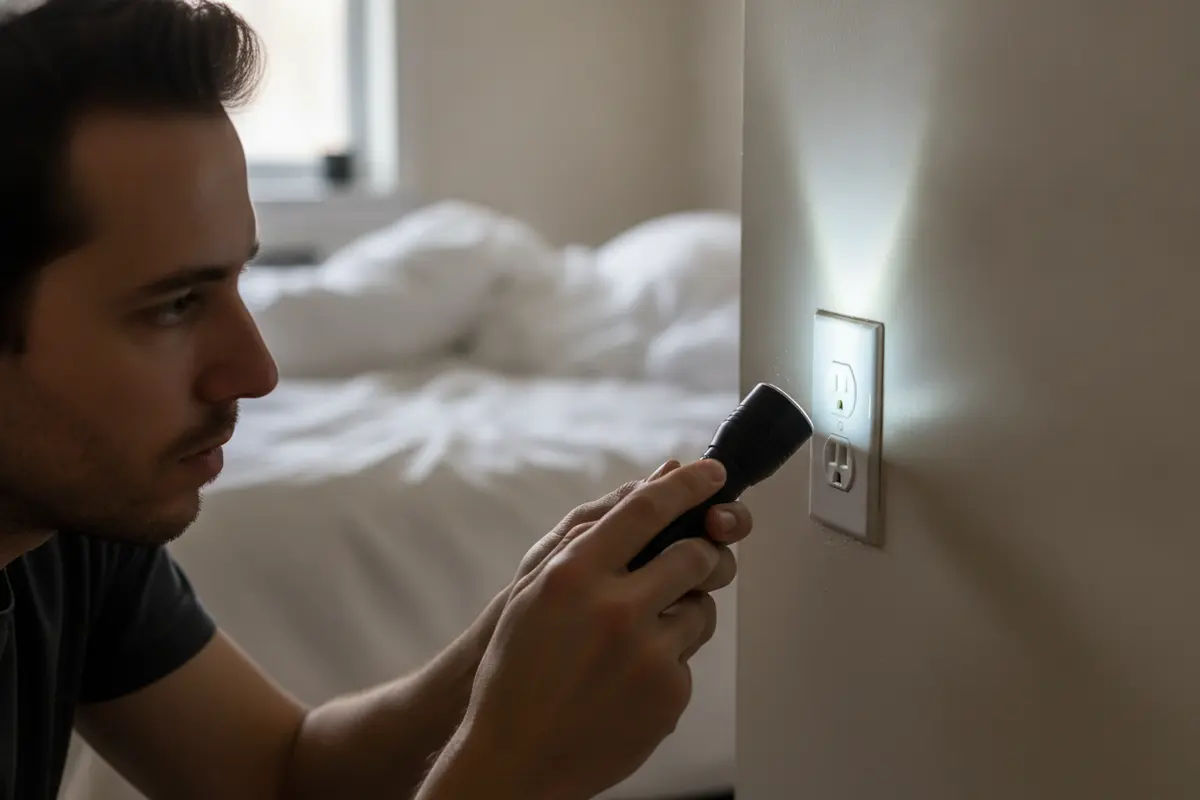
Look only at surfaces you can see without removing the cover, inserting an object, or moving electrical parts. Use a flashlight from a comfortable distance. You can document the area around the plate, the wall surface, and nearby seams or furnishings. Possible clues include:
- A small, flat, reddish-brown insect on the wall or plate exterior.
- Tiny dark marks on the wall surface, cover edge, or nearby baseboard.
- Pale shed skins or tiny eggs in a visible crack next to the plate.
- Similar evidence at the bed frame, mattress seams, headboard, or another nearby hiding place.
None of these observations alone confirms that bed bugs are inside the outlet. Avoid scraping or wiping suspected evidence before photographing it. Take a clear photo from a safe position, then a wider photo showing where the outlet sits in relation to the bed or sofa. Record the date, room, and exactly where you noticed the sign. Do not use a phone flash so close that you must lean against or handle the outlet.
When documenting, keep observations separate from conclusions. Write, for example, “small brown insect on wall, about a handspan above outlet, seen Tuesday evening,” rather than “bugs in the wiring.” This gives an inspector a specific location and time without implying a cause that has not been confirmed. If the mark appears in more than one place, photograph each spot separately and note how far apart they are.
If you can safely see a bug on an accessible wall surface, photograph it rather than trying to catch it near the electrical plate. Do not use tweezers, a vacuum attachment, tape, or another tool around the receptacle. If a specimen is already on the floor well away from the outlet, you can photograph it and keep the image for the inspector; there is no need to risk reaching into a tight gap. Learn more about what bed bugs can look like and how to check a room carefully.
What should you never do around a suspected infested outlet?
Do not spray pesticide, alcohol, cleaner, water, essential oils, or any other liquid into an outlet, behind a cover, or into a wall gap. Do not pour powders or dust into the receptacle. Products used in a way that is not on the label can expose people and pets, damage materials, or create a hazard. A product labeled for one surface or use is not automatically appropriate for an electrical component or wall void.
Also avoid these actions:
- Do not remove the outlet cover or touch wiring to look for insects.
- Do not insert a cotton swab, pin, vacuum nozzle, or other object into openings.
- Do not use a fogger or bug bomb to try to drive bed bugs out of the wall. It does not replace inspection and can spread treatment material where it should not go.
- Do not seal the plate with tape, caulk, or foam as an improvised treatment. Sealing may interfere with inspection or repair and does not confirm the insects are gone.
- Do not use a hair dryer, heat gun, or other heat source on the outlet or wall.
The EPA’s guidance on preparing for bed bug treatment discusses checking around outlets and switches as part of preparation. That does not make it safe to open an outlet or apply a product inside it. Follow the specific preparation instructions from the professional handling the inspection or treatment, and do not treat EPA preparation guidance as permission to improvise an application. If you are unsure whether a product is permitted for a particular location, do not use it there; follow its label and ask a qualified professional. For more on the limits of over-the-counter products, read about why bed bug bombs are not a reliable fix and rubbing alcohol and bed bugs.
Never attempt electrical work unless you are qualified to do it. If an outlet is loose, warm, sparking, buzzing, damaged, or has a burning smell, stop using it and contact a licensed electrician promptly. If there is smoke or fire, leave the area and contact emergency services. An insect concern is not a reason to handle a potentially faulty outlet.
Do not attempt to solve both concerns with one improvised action. For instance, spraying a suspected crack cannot tell you whether a mark is bed bug evidence, and removing a plate to search for insects introduces an electrical task that belongs to a qualified person. Keep the fixture undisturbed, record the visible clues, and let each professional address the part of the problem within their role.
How should you safely inspect and record the room?
Keep the inspection focused on visible, accessible surfaces. A simple record helps a pest professional understand the concern without prompting you to disturb an electrical fixture. You do not need to perform an exhaustive search before asking for help; avoid dismantling furniture or pulling fixtures away from the wall.
- Keep people and pets from handling the outlet. Do not let anyone probe the openings or remove the plate. If the outlet appears damaged or behaves abnormally, stop using it and contact an electrician.
- Photograph the visible area. Take one close photo and one wider image that shows the outlet’s position in the room. Do not touch or reposition the cover to improve the picture.
- Note the details. Write down the date, room, what you saw, and whether similar signs appeared at the bed, sofa, baseboards, or other locations. Separate what you observed from what you suspect.
- Check nearby furniture from the outside. Look over accessible mattress seams, bed-frame joints, headboard edges, and baseboards without pulling apart electrical fixtures. This can help show whether the outlet is one clue among several.
- Ask for a professional assessment. Share your photographs and notes with a bed bug professional. Ask whether the visible evidence is consistent with bed bugs and what preparation, if any, is appropriate before a visit.
For a useful record, include the room name, approximate location of the outlet, date and time noticed, and whether you saw an insect, a mark, shed material, or only a gap. Keep original photographs if possible instead of relying only on a cropped or edited copy. If you rent, note when you notified the property manager and how you sent the images. This creates a straightforward timeline without making claims about the source of the suspected activity.
Do not move furniture through the building or carry bedding into another room just because you found a mark. Moving items can complicate an inspection and may spread pests if bed bugs are present. A careful, limited check is more useful than extensive dismantling or cleaning before the source is understood. This bed bug inspection overview explains what an assessment can address.
When should a pest professional and electrician coordinate?
A pest professional can assess whether the sign is bed bug evidence, inspect nearby harborages, and recommend a treatment plan for the infestation. An electrician handles electrical components, wiring, and any needed removal or replacement of a cover or receptacle. These roles are related but not interchangeable: pest treatment is not electrical repair, and opening an outlet to search for pests is not a homeowner inspection step.
Coordination is especially important if the inspection or treatment plan may require access behind an outlet cover or into a wall void. Tell the pest professional exactly where you saw the evidence and mention any outlet damage or unusual behavior. Ask who should arrange access and whether the fixture must be assessed by an electrician first. Do not remove the cover yourself to make the inspection easier.
Before treatment, ask the pest professional to explain the proposed method, where it will be applied, any preparation required, and any precautions for people or pets. The right plan depends on what is found and the layout of the property; there is no universal treatment to pour or spray into outlets. Ace describes a service process that includes inspection, treatment planning, and follow-up. You can learn about bed bug treatment options, its Aprehend treatment approach, and the differences described in its heat and chemical treatment comparison.
For an apartment or other shared building, notify the landlord or property manager about the suspected evidence and share your photos. Avoid making claims about the source or spread until it has been assessed. If a common wall or adjoining unit may be involved, a coordinated inspection can be more useful than treating a single room in isolation. For local service information, see Ace’s New York service areas and the New York bed bug removal guide.
When you contact the property manager, describe what you saw and where, then ask what reporting or inspection process applies in the building. Do not cover the outlet or discard nearby items while waiting for instructions. If an electrician is called because the fixture is damaged or hot, explain that pest evidence was also noticed nearby; the electrician can decide how to handle the electrical issue, while the pest professional can advise on pest inspection access. The order of visits may depend on the condition of the fixture.
How do the next steps differ by situation?
| What you notice | Safe next step | Who to contact | What to avoid |
|---|---|---|---|
| A mark or possible insect on the outside wall near an outlet | Photograph it from a safe distance and note its location | Bed bug professional for identification and assessment | Do not open the cover or spray the area |
| Similar signs at the bed or furniture as well as near the outlet | Document each location and limit movement of belongings | Bed bug professional; notify property management if applicable | Do not carry bedding or furniture to another room unnecessarily |
| Loose, damaged, hot, buzzing, or sparking outlet | Stop using it; keep hands and objects away | Licensed electrician; emergency services for smoke or fire | Do not attempt a DIY repair or pest treatment inside it |
| Confirmed bed bug evidence beside an outlet, with no electrical fault | Share photos and coordinate access before treatment | Pest professional, and electrician if access or repair is needed | Do not remove the plate or apply product into the wall |
These steps are meant to keep the observation useful while avoiding electrical and pesticide risks. Evidence found on a wall or plate still needs proper identification; an electrician should address fixture issues, while a pest professional evaluates suspected bed bugs. If you only see a stain but no insect or other sign, document it without trying to test it with a household product.
Request help assessing suspected bed bug signs
Frequently Asked Questions
Can bed bugs live inside an electrical outlet?
Bed bugs may shelter in gaps around an outlet or in a nearby wall void, but seeing a bug or mark beside a plate does not show that insects are living inside the electrical receptacle. A professional can inspect the area and nearby hiding places. Do not remove the cover to check.
Can I spray bed bug product into an outlet?
No. Do not put pesticide or any other liquid, powder, or household product into an outlet or electrical component. Use a pesticide only in locations and ways allowed by its label, and ask a pest professional about a suspected wall void. Never improvise an application inside an electrical fixture.
Should I turn off the breaker before checking behind the plate?
Do not remove the plate or reach behind it as a homeowner inspection step, even if you believe the power is off. If access to the fixture is needed, arrange for a qualified electrician to handle the electrical work and coordinate with the pest professional.
Does one bed bug near an outlet mean the whole building is infested?
No. One observation cannot establish the extent or source of a problem. Record where and when you saw it, then have the area assessed. In a multi-unit building, notify property management so concerns can be evaluated in context rather than assumed to involve every unit.
What if I am not sure the mark is from a bed bug?
Take a clear photograph without touching the outlet or scraping the mark. Note nearby signs and ask a pest professional to identify the evidence. Bed bug signs can be confused with other insects, dirt, and ordinary wear, so avoid treating an uncertain mark as confirmation.
Keep the outlet closed and untouched, save your photos and notes, and let qualified professionals determine whether the evidence points to bed bugs, an electrical issue, or something else.