
A bed bug monitoring service for NYC residents can help answer an important question: is there evidence of bed bug activity, and is it changing over time? Monitoring can support early detection, follow-up after professional treatment, and prevention planning in apartments or larger buildings. It is not the same as extermination, and a monitor by itself does not reliably remove an established infestation.
Call Ace at (347) 378-7070 or request an assessment through our contact page.
How a bed bug monitoring service NYC residents may choose supports detection
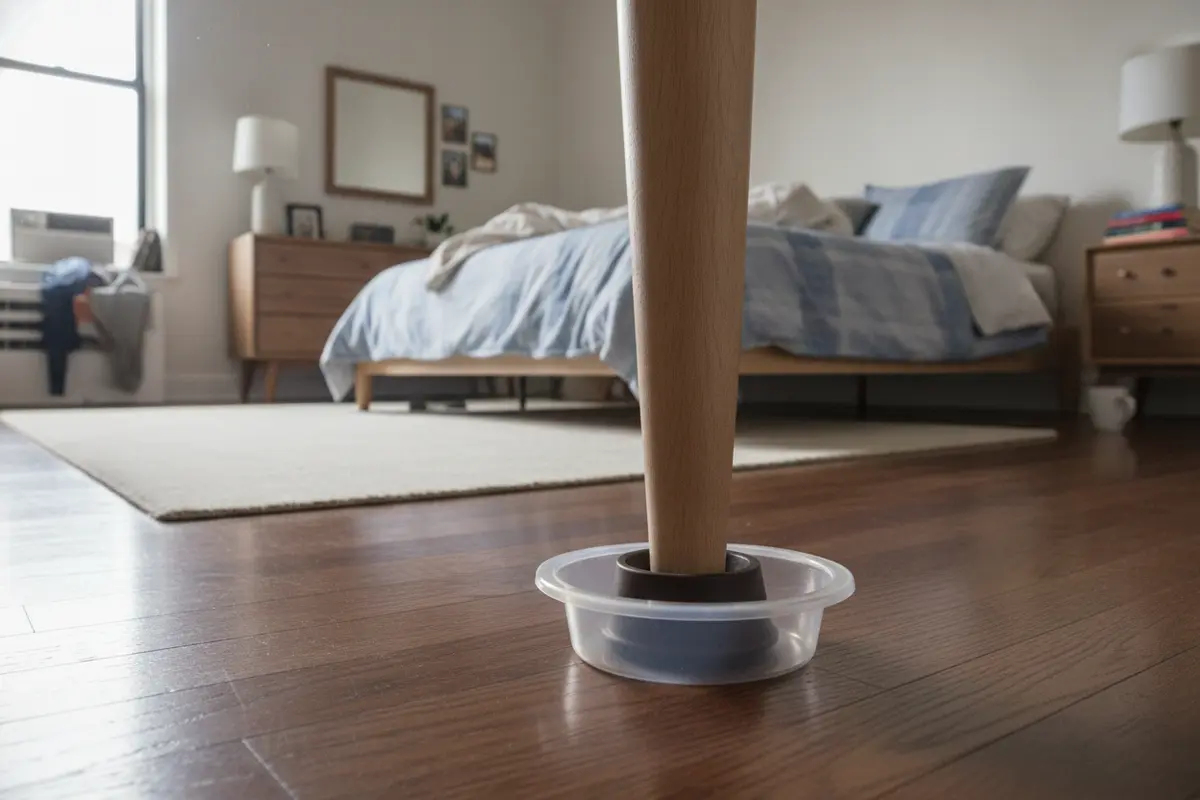
Monitoring means using a tool or a repeatable inspection process to look for signs of bed bug activity. Depending on the setting, this can include checking interceptors placed near bed or seating legs, reviewing other monitoring devices, or having a trained professional examine likely harborages and record findings. A monitoring plan works best when it has a clear purpose, consistent placement, and scheduled review.
Many people use the word “monitor” for different things. Some mean a passive device that may catch a bug moving between a sleeping area and a hiding place. Others mean scheduled professional visits, visual checks, or a combination of devices and inspections. Ask exactly what the provider means. The word alone does not tell you how often checks occur, who checks the devices, or what happens after a positive finding.
A monitor is evidence-gathering equipment, not a treatment plan. It may help reveal activity that is otherwise difficult to notice, but it cannot prove that a room or building is free of bed bugs simply because nothing is caught. Nor should a positive monitor result be treated as a complete map of an infestation. It is a reason to investigate the surrounding area and decide on appropriate next steps.
When can monitoring be useful in an NYC home?
Monitoring can be useful when the goal is to detect, observe, or verify a change over time. In a NYC apartment, it may be considered after a suspected exposure, when a resident has concerns but no clear identification, or as part of a professional follow-up plan. In all of these cases, the value comes from the information gathered and the response to it, not from leaving a device in place and assuming it will solve the problem.
- Early warning: A device placed at a relevant location may catch activity before a resident sees a live bug. It can add another observation point, but it cannot guarantee detection.
- Post-treatment observation: Follow-up checks can help evaluate whether activity is still being detected after treatment. A result should be interpreted alongside the treatment history, inspection findings, and any new signs.
- Recurring concerns: A consistent monitoring routine can help distinguish a one-time report from repeated evidence that calls for further investigation.
- Building coordination: In multi-unit properties, documented observations can help a manager coordinate assessments across relevant spaces rather than relying on informal reports alone.
- Prevention planning: In settings with recurring exposure risk, a defined process for reporting and checking suspected activity may help staff or residents respond sooner.
Monitoring is not a substitute for confirming what an insect is. Skin marks alone do not establish that bed bugs are present, and a device may catch other insects or remain empty for reasons unrelated to whether a problem exists. If you need to understand common signs and locations to inspect, see this guide to bed bug hiding spots and the overview of early signs of bed bugs.
How does monitoring differ from inspection and extermination?
These terms describe different functions. A monitor gathers evidence over time or at a particular location. An inspection is an active assessment of an area for signs of bed bugs and conditions that may matter to a response. Extermination is the treatment work intended to control or eliminate an infestation. A provider may use more than one function in a service plan, but the terms should not be used as if they mean the same thing.
| Approach | Main purpose | What it can tell you | What it cannot do alone |
|---|---|---|---|
| Passive monitoring device | Collect observations at a selected location over time | Whether the device has captured possible activity during the period checked | Confirm an entire unit is clear, find every harboring place, or eliminate bugs |
| Professional inspection | Assess selected areas for signs and likely extent | What the inspector observes in the areas examined and what further assessment may be needed | Guarantee that no bug is present anywhere beyond the inspection’s limits |
| Professional treatment | Control an identified infestation using an appropriate treatment plan | What work was performed and what follow-up steps are recommended | Replace monitoring or follow-up when those are part of the plan |
| Integrated monitoring and response | Connect observations, assessment, treatment decisions, and follow-up | How findings change over time and what action is warranted | Make a building-wide problem disappear without suitable assessment and intervention |
For a fuller explanation of what an assessment may involve, review the page on bed bug inspection in NYC. The key question is whether a provider describes the service accurately: a device-only visit is not automatically an inspection, and placing monitors is not itself extermination. If evidence suggests an infestation, the next step should be a case-specific assessment and response plan.
What can monitoring show after treatment?
After a treatment, monitoring can provide additional observations that help guide follow-up. A captured bug or new signs may warrant prompt communication with the treatment provider. An empty device can be reassuring as one piece of information, but it does not establish that all bed bugs have been eliminated. Devices have limited coverage, and detection depends on where they are placed, how they are used, and whether bugs encounter them.
Ask the provider how monitoring fits into the specific treatment plan. Does the provider want devices to stay in particular locations? Who will inspect them, and when? What should you do if you find a possible bed bug or other evidence? Is a follow-up visit included or separately arranged? The answers may differ by property and treatment method. Do not move equipment or change the treated area based on a general online checklist; follow the instructions for your case.
Keep a simple record of dates, locations, and what you observed. Photograph a suspected insect or sign when safe and practical, without disturbing the area unnecessarily. Share the record with the provider rather than relying on memory or repeatedly changing device locations. For more on what to look for, see how visible bed bug signs can be and the guide to shed bed bug skins.
How should multi-unit buildings use monitoring?
In an apartment building, a monitoring plan needs coordination. A report in one unit does not prove that every nearby apartment is infested, but it may be a reason to consider whether adjacent or connected spaces should be assessed. A building manager should have a clear way for residents to report concerns, a process for documenting the location and date of findings, and a defined person responsible for arranging an evaluation.
Randomly placing devices throughout a building can create confusion. A useful plan establishes why each location was selected, who has access, how often observations are reviewed, and how positive or uncertain results are escalated. Residents should receive clear, case-specific instructions and know whom to contact. Managers should avoid treating a negative device as proof that no further assessment is needed when there are other credible signs or reports.
For a property, records can help identify where and when reports arise and whether follow-up has occurred. Keep the record factual and limited to what was observed, what action was taken, and when. Do not label a unit as infested based only on an unverified report or assume a monitor result determines responsibility. Decisions about assessment and treatment should be made by qualified professionals with the relevant building details.
Monitoring programs for commercial or institutional settings also need context-specific planning. Schools, hotels, shelters, and other occupied facilities have different operations and responsibilities. Treatment and monitoring decisions should be assessed for the particular site; there is no universal device placement or automatic service that fits every property. Ace discusses concerns on a case-by-case basis, including through its NYC-area service coverage information.
What to ask when comparing a bed bug monitoring service NYC providers offer
Before agreeing to a “monitoring service,” make sure you understand the actual work. Some providers may offer inspection and treatment, while a monitoring arrangement may focus on scheduled checks or devices. Ask for the scope in writing so you can compare services accurately and know what a finding will trigger.
- What exactly is included? Ask whether the visit includes devices, a visual assessment, a written report, follow-up, treatment, or only some of these. Do not assume that the service name includes all of them.
- Where will devices be placed, and why? Ask which rooms or items are included, how the locations were chosen, and whether furniture or devices should remain in place between checks.
- Who checks the devices and how often? Clarify the schedule, who reviews the findings, and whether you receive a record of each visit.
- How are findings identified? Ask how a possible bed bug is distinguished from another insect and what happens if the result is uncertain. A suspected finding may need confirmation.
- What happens after a positive result? Find out whether the provider recommends further inspection, how quickly you should report a finding, and whether treatment requires a separate agreement.
- What does a negative result mean? Ask what the device or inspection can and cannot rule out, and how other signs or resident reports affect the decision.
- How does the plan work in a multi-unit property? For building-wide work, ask who coordinates access, communicates with residents, keeps records, and decides whether additional units need assessment.
- What preparation or access is required? Ask for instructions specific to your appointment and treatment, if any. Avoid moving belongings or applying products unless the provider tells you to do so.
Look for answers that separate detection, inspection, and treatment rather than promising that a monitor will “clear” a unit. If you are comparing approaches, the guides to bed bug removal and prevention and choosing a professional exterminator can help you frame questions about the broader service.
What should you do if a monitor catches something?
Do not assume that every insect in a monitor is a bed bug, and do not discard a possible specimen before documenting it. If possible, take a clear photo and note the device location and date. Follow the provider’s instructions for preserving or sharing the finding, and avoid carrying the device or loose items through the building unnecessarily.
Contact the person responsible for the monitoring plan or a pest professional to discuss what was found. If the result is confirmed or other evidence is present, ask whether an inspection is appropriate and what the next step would be. A professional may need to assess the area and circumstances before recommending treatment. Monitoring can inform that decision, but it does not determine the treatment on its own.
If there is no existing plan, keep the suspected item or observation localized and seek qualified guidance. Avoid using foggers or applying pesticides without appropriate directions; products and methods are not interchangeable. For general information about safe pest management and product use, consult the U.S. Environmental Protection Agency and follow the label instructions for any pesticide. Ace’s article on why bed bug bombs can be a poor response explains why a quick spray is not a replacement for assessment.
What does an effective prevention program include?
Prevention is broader than buying monitors. A practical program makes it easy to report a concern, explains who responds, and describes when an assessment is warranted. At home, residents can use a consistent routine to notice changes around beds and upholstered furniture, while avoiding unnecessary movement of potentially affected belongings. In a building, managers can establish a reporting route and a recordkeeping process before an urgent report occurs.
A prevention plan should also be realistic about what monitoring cannot do. No device observes every hiding place. No empty device promises that an apartment is clear. A strong plan treats monitoring as one source of information, uses professional assessment when the evidence calls for it, and arranges treatment where appropriate. Follow the specific directions given by a qualified provider after service rather than relying on a one-size-fits-all schedule.
NYC residents who suspect activity can also use a careful, basic checking routine to document what they see without spreading items from room to room. If you rent, notify the appropriate building contact and keep a record of the communication. A measured report with a location, date, and photo is more useful than a guess based only on bites or an unverified device result.
Ask Ace about an assessment for your property by calling (347) 378-7070 or using our contact page.
Frequently Asked Questions
Can a bed bug monitor prove my apartment is bed bug-free?
No. A monitor only provides information about the location and period in which it was used. An empty device does not rule out activity elsewhere or prove that an infestation has ended. Consider the result together with other signs and, when warranted, a professional assessment.
Do bed bug monitors kill the bugs they catch?
Some devices may trap insects, but their main role is observation and detection. A device should not be treated as a stand-alone extermination method. Ask the provider what the particular device is designed to do and what action follows a finding.
Should I leave monitors in place after professional treatment?
Follow the instructions from the professional who handled your property. The appropriate locations and review schedule depend on the treatment plan and site. Ask who will check the monitors, how to report a result, and whether a follow-up visit is planned.
How often should a monitoring service check a NYC apartment?
There is no single schedule that fits every apartment or purpose. Frequency depends on why monitoring is being used, the building and treatment history, and the provider’s plan. Ask the provider to explain the proposed schedule and what decisions each check is intended to support.
Is monitoring the same as a bed bug inspection?
No. Monitoring gathers observations, often over time or at selected points. An inspection is an active assessment of selected areas for evidence and likely conditions. A provider can explain whether an appointment includes one or both.
Use monitoring as information, not a cure
A bed bug monitoring service can help residents, property managers, and professionals notice activity, track observations, and decide when a closer assessment is needed. Its limits matter just as much: monitoring alone cannot confirm an entire property is clear or eliminate an established infestation. Ask what the service includes, how findings are handled, and how monitoring connects to inspection and treatment before choosing a plan.