
Finding a suspicious mark or insect can feel especially stressful when you share a residence hall. If you are worried about bed bugs in dorm room housing, avoid moving your mattress or belongings into a hallway, laundry room, or another room. Document what you noticed, contact housing staff promptly, and follow their instructions for inspection and preparation. A measured response helps staff assess the room and reduces the chance of spreading items before anyone knows what is happening.
Call Ace at 347-378-7070 for a professional bed bug assessment
What signs might point to bed bugs in a dorm room?
A single mark on your skin does not confirm bed bugs. Reactions to bites vary, and other insects or skin conditions can look similar. Look for physical evidence near places where someone sleeps or rests: a live insect, shed skins, tiny pale eggs, or dark spotting on mattress seams, bed-frame joints, nearby furniture, or the edge of a baseboard.
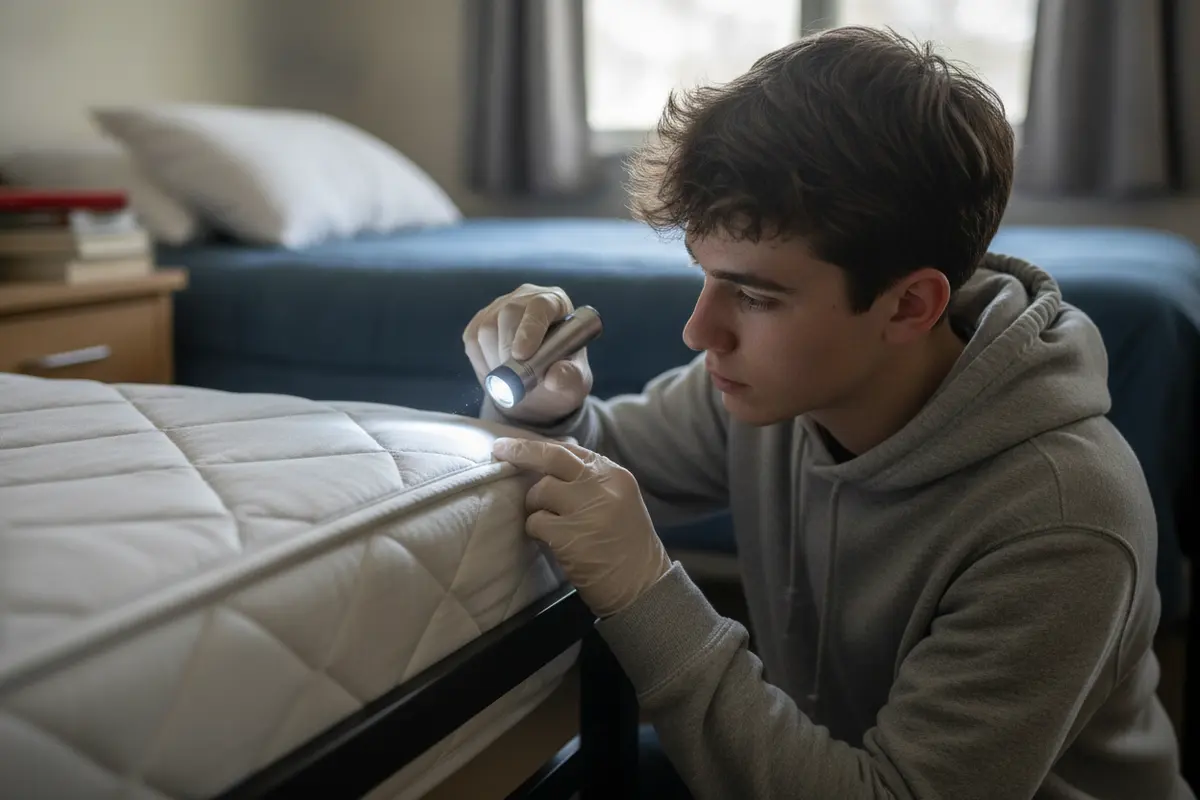
Check calmly with a flashlight. Examine the mattress piping and labels, the headboard and frame joints, and the seams or undersides of nearby upholstered furniture. Do not pull apart fixtures or damage school property. A useful overview of common bed bug hiding places can help you focus your visual check. You can also review early signs of bed bugs, but remember that online photos are not a substitute for an inspection.
Work in a simple, repeatable order so you do not overlook a location or scatter items. Start at the mattress, then check the bed frame and headboard, followed by the nearest chair or upholstered furniture and the floor edge around the bed. Keep bedding in place while looking. If you find something suspicious, pause rather than searching through drawers or lifting heavy furniture; staff can tell you what they need to inspect.
If you find an insect, do not crush it and then rely only on a description. If safe, place it in a tightly sealed clear container or bag for staff to examine. Photograph the insect or marks in place, with a nearby object for scale if possible. Record the date, exact location, and what you observed. Do not use a pesticide or fogger as a test; unapproved or misplaced products can create risks and complicate a professional assessment.
Who should you tell, and what details should you share?
Follow your residence hall’s reporting process. Contact the housing office, residence life staff, facilities team, or the designated work-order channel. If you have a resident adviser, tell them as well, but do not assume that an informal conversation replaces an official report. If you are unsure which channel to use, ask housing staff where to submit the concern and how to arrange an inspection.
State facts rather than conclusions. Explain which room and bed are involved, when you noticed the evidence, where it was found, and whether you have a specimen or photograph. Include whether you have seen similar signs elsewhere in the room, but do not speculate about who brought the insects in. A campus policy from Wagner College advises clearly communicating the building, room, location, and physical or visual evidence that prompted concern. See its bed bug reporting guidance for an example of the kind of information a campus may request.
Keep a record of the report: the date and time, who you contacted, any case or work-order number, and the next steps staff gave you. Ask when an inspection is expected and whether you should remain in the room, avoid using a particular item, or take any temporary steps. Housing procedures differ by school and building, so use the instructions from your own staff rather than applying another campus’s policy as if it were yours.
If you do not receive a response within the timeframe staff gave you, follow up through the same official channel and include the earlier report number. Keep the message neutral and concise: restate the room, the evidence, and any change since your first report. If you find new evidence, add its location and date rather than replacing or discarding the original record. This timeline can prevent confusion if more than one staff member handles the request.
What should you avoid doing before housing inspects?
Do not move unbagged bedding, clothing, backpacks, or furniture to another room. Carrying items through corridors or placing them in a shared laundry area may disperse insects if they are present. Avoid sleeping in a friend’s room or transferring your belongings to another residence hall without instructions. Such moves can expose another space and make it harder for staff to understand where the evidence was found.
- Do not discard a mattress, bed frame, or other furniture on your own. Ask housing staff what to do with school property.
- Do not use a fogger, household insecticide, rubbing alcohol, or improvised heat treatment. These actions may be unsafe or ineffective and can interfere with a professional assessment.
- Do not vacuum or clean away suspected evidence before documenting it, unless staff direct you to do so.
- Do not put potentially exposed items on a roommate’s bed, a lounge sofa, or a shared study space.
- Do not blame a roommate or another student. Evidence should be assessed, and the source usually cannot be determined from one observation.
If you already moved something, tell housing staff where it went and when. Honest, specific information helps staff decide what to inspect next. It is more useful than trying to hide a move or independently treat the new location.
How can you prepare for an inspection without spreading items?
Wait for the school’s directions before doing major preparation. An inspection may require access to the bed, nearby furniture, or specific belongings, and preparation can vary with the suspected location and the campus’s procedure. Ask whether you should clear a path, leave items in place, or bag anything. Do not empty the room into a hallway simply to make it look tidy.
Before the visit, write down your observations and keep photos or a sealed specimen accessible. If staff request access, move only what they identify, and use the containment method they specify. Leave the bed, frame, and surrounding area available for inspection. Ask whether a roommate needs to be present and whether staff need to inspect an adjacent room or shared furniture.
Think through practical access questions ahead of time. Tell staff if a mobility aid, medication, class materials, or other essential item must stay available, and ask how to keep it accessible while leaving the inspection area undisturbed. If you have a room condition that makes a requested step difficult, explain it before moving belongings. Staff can clarify whether there is an alternative that fits their process.
These steps make the conversation and visit more organized:
- Report the concern through the official housing channel. Give the room number, exact location, date, and description of evidence.
- Ask what to leave untouched. Confirm whether bedding, drawers, bags, and nearby furniture should remain where they are until inspected.
- Keep access clear. Make a reasonable path to the bed and furniture, but do not transport belongings out of the room unless directed.
- Tell staff about shared spaces and recent moves. Mention a lounge chair, laundry basket, or item you carried elsewhere if relevant.
- Get the follow-up plan in writing. Note preparation instructions, who will contact you, and how to report new evidence.
For context on what an inspection can involve, see this guide to a professional bed bug inspection. A student’s role is to report observations and follow housing directions, not to diagnose or treat the building independently.
How should roommates and nearby rooms be handled?
Tell your roommate that you reported a concern and share the practical instructions housing staff provide. Avoid presenting a suspicion as a confirmed infestation. Both residents can check their own belongings for visible signs, but they should not exchange bedding, store bags in another room, or start separate treatments. If both of you have observations, each person should describe them directly to housing staff.
Housing staff may decide whether to inspect neighboring rooms, common areas, or other locations. The right scope depends on the evidence and the building. Do not knock on doors to alarm neighbors or ask them to move possessions. If staff request that nearby residents cooperate or prepare, use the communication and instructions supplied by the school.
Written records are helpful when residents share a room or report concerns at different times. Keep a simple timeline of observations and communications. A college-focused bed bug response guideline describes follow-up inspections and treatment as necessary until successful control is confirmed. That is a general reference, not a substitute for your school’s policy or a promise about a particular campus response.
| Situation | Student action | What to avoid |
|---|---|---|
| Possible evidence in your room | Document the location and promptly report it to housing. | Moving bedding or treating the room before instructions. |
| A roommate has a concern too | Share observations and follow the same official reporting process. | Swapping rooms or belongings to wait it out. |
| You carried an item elsewhere | Tell staff where it went and ask whether that area should be checked. | Concealing the move or spraying the new location. |
| Staff request preparation | Follow the exact instructions and ask about anything unclear. | Assuming home-treatment directions apply to a residence hall. |
What should you do with laundry, bags, and travel items?
Do not carry a full hamper through shared spaces while you are waiting for guidance. If housing staff direct you to launder clothing or bedding, ask how to contain it on the way to the laundry room and what handling steps to use. Follow the machine’s care instructions for each item. Some items may not tolerate high heat, and a dryer cycle does not replace an inspection or building response.
Keep backpacks, luggage, and frequently used bags off other beds and upholstered communal furniture. Do not store potentially exposed items in a roommate’s closet. If you must leave the room for class or a temporary relocation, ask staff how they want you to handle clothing and personal items. Use only bags and storage locations they approve, and keep clean and not-yet-processed items separate if instructed.
For example, if you are due to travel home for a weekend before housing has inspected, do not pack from the suspected area by guesswork. Ask whether to postpone packing or how to handle specific clothing and bags. If staff approve taking items, follow their instructions for sealing and transport, and keep those items separate from belongings that have not been assessed. On returning, do not place the bag on a roommate’s bed or communal seating while you await guidance.
For general handling ideas, read about bed bugs in clothing and safe laundry practices. It is a general household resource; residence halls may have additional rules, and campus instructions take priority. For a visual check of your own bed area, this simple bed bug inspection checklist can help you note what you see without dismantling furniture.
How is a dorm response different from treating an apartment?
A dorm room is part of a larger, managed building. Residents may share corridors, lounges, laundry rooms, furniture, and building systems, while housing controls access to rooms and determines how inspections are coordinated. As a student, you usually should not arrange treatment independently or make decisions about adjacent rooms. Report the evidence to the responsible campus team and ask them to coordinate the response.
An apartment tenant may report a concern to a landlord or property manager, while an owner may arrange a qualified pest professional. In either setting, confirming the problem, controlling movement of belongings, and following a coordinated plan matter. But do not assume apartment preparation instructions automatically apply in a residence hall. School policy, accessibility needs, room assignments, and campus safety procedures may change what you should do.
The difference is also practical: a dorm resident may not control the furniture, entry schedule, neighboring spaces, or laundry arrangements. Keep a short list of questions for housing: who will inspect, what spaces may be included, whether you need to be present, what to do with essential belongings, and how you will receive any follow-up instructions. Getting those answers from the people responsible for the building helps avoid conflicting advice from friends, online sources, or a household checklist.
If staff confirm bed bugs, ask who is coordinating any inspection or treatment, what you need to prepare, what areas are included, and how you will learn about re-entry or follow-up. Ace provides bed bug services in the New York City metropolitan area; the company’s bed bug removal information is general service information, not an indication that a school has approved a particular treatment. Any school-related service would need to be assessed case by case with the responsible campus decision-makers.
Students in the New York area can also check whether a location falls within the company’s listed service area. For a broader overview of bed bug response, consult the New York bed bug removal guide, while continuing to follow your campus’s instructions.
Call Ace at 347-378-7070 to discuss a professional bed bug assessment
Frequently Asked Questions
Should I sleep in another room if I suspect bed bugs?
Do not move to a roommate’s room or another residence hall without first asking housing staff. Moving yourself and your belongings may expose another space, and the school may have a specific temporary-room procedure. Contact the housing office and follow its directions about where to sleep and what to bring.
Can I spray my dorm room before the inspection?
No. Do not apply pesticides, foggers, or improvised treatments unless the responsible campus team specifically directs an appropriate action. Products used incorrectly can pose risks and may complicate an inspection. Report the evidence and let housing staff coordinate next steps.
Does a bite or a dark spot prove that I have bed bugs?
No. Skin reactions and isolated marks are not enough to confirm an infestation. Look for physical evidence, record where and when you noticed it, and ask housing staff to arrange an assessment. If you have a health concern or a significant skin reaction, seek medical advice.
Should I tell students in nearby rooms?
Report your concern to housing and ask how the school will communicate with nearby residents. Avoid alarming neighbors or asking them to move belongings based on an unconfirmed observation. Staff can decide which rooms or shared areas need inspection and how to coordinate access.
What if I already brought laundry or a bag to another room?
Tell housing staff exactly what you moved, where it went, and when. Do not spray the item or move it again unless staff instruct you to. That information helps them decide whether the second location should be checked and how to contain the item safely.
When you report a concern promptly, keep belongings in place, and follow the school’s directions, you give housing staff a clearer path to inspect and coordinate next steps. Document what you observe, ask questions when an instruction is unclear, and avoid trying to solve a building-level concern alone.