
Freezing can kill bed bugs. Putting an infested item somewhere cold for a few hours is not the same as completing a reliable cold treatment. The result depends on the temperature reached at the item’s center. It also depends on how long that temperature is maintained and whether every life stage is exposed.
So, can bed bugs survive freezing? Yes, some can survive short exposure to very cold temperatures, including conditions below 0 degrees Fahrenheit. Research summarized by Entomology Today found that achieving complete mortality across life stages required sustained exposure, not simply a brief freeze: the study summary reports at least 80 hours at -16 degrees Celsius.
That distinction matters in apartments, hotels, and homes, where bulky belongings may cool unevenly and bed bugs may remain hidden elsewhere. Before relying on winter weather or a household freezer, it helps to understand what freezing actually means for a bed bug and its eggs.
Ask Ace Bedbug Exterminating about an inspection and treatment recommendation
What Does Freezing Mean for Bed Bugs?
Freezing is not simply a matter of putting an infested item somewhere cold and waiting for visible ice. For bed bugs, cold treatment depends on the relationship between temperature and exposure time. A temperature that slows or immobilizes a bed bug may not kill it, and the coldest part of an item may take much longer to reach the surrounding air temperature. That distinction matters when treating bedding, clothing, luggage, or other isolated belongings.
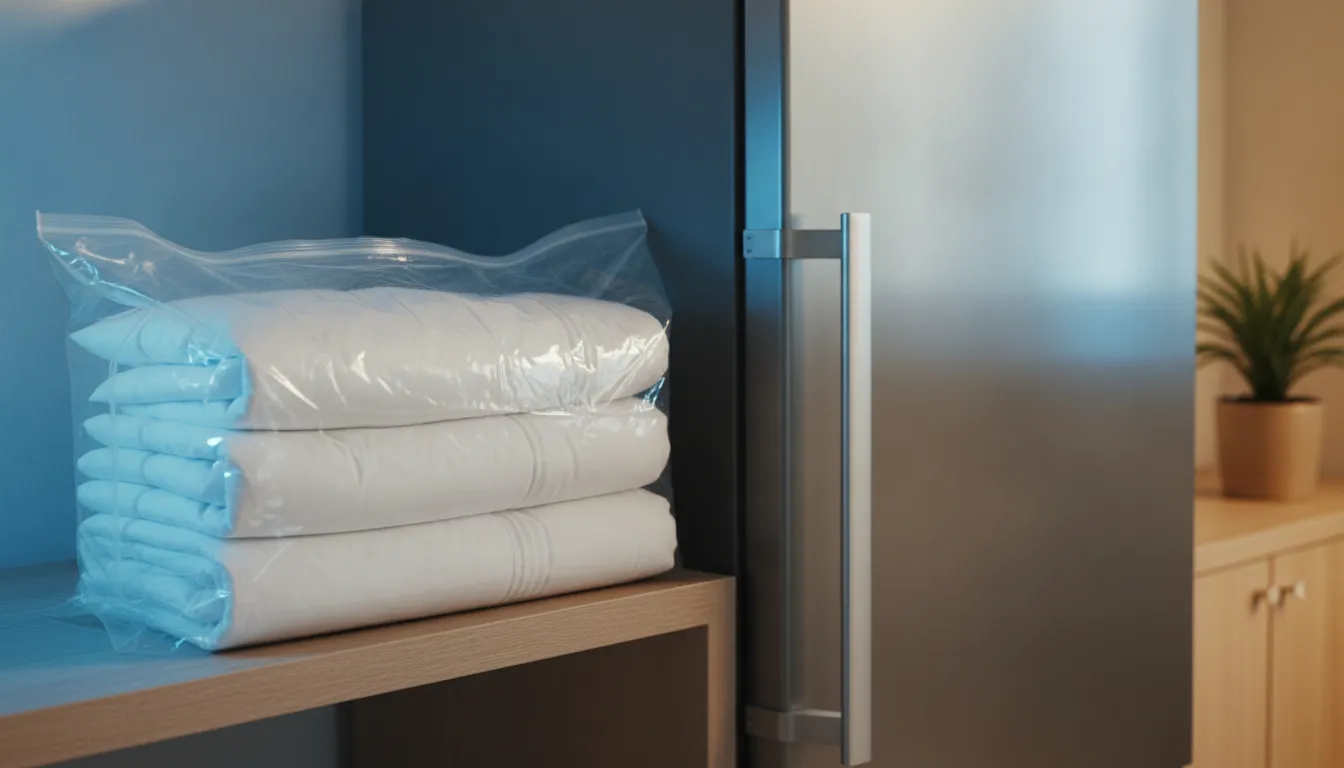
Bed bugs have a notable tolerance for cold. One source reports that they can remain active at temperatures as low as 46 degrees Fahrenheit. That is well below a comfortable indoor temperature, but it is not a reliable killing temperature. The same source summarizes research showing that some bed bugs survived short exposures as low as minus 13 degrees Fahrenheit because they can lower the freezing point of fluids in their bodies. In practical terms, cold weather alone should not be treated as proof that an item is pest-free.
The life stage also matters. The study summary describes testing the supercooling point and lower lethal temperature across all bed bug life stages, rather than looking only at adult insects. It also reported that bed bug eggs survived short-term exposure to temperatures as low as minus 25 degrees Celsius. That finding is one reason a quick trip into a cold garage, vehicle, or outdoor area can fail to control an infestation. Eggs and hidden insects may tolerate a brief exposure even when an item feels extremely cold.
Cold treatment therefore requires a controlled combination of conditions. The cited research summary says that bed bugs may be less susceptible to freezing temperatures than previously reported. It also reports that complete mortality across life stages required at least 80 hours at minus 16 degrees Celsius. Those results describe specific research conditions, not a universal household recipe, but they show why both the temperature and the clock matter. A shorter exposure at the same temperature may leave survivors.
There is also a physical problem with bulky belongings. The outside of a bag, blanket, or pile of clothing can become cold while the center remains warmer. The exposure countdown should not be assumed to start until the center of the infested item reaches the required temperature. If that point cannot be measured or reasonably confirmed, the treatment result is uncertain. For a broader checklist, review these common bed bug hiding spots before treating only one item.
For that reason, freezing is best understood as a possible tool for selected, isolated items, not a whole-room solution. It does not reach bed bugs concealed in cracks, furniture, walls, or other belongings elsewhere in a home. Use the method cautiously, keep potentially infested items contained, and avoid moving them back into clean areas until the wider bed bug plan is clear. Sources: University of Minnesota Extension guidance and cold-tolerance study summary.
Can Bed Bugs Survive Freezing? Temperature and Time Matter
Cold treatment is not defined by a single number. The time needed for control changes as the temperature changes, and the measured temperature must describe the item being treated rather than only the surrounding air. That is why an overnight freeze, a cold balcony, or a brief period in an appliance can produce a result that looks promising without being dependable.
Research summarized by Entomology Today shows how sharply the required exposure can change with temperature. Under the cited study conditions, complete mortality across life stages required at least 80 hours at minus 16 degrees Celsius. That finding demonstrates the time-temperature relationship, but it is not a universal recipe for every object or appliance.
A study summary provides another useful benchmark. It reports that achieving 100 percent mortality across all life stages required a minimum exposure of 80 hours at minus 16 degrees Celsius. It also summarizes control at temperatures below minus 15 degrees Celsius after 3.5 days, and below minus 20 degrees Celsius after 48 hours. The exact condition matters. A reader should not shorten the exposure merely because a freezer feels cold or the item’s surface has frost.
These findings also explain why cold can be misleading. An insect may survive a short exposure even when the air temperature is far below freezing. Eggs can be especially important because leaving one viable life stage behind can allow activity to continue. The study summary notes that all life stages were considered, and that some eggs survived short-term exposure as low as minus 25 degrees Celsius. A treatment plan therefore needs to account for eggs, nymphs, and adults rather than relying on what is visible.
The practical question is not only whether bed bugs can freeze. It is whether the entire item reached a sufficiently low temperature, whether that condition lasted long enough, and whether the method addressed all affected belongings and hiding places. If the item is dense, tightly packed, or difficult to measure, the outside may reach the target well before the center. That delay reduces the effective exposure time.
Use published thresholds as evidence that controlled freezing can work under defined conditions, not as permission to improvise with outdoor weather. For an exact source discussion, review this cold-tolerance study summary. The next issue is why winter air and unheated spaces rarely provide the same control as a measured treatment.
Why Outdoor Winter Temperatures Are Unreliable
Putting an infested chair, suitcase, or bag of clothing outdoors during winter may feel like a simple solution, but outdoor conditions are not a controlled freezer. Air temperature changes across the day. Sunlight can warm an object even when the forecast is below freezing. Wind, snow, shelter, and contact with a building can also change how quickly the item cools. A brief cold spell does not prove that the center of an object reached the required temperature.
That item-core distinction is central to cold treatment. Guidance says the countdown should begin only after the center of the infested item reaches 0 degrees Fahrenheit or lower. The outside can feel frozen while folded fabric, packed luggage, a cushion, or a wooden joint remains warmer. Without measuring or otherwise confirming the core condition, the exposure period is uncertain.
A household freezer has its own limitations, but it is still more controlled than a porch, garage, shed, or vehicle. University of Minnesota Extension reports that most household freezers operate between 0 and 5 degrees Fahrenheit. Outdoor areas do not hold a stable target in the same way. A warm afternoon or sunlit surface can interrupt the process, and the item may never cool evenly.
Containment matters as well. Moving a suspected item through a home, down a hallway, into a car, or across a yard can create opportunities for bed bugs to drop off or spread. If an item is moved, keep it sealed before transport and do not open it simply because the surrounding weather is cold. A sealed bag can reduce movement, but it does not make an uncontrolled temperature pattern equivalent to a validated treatment.
There is also a scope problem. Freezing one belonging cannot reach bed bugs hidden in a mattress, sofa, bed frame, baseboard, wall void, or another item. Integrated pest management combines prevention, monitoring, and treatment because isolated actions rarely cover every harborage. If activity is present in a room, treating a single object outdoors may leave the main source untouched.
For additional context, see the University of Minnesota Extension bed bug guidance. If freezing is considered at all, reserve it for a suitable, isolated item and evaluate the material. Consider containment, core temperature, exposure time, and the wider infestation before relying on the result.
Can a Household Freezer Treat Small Items?
A household freezer can sometimes help with a small, isolated, freezer-safe belonging, but it is not a reliable substitute for treating a room or building. The key question is not simply whether the appliance feels cold. The item must cool through its center, and that center must remain at the required temperature for the full exposure period. The University of Minnesota Extension states that all bed bug life stages will be killed on objects left in a freezer at 0 degrees Fahrenheit for 3 days. Its guidance also notes that most household freezers operate between 0 and 5 degrees Fahrenheit. That operating range makes verification important.
| condition | temperature | time | strengths and limits |
|---|---|---|---|
| Object in a freezer at the stated target | 0 degrees Fahrenheit | 3 days | Can address all life stages on a suitable object, provided its center reaches the target. |
| Typical household freezer | 0 to 5 degrees Fahrenheit | Depends on equipment and item | May be useful for small items, but the warmer end and item-core delay reduce certainty. |
| Bagged item under cited study recommendations | Depends on freezer temperature | 2 to 4 days | Plastic containment helps isolate the item, but it does not solve uneven cooling. |
The cited study recommendations advise placing potentially infested belongings in plastic bags and leaving them in the freezer for 2 to 4 days, depending on the freezer temperature. Read that as a controlled procedure, not as permission to freeze every possession. The University of Minnesota condition is more specific: objects in a 0-degree-Fahrenheit freezer for 3 days. These are not interchangeable promises for every appliance, package, or material. Source guidance: University of Minnesota Extension and the cited cold-tolerance study summary.
Do not overpack the freezer or compress a bulky item. A thick stack, stuffed bag, or dense object can have a warmer center long after its surface feels frozen. The exposure countdown should begin only after the center of the infested item reaches 0 degrees Fahrenheit, as the cited guidance explains. A household thermometer that measures only the appliance air may not confirm the temperature inside the object. When core temperature cannot be checked, the result is less certain.
Material safety is another limit. Electronics, liquids, leather, adhesives, delicate finishes, and moisture-sensitive goods may be damaged by freezing or condensation. Follow the manufacturer’s care guidance first. A sealed bag can reduce spread and help contain the item, but it cannot prevent damage or make an unsuitable object safe. After removal, keep the treated belonging isolated until the wider plan is clear.
Most importantly, freezer treatment applies to an isolated object, not to bed bugs hiding in a mattress, sofa, wall void, crack, nearby room, or another possession. If activity continues, repeatedly cycling individual belongings through the appliance can create false confidence while the source remains untreated. Freezing can be one limited tool for selected items, but inspection and a broader treatment plan are needed when infestation may extend beyond those items.
Which Items Are Safer to Freeze?
Freezing is best reserved for small, isolated belongings that are confirmed to be freezer-safe, can be sealed without damage, and can cool all the way through. It is not a universal solution for every fabric, object, or infestation. Before moving anything, consider the manufacturer’s care guidance, the material’s sensitivity to cold and condensation, and whether the item is compact enough for the center to reach the target temperature. A cold surface does not prove that the interior has received a lethal exposure.
The cited recommendations advise placing potentially infested items in plastic bags. The University of Minnesota Extension states that all bed bug life stages will be killed on objects left in a freezer at 0 degrees Fahrenheit for 3 days. Most household freezers operate between 0 and 5 degrees Fahrenheit, however, so the appliance setting, actual performance, package size, and item core all matter. The cited cold-treatment sources are University of Minnesota Extension and the cold-tolerance study summary.
- Select a genuinely suitable item. Choose only a small belonging that the manufacturer or material guidance indicates can tolerate freezing. Do not assume that electronics, liquids, leather, adhesives, delicate finishes, or moisture-sensitive objects are safe.
- Contain it before transport. Place the potentially infested item in a sealed plastic bag before moving it. Bagging helps contain bed bugs and reduces the chance of spreading them through the home or freezer area.
- Leave room for cooling. Avoid overpacking the appliance or compressing a dense object. A crowded freezer can make airflow and cooling less predictable, and a bulky item may have a warmer center than its surface.
- Check the core when possible. Measure the item’s center with an appropriate method when feasible. Begin counting exposure only after the item core reaches the target temperature, not when the bag first enters the freezer.
- Maintain the full condition. The cited study recommendations describe 2 to 4 days depending on freezer temperature, while University of Minnesota Extension describes objects at 0 degrees Fahrenheit for 3 days. Do not shorten the period because the outside feels frozen.
- Keep it isolated afterward. After removal, keep the treated item sealed or separated until the wider bed bug plan is clear. Do not return it to a room where active harborages have not been assessed.
Eggs and other life stages are why a brief or uneven freeze can be misleading. University of Minnesota Extension reports that bed bug eggs hatch in 6 to 10 days. The research summary also reports that bed bug eggs survived short-term exposures as low as minus 25 degrees Celsius. Those findings do not mean a properly controlled freezer treatment cannot work. They do mean that temperature, exposure duration, life stage, and item core must be considered together. A short cycle or a warm center can leave viable insects behind.
Freezer suitability also depends on what the item is made of. Condensation during removal may damage paper goods, electronics, fabrics with delicate finishes, or objects with bonded parts. Let a sealed bag warm before opening when appropriate, and follow material-specific care instructions. If those instructions are unavailable, the safer choice may be to avoid the freezer rather than risk damage or create an unverified treatment result.
Finally, treating one belonging does not treat insects in mattresses, furniture, walls, cracks, or nearby rooms. If several items may be involved, contain possessions and arrange a professional inspection. A broader integrated plan may be needed to confirm the identification, locate hiding places, address the affected areas, and monitor for continuing activity. Freezing can support a plan for selected objects, but it should not be presented as a whole-home solution.
What Works Better for Clothes, Bedding, and Rooms?
Freezing can be useful for some isolated belongings, but it is rarely the most practical first choice for clothing, bedding, or an occupied room. The better option depends on the item, the infestation’s location, and whether every life stage can be reached and exposed for long enough. A treatment that kills bugs in one bag does not address insects hidden in a mattress seam, bed frame, baseboard, wall void, or nearby furniture.
Use the dryer for washable clothes and bedding
For items that can safely tolerate heat, laundering and machine drying are often simpler than trying to freeze them. University of Minnesota Extension reports that clothing laundered in hot water and/or dried above 122 degrees Fahrenheit for 20 minutes will kill all bed bug stages. Follow the care label, and avoid moving loose items through the home before they are contained. Place potentially infested laundry in sealed bags or directly into the washer, then keep clean items sealed until the sleeping area and surrounding furnishings have been assessed.
Drying is especially useful for sheets, blankets, clothing, and other fabrics that can be processed without damage. It does not replace an inspection. Bed bugs may remain in the bed, box spring, nightstand, cracks, or adjacent rooms even after the laundry is treated.
Consider controlled heat or steam for furnishings
Professional heat treatment uses monitoring and controlled equipment to reach target temperatures throughout treatment areas, rather than relying on the temperature of a room’s air alone. University of Minnesota Extension describes a two-hour core exposure at 120 degrees Fahrenheit as a minimum target for heat treatments. Some pest control services may use 118 degrees Fahrenheit maintained for at least 70 minutes in target areas. Actual treatment decisions depend on the property, construction, contents, and equipment.
Steam can be appropriate for selected seams, joints, edges, and other reachable surfaces. It must be applied carefully so the heat reaches the area where bugs may be hiding without damaging materials or spreading the problem through careless movement. Read more about professional bed bug treatment options before treating a room with improvised heaters or household equipment.
Rooms need an integrated plan
A room-wide or building-wide infestation calls for more than one temperature method. Ace’s approach combines inspection, targeted treatment, monitoring, and prevention so hidden harborages and activity in connected areas are considered. Depending on the findings, a plan may include professional heat, steam, EPA-approved products, and other IPM measures. A bed bug removal service can help determine which belongings should be treated, isolated, discarded, or left in place while the wider plan is carried out. For a broader NYC treatment overview, see New York bed bug removal guidance.
The practical goal is not simply to kill visible bugs. It is to identify where activity is located, address all relevant life stages, and prevent treated items from becoming a route back into a clean area. That is why laundry and isolated-item treatment work best as supporting steps within a documented inspection and treatment plan, not as a substitute for one.
When Should You Stop Testing DIY Cold Treatment?
Stop treating freezing as a stand-alone experiment when you cannot confirm the insect, the item’s internal temperature, or the full area affected. A freezer may help with selected belongings under controlled conditions. But it cannot reach bed bugs tucked inside a mattress, box spring, wall void, furniture joint, crack, or neighboring room. Continuing to move items in and out of a freezer can create a false sense of progress while the infestation remains active.
Are you sure the pest is a bed bug?
Identification comes before treatment. If you are unsure what you found, review how to check for visible bed bugs before moving or freezing belongings. A University of Minnesota study found that 76 percent of samples submitted for identification were not bed bugs, according to University of Minnesota Extension. That finding is a useful reason to pause before repeatedly freezing clothing, bedding, or furniture. Carpet beetles, cockroach nymphs, and other insects can be mistaken for bed bugs, while bites alone cannot confirm the source.
If you have a specimen or clear signs of activity, a professional bed bug inspection can help establish what is present, where activity is concentrated, and whether more than one room may be involved. Correct identification prevents you from spending time treating the wrong pest or overlooking an active harborage.
Has freezing addressed the hiding places?
Cold treatment is most limited by scope. Even when an isolated item reaches the required temperature for the required exposure, that result says nothing about bugs hidden elsewhere. The item’s center must reach the target temperature before the exposure countdown begins, and bulky or tightly packed belongings may cool unevenly. If you cannot verify those conditions, or if activity continues after treatment, it is time to stop testing and reassess.
Bed bugs also pass through multiple life stages, including eggs. A method that misses an egg, nymph, or adult can leave the infestation able to continue. Avoid spreading uncertainty by moving untreated belongings from room to room. Keep potentially affected items contained while the broader inspection and treatment plan is determined.
What if sprays have not worked?
Repeatedly adding pesticides is not a reliable next step. Some bed bugs have developed resistance to common pesticides, so a spray that appears to work briefly may not control the population. An integrated plan combines inspection, source elimination or exclusion, targeted treatment, monitoring, and prevention. Depending on the findings, that plan may include controlled heat, steam, or other professional methods rather than another household experiment. Avoid relying on products such as bed bug bombs as a substitute for inspection. Working with bed bug specialists can also help keep inspection, treatment, monitoring, and prevention connected.
When freezing no longer answers the practical questions of what is present, where it is hiding, and whether every life stage is being addressed, inspection is the more useful next step. A clear assessment allows the right treatment options to be considered for the home, apartment, hotel, office, or other affected space.
Ready to Choose the Right Next Step?
An inspection can help clarify whether freezing is suitable for a limited item or whether a broader treatment plan is needed. Ace Bedbug Exterminating can help evaluate the situation and recommend an appropriate next step.
Ask Ace Bedbug Exterminating about an inspection and treatment recommendation
Frequently Asked Questions
Can bed bugs survive freezing?
Yes. Bed bugs can survive some short exposures to freezing temperatures, so placing an item outside during winter is not a dependable treatment. Cold works through a combination of temperature and time, and the item must become cold throughout, not just on its surface. Eggs may also tolerate short-term exposure to very low temperatures. Research summarized by Entomology Today found that cold tolerance varies across life stages.
How long can bed bugs survive freezing?
There is no single time that applies to every freezer, item, or life stage. The cited study summary reports that temperatures below -15 degrees Celsius required about 3.5 days for control of all life stages, while temperatures below -20 degrees Celsius required 48 hours. Those figures apply only when the item actually reaches and maintains the target temperature.
Can bed bugs survive freezing overnight?
Often, yes. An overnight freeze may not provide enough time for the center of clothing, luggage, furniture, or another bulky object to reach the required temperature. Do not remove or open a bagged item simply because its outside feels frozen. A controlled process must account for the item core and the full exposure period.
Does cold kill bed bugs and their eggs?
Cold can kill bed bugs and eggs when conditions are sufficiently cold and sustained, but incomplete exposure can leave survivors. University of Minnesota Extension states that all life stages can be killed on objects kept in a 0-degree-Fahrenheit freezer for three days, while also noting that the item must be treated under the correct conditions. Freezing isolated belongings does not reach bugs hidden in rooms, walls, mattresses, or furnishings.
Can bed bugs survive in the cold in a car?
Yes, a car is an unreliable cold-treatment environment. Outdoor temperatures fluctuate, sunlight can warm enclosed areas, and the temperature inside the thickest part of an item may differ from the surrounding air. Moving belongings into a cold vehicle may also spread bugs to new locations. Keep potentially infested items contained and arrange an inspection if activity may extend beyond one isolated object.