
In a Queens apartment, condo, row house, or multifamily building, the cheapest-looking treatment plan is not always the clearest one. A reputable provider should explain what the inspection found, why a particular treatment fits the property, how residents and pets should prepare, and what follow-up will look like.
When comparing a bed bug treatment company Queens residents can trust, look for a documented inspection. A customized Integrated Pest Management plan, clear safety instructions, and monitoring or follow-up after treatment. A legitimate provider should scope the infestation before presenting a final recommendation, rather than treating every home the same way.
A proper inspection should identify activity, hiding places, and the likely extent of the problem. Then give you useful information to share with a landlord or property manager when needed. Before you book, here is what to verify about a provider’s process, credentials, and local logistics.
Request an inspection from Ace Bed Bug Exterminating.
What a Reputable Bed Bug Treatment Company Queens Residents Can Verify Before Booking
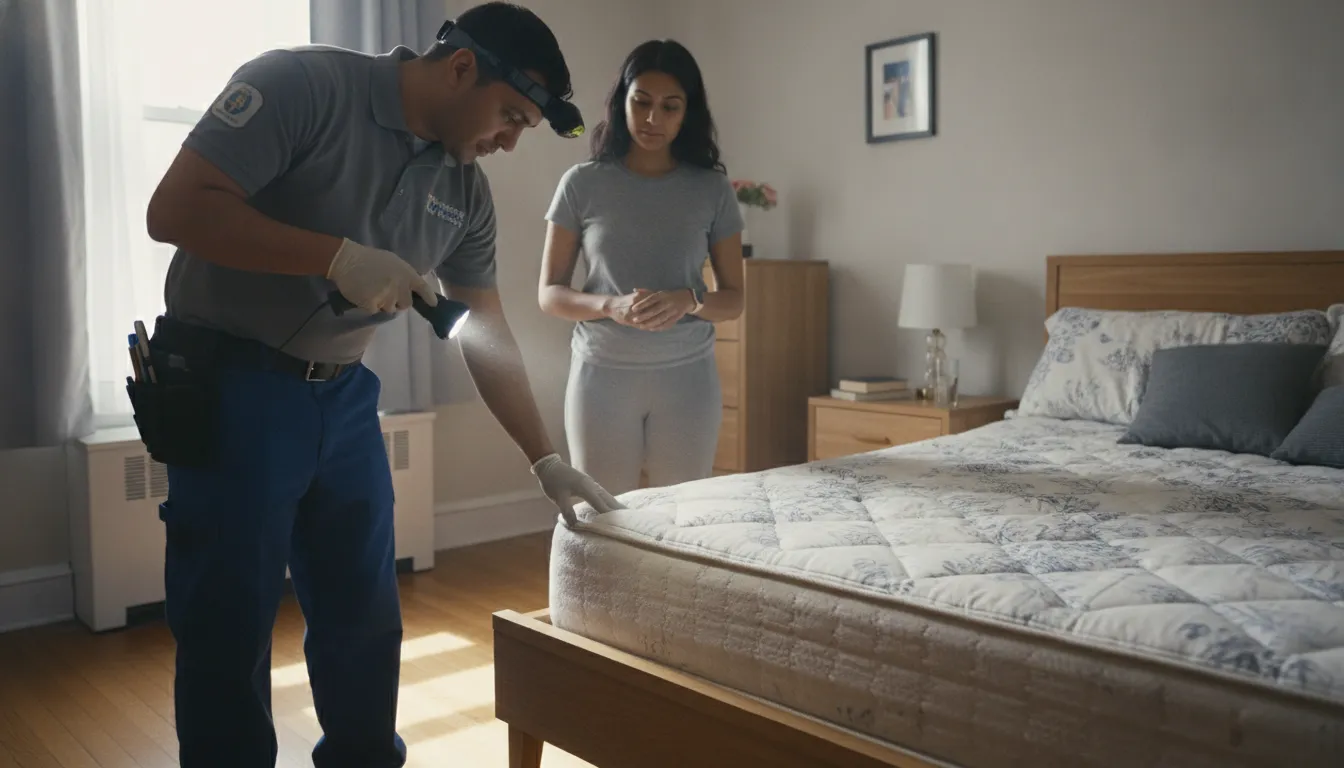
Before you schedule service, look for evidence that the provider understands bed bugs as a specialist problem rather than treating your home like a routine pest-control stop. The company should explain how it will inspect, document, treat, and monitor the infestation. The EPA notes that hiring a pest management professional can be a good option, but consumers should be careful when selecting a company. Review the EPA’s guidance on choosing professional bed bug help alongside the provider’s own answers.
Confirm bed bug specialization and credentials
Ask how much of the company’s work is devoted to bed bug detection, treatment, and prevention. A specialist should be able to discuss bed bug behavior, hiding locations, life stages, and the differences between an apartment, condo, row house, and multifamily property. Ask who will perform the inspection, what training or credentials that person holds, and whether the same team will explain preparation and follow-up.
Ace Bed Bug Exterminating describes itself as locally owned and focused exclusively on bed bug services in New York City and surrounding areas. It also reports trained service specialists and Associate Certified Entomologist credentials. You can review Ace’s experience and credentials, then ask any provider for comparable, specific information rather than accepting a vague claim of expertise.
Expect a real inspection and written scope
A quick visual glance is not the same as a structured inspection. The inspection should look for activity level, hiding spots, and the extent of the infestation, including evidence in mattresses, box springs, furniture, walls, cracks, and crevices. It should result in findings that your household, landlord, or property manager can understand. Read more about what a professional inspection covers.
Before booking treatment, request the scope in writing. It should identify the areas included, preparation responsibilities, products or methods under consideration, safety instructions, and how follow-up will be handled. A documented program commonly separates proper identification, preparation, intensive treatment, protection, and follow-up instead of presenting service as one unexplained visit. See an example of a documented bed bug service sequence.
Check Queens logistics before the appointment
Ask whether the provider regularly handles your property type, how technicians access units. What documentation can be shared with management, and how nearby units will be considered when the building is multifamily. Preparation is important whether you hire a professional or treat the infestation yourself, according to the EPA. A reputable company should give clear preparation and post-treatment care instructions before service, not leave residents guessing after the technician arrives. If the answers are specific, written, and tied to inspection findings, you have a much stronger basis for booking.
How Should a Professional Inspection Shape the Treatment Plan?
An inspection should do more than confirm that bed bugs may be present. It should give you a clearer picture of what the provider intends to treat and why. Ask whether the technician documented the activity level, likely hiding places, and the apparent extent of the infestation. Ace explains that a proper inspection should produce a detailed report covering those findings, rather than jumping straight to a standard application. You can also review what a professional inspection covers before comparing proposals.
Life stages matter. Ask whether the inspection looked for eggs, nymphs, and adult bed bugs, not only visible insects on the mattress. The search should consider mattresses, box springs, furniture, walls, cracks, and crevices, because the findings in those areas can change the treatment scope. This is especially important in Queens apartments, condos, and row houses where furniture, wall gaps, and adjoining living spaces may create different inspection considerations. Ace describes these inspection targets here: inspection findings and hiding places.
Questions that connect findings to recommendations
A useful provider should be able to answer practical questions without relying on a one-size-fits-all promise:
- What evidence indicates current activity, and how would you describe its level?
- Which rooms, furnishings, cracks, or other areas showed signs of bed bugs?
- Were multiple life stages found, and does that affect the proposed scope?
- Does the plan address only the reported bedroom, or are other areas included because of inspection findings?
- Why is each recommended method appropriate for this property and the observed conditions?
- What preparation, occupant safety steps, and follow-up does the plan require?
Method selection should follow this evaluation, not replace it. Ace describes customized treatment that may combine biopesticide, heat, steam, and other Integrated Pest Management techniques. The company also states that its service model moves from inspection and assessment to treatment, then monitoring and prevention education. That sequence gives you a useful standard when reviewing a proposal: the provider should explain the connection between evidence, treatment area, method selection, and follow-up. EPA guidance likewise notes that professional treatment requires careful company selection, and that bed bug control can involve both chemical and non-chemical methods.
Use the Queens bed bug removal plan for broader preparation and process context, but keep your buying decision focused on the inspection report. A reputable bed bug treatment company in Queens should be willing to explain what was found, what remains uncertain, and how those facts shaped the proposed work. Ace’s service model and IPM approach are described at bed bug removal and treatment methods.
Compare Treatment Methods, Occupant Safety, and Preparation
A trustworthy provider should explain why a particular treatment plan fits the property instead of presenting one method as a universal answer. A Queens apartment, condo, row house, and multifamily building can each have different hiding places, access issues, and risks of reintroduction. Treatment may combine chemical and non-chemical measures as part of Integrated Pest Management (IPM). An approach the EPA describes as using pest life-cycle information and available methods with the least possible hazard. EPA guidance on bed bug IPM also emphasizes that resident participation matters.
| Provider promise or method | What to ask | Evidence of a sound plan |
|---|---|---|
| “We use one treatment method for every property.” | What did the inspection find, and why is this method appropriate here? | The plan reflects activity level, hiding spots, infestation extent, furnishings, and access conditions. |
| Heat will solve the problem. | What areas and items will be heated, and how will temperature and exposure time be verified? | The provider explains limitations and avoids treating a general temperature claim as a guarantee. EPA guidance says infested articles or areas need to reach at least 120 F for 90 minutes to ensure eggs are killed. |
| Steam reaches hidden bugs. | Which cracks, crevices, fabrics, and hard-to-reach areas can steam safely address? | Steam is used selectively, alongside other appropriate measures, rather than as a substitute for inspection and monitoring. |
| EPA-approved products are safe. | Which product is being used, where will it be applied, and when may people and pets return? | The technician provides product-specific instructions, addresses children and pets, and explains post-treatment care. “EPA-approved” does not remove the need to follow the label and technician directions. |
| Prepare the home before treatment. | What must be bagged, laundered, moved, discarded, or left in place? | Instructions are written and specific. EPA recommends drying bedding and clothing at high temperatures for 30 minutes because washing alone generally does not kill bed bugs. |
| Return after a set amount of time. | What is the re-entry time for this treatment, and what changes if conditions differ? | The resident receives clear re-entry and ventilation instructions. Site guidance may list four hours, but the technician’s instructions control for the actual treatment. |
Preparation is part of treatment, not busywork. Removing clutter, following laundering directions, and protecting or relocating pets can give technicians better access and reduce avoidable exposure. A reputable bed bug removal and treatment methods plan should also explain what happens after application, including monitoring, prevention education, and any follow-up visit recommended from the findings.
Before work begins, ask for the plan in writing. It should identify the treatment areas, preparation steps, safety precautions, re-entry instructions, and follow-up expectations. No single method fits every property, and no responsible provider can promise the same outcome without considering the inspection. EPA notes that bed bug control takes time and patience because eggs resist many control methods. Follow the technician’s instructions closely, especially in multifamily housing where residents and building management may both need to participate.
What Should Happen After the First Treatment?
The first treatment should be the beginning of a documented follow-up plan, not the end of the conversation. A reputable provider should explain how activity will be monitored, when a return visit may be appropriate. And what you should do if you see signs of bed bugs again. Ace describes its service model as inspection and assessment, treatment application, followed by monitoring and prevention education. That three-phase approach gives Queens residents a practical standard for comparing a bed bug treatment company Queens homeowners or renters are considering.
Expect monitoring, not an instant all-clear
Bed bug control can require patience. The EPA explains that bed bug eggs resist many control methods and that controlling an infestation takes time because bed bugs reproduce quickly. A single quiet night does not prove that every egg or hiding place has been addressed. Ask the technician what evidence will be reviewed during follow-up, where monitors should be placed, and which signs should prompt a call.
Monitoring may include checking sleeping areas, furniture, cracks, and other locations identified during the original inspection. If bites continue or a live bug is found, record the date, location, and any photograph you can safely take. Do not apply additional pesticides on your own unless the provider specifically directs you. Unplanned products can interfere with the treatment plan or create avoidable safety concerns.
Clarify the timeline and return-visit policy
There is no responsible universal timetable for every Queens property. The right interval depends on the inspection findings, treatment methods, building conditions, resident participation, and whether adjacent units or shared spaces require attention. Before booking, ask whether follow-up is included, what triggers a return visit, and who schedules it. You can also review this guide to the bed bug treatment timeline for a fuller explanation of why resolution may take more than one visit.
A follow-up should be more than a quick reassurance. It should revisit the documented scope, assess current activity, and identify any remaining access or preparation issues. EPA guidance says effective IPM depends on diligent participation by residents and, in multifamily housing, building management as well.
Request written aftercare and documentation
Ask for written instructions covering re-entry, laundering or containment steps, child and pet safety, monitoring, and what to report. Ace’s service guidance states that products are intended to be safe for families and pets when used according to treatment instructions, so those instructions matter. The site also lists a four-hour re-entry guideline, but residents should follow the technician’s instructions for the specific property.
Keep the inspection report, treatment summary, products or methods used, areas treated, follow-up notes, and any recommendations for prevention. Ace reports serving more than 9,567 customers across the New York Tri-State Area, but a service record for your own apartment. Condo, or house is more useful than a general experience claim when coordinating with a landlord or property manager.
Put satisfaction and warranty terms in writing
Ask exactly what the provider means by a satisfaction guarantee or warranty. How long does it last? What visits are included? What resident preparation is required? Are follow-up conditions different for apartments, multifamily buildings, or neighboring units? Ace identifies follow-up visits, prevention education, satisfaction coverage, and warranty coverage as part of its stated service model. But specific terms should be confirmed before work begins rather than assumed.
Questions to Ask Before You Book in Queens
A confident booking decision starts with clear answers, not pressure to schedule immediately. Ask the company to explain what it will inspect, how the treatment will be selected, what residents must do, and how follow-up will work. Those answers should fit your Queens property, whether you live in an apartment, condo, row house, or multifamily building.
- What credentials, experience, and bed bug focus do your technicians have? Ask whether bed bug work is a core specialty and who will perform the inspection and treatment. A provider should be comfortable explaining its qualifications without making unsupported claims.
- Will you inspect the property before recommending treatment? The inspection should look for activity, hiding places, and the extent of the issue, including mattresses, box springs, furniture, cracks, and crevices. Ask whether you will receive a written report describing the findings. For more detail, see what a professional inspection covers.
- What areas and units are included in the proposed scope? Confirm which rooms, belongings, common areas, and potentially connected or adjacent units will be evaluated. In a Queens apartment building, clarify who coordinates access with the property manager and what information must be shared.
- Which methods are you recommending, and why do they fit this property? A sound plan may combine inspection, treatment application, and monitoring. Ask whether the approach uses appropriate chemical and non-chemical methods, such as steam or an EPA-approved product, rather than treating one method as ideal for every situation. You can review bed bug removal and treatment methods before the appointment.
- What preparation is required before the technician arrives? Request written instructions covering laundry, clutter, furniture, access to walls and floor edges, and items that should not be moved between rooms. Preparation is an important part of professional bed bug control, not an optional extra.
- What should I do about children, pets, and re-entry? Ask how children and pets should be protected, whether pets need temporary relocation, which products will be used, and when residents may return. Site guidance may specify a four-hour re-entry period, but follow the technician’s instructions for your property and treatment.
- What follow-up is included, and what happens if activity continues? Ask when monitoring or a follow-up visit is expected, what signs you should report, and which service or warranty terms apply. Do not accept a vague promise of immediate resolution. Bed bug control can require patience because eggs resist many methods, as the EPA explains.
- What will I receive in writing before I book? Request the inspection findings, treatment scope, preparation checklist, safety and re-entry instructions, follow-up plan, and clear service terms. If anything is unclear, ask for it to be explained before authorizing work. A reputable bed bug treatment company in Queens should make the process understandable from the first visit through monitoring.
Clear answers help you compare providers on process and accountability rather than on sales language alone. They also give everyone involved, including residents and property managers, the same expectations before treatment begins.
Why Apartment and Property-Manager Coordination Matters
Bed bug treatment in a Queens apartment is rarely only a conversation between one resident and a technician. A property manager, superintendent, owner, or building representative may need to coordinate entry, share building information, and communicate preparation steps. That coordination is not bureaucracy for its own sake. The EPA says bed bug control in multifamily housing works best when residents and building management participate diligently in an Integrated Pest Management approach. Read the EPA guidance on multifamily IPM.
Before service, establish who can provide access to each space, how keys or entry codes will be handled, and which rooms require preparation. Residents should receive clear written instructions about laundering, moving belongings, pets, children, and re-entry. A professional should explain which instructions apply to the specific treatment rather than handing everyone a vague checklist. Preparation is important whether a property hires a professional or attempts control independently, according to the EPA. EPA preparation guidance can help managers identify questions to discuss in advance.
Plan access and resident communication before treatment
Access planning should cover the reported unit, common areas that need inspection, and any other spaces the technician specifically identifies during the evaluation. Do not promise that every neighboring apartment will automatically be treated. Instead, ask the bed bug treatment company Queens residents are considering how it evaluates the broader property. What findings would change the scope, and who receives the resulting report.
Resident notices should state the appointment window, preparation requirements, safety instructions, and the right contact for questions. They should also explain what residents should do if they see activity after service. That keeps tenants from improvising with unapproved sprays or moving infested furniture through hallways.
Request documentation that the property can use
A useful service record identifies the inspected areas, observed activity, treatment performed, products or methods used, and instructions for occupants. It should also make follow-up expectations clear without promising a universal number of visits or a guaranteed outcome. If a resident reports bites but no visible insects, ask whether additional inspection options are appropriate. Some providers describe canine inspection as useful in that situation, but the decision should follow the property’s evidence and the technician’s assessment. Commercial bed bug treatment offers related coordination considerations for larger properties.
Clear roles, careful notices, and written records give residents practical direction while helping managers track what happened. That shared process is a stronger sign of a prepared multifamily program than a promise built around one treatment method.
A professional inspection can help you understand the scope of the problem and what your property may need before treatment begins. To discuss your situation with a bed bug specialist, contact us to request an inspection in Queens. Share the property type and any details you have so the next step can focus on a clear, practical plan.
Frequently Asked Questions
How much does bed bug treatment cost in Queens?
There is no responsible one-size-fits-all quote. The total depends on the infestation’s extent, the property layout, the treatment plan, and whether follow-up visits are needed. Ask for an inspection-based scope that explains what is included before you book.
What should happen during the initial inspection?
A technician should look for signs and bed bugs at different life stages in sleeping areas, furniture, cracks, crevices, and other likely hiding places. You should receive a clear explanation of the findings, affected areas, recommended treatment, preparation steps, and any limitations.
How can I tell whether a treatment plan is safe for my family and pets?
Ask which products and methods will be used, where they will be applied, how to prepare, and when residents and pets may return. A sound plan includes written instructions for children, pets, re-entry, ventilation, and post-treatment care. Follow the technician’s site-specific directions rather than relying on a generic timeline.
How many visits should I expect?
The answer depends on inspection findings and how residents and, when applicable, building management participate in the plan. A reputable provider explains whether monitoring or follow-up is recommended, what each visit is meant to accomplish. And which signs should prompt a call instead of promising the same schedule for every property.
What documentation should a bed bug treatment company provide?
Request the inspection findings, treatment scope, preparation and safety instructions, products or methods used, areas treated, follow-up recommendations, and any applicable service terms in writing. Queens renters may also need a report to share with a landlord or property manager, so confirm that the documentation is specific enough for that purpose.