
Bed bugs in a school call for a calm, coordinated response, not blame or a reflexive shutdown. Administrators should protect student safety and privacy while documenting what was reported, checking the affected setting, and aligning next steps with local district and health requirements.
In short: Bed bug treatment for schools should be built around the specific evidence, spaces, and people involved. A school-specific response can protect safety and privacy without assuming that one universal policy fits every campus, district, or situation.
The right starting point is to establish what was observed, where it occurred, and who will coordinate the response. That foundation helps the school respond proportionately when bed bugs are reported, while avoiding unnecessary disruption for students, staff, and families.
What Does Bed Bug Treatment for Schools Involve?
A calm, documented response protects students, staff, and families without turning a suspected sighting into a public accusation. The goal is to contain possible movement, verify what was found, and coordinate next steps under the school’s plan and local guidance.
- Receive the report privately. Thank the person who reported it and move the conversation away from public areas. Do not name, shame, isolate, or imply that a student or family caused the problem. Record what was observed, when it was noticed, and who needs to know.
- Contain belongings carefully and respectfully. Keep potentially affected bags, coats, or other items from moving unnecessarily, but do not treat a child as contaminated or require improvised procedures. A school can ask its designated staff member or pest professional for item-specific direction. The EPA notes that bed bugs are often brought into buildings on personal belongings and that a school can act as a travel hub even though it is not an ideal habitat. See the EPA’s guidance for school administrators, teachers, and staff for response principles.
- Assign one point person. Designate an administrator, school nurse, facilities lead, or other trained staff member to coordinate communication, records, access, and vendor contact. A single point of contact reduces conflicting instructions and helps protect student privacy.
- Document exact dates and locations. Note the room, bus, furniture, belongings, and circumstances connected with the report. Preserve any specimen or photograph according to the school’s procedure, without declaring it a bed bug before identification. These records help an inspector determine where to look and whether additional areas need review.
- Check local and district requirements. Review the school’s pest-management plan and consult the district, health department, or other applicable public-health authority. Policies differ by jurisdiction. EPA guidance says a sighting usually does not require closing the school or automatically sending students home, but that guidance does not replace local policy or public-health direction.
- Coordinate a professional inspection. Arrange an assessment of the reported area and nearby spaces, then share the documented facts with the pest-management provider. Do not apply pesticides or promise treatment before the situation is assessed. The inspection findings should guide any response, communication, and follow-up plan.
This sequence keeps the response evidence-based and proportionate. A report deserves prompt attention, but it is not by itself proof of a school-wide infestation.
How Can a School Confirm a Possible Bed Bug Safely?
A report should prompt a careful inspection, not a conclusion based on one symptom. Physical evidence is generally more reliable than bites, which can resemble other skin reactions and are a poor indicator by themselves. A low-level presence can also be difficult to identify, so staff should avoid dismissing a concern simply because no insect is found immediately.
Look for physical evidence
Trained inspectors look for live bed bugs, shed skins, fecal spotting, eggs, and eggshells in likely hiding places. Eggs and eggshells are about 1 millimeter in size and may appear pale yellow. Bed bugs can fit into very small spaces, including seams, cracks, crevices, and gaps around furniture. The inspection should consider the reported location and nearby areas, rather than treating a single desk, backpack, or classroom object as proof of an infestation.
Schools may consider contacting a qualified pest-management provider, including Ace, for a professional bed bug inspection when the evidence is unclear or the concern may extend beyond one item. An experienced inspector can assess activity, hiding locations, the possible extent of the issue, and life stages without relying on assumptions about who brought the insect or where it originated.
Protect student privacy during the inspection
Inspection procedures should be discreet and consistent. Do not identify a student publicly, ask classmates to speculate, or imply that a child or family caused the problem. Coordinate privately with the school point person, nurse, facilities staff, and the family contact designated by school policy. Keep notes focused on observable facts, such as dates, locations, and physical evidence, and limit access to those who need the information to respond.
Staff should also avoid automatically isolating a student or sending students home solely because of a report. Follow applicable district and health guidance while the inspection is arranged. A calm, evidence-based response protects dignity and helps the school make decisions that support both student safety and an accurate path toward bed bug treatment for schools.
Where Should Schools Look: Classrooms, Buses, and Shared Spaces
A report should prompt a focused inspection, not a search for someone to blame. Bed bugs can arrive on personal belongings, and a school may become a travel hub between locations without being an ideal habitat itself. Reviewing how bed bugs spread can help staff explain the pathway without suggesting that a student or family caused the problem.
School areas to inspect after a possible bed bug report
| Area | What to inspect | Response notes |
|---|---|---|
| Classrooms | Student seating, upholstered furniture, gaps near baseboards, backpacks, and items stored on or near the floor. | Document the exact seat or location, limit unnecessary movement of belongings, and inspect surrounding areas to understand the extent. |
| School buses | Fabric seats, seams, floor edges, storage areas, and routes or vehicles connected to the reported trip. | Coordinate with transportation staff and inspect linked vehicles when the report suggests a travel pathway. Avoid singling out a rider. |
| Offices and nurse areas | Waiting-room chairs, couches, blankets, exam furniture, and places where personal items were set down. | Protect privacy, record dates and locations, and keep potentially affected items contained until the response plan is clear. |
| Libraries and shared rooms | Soft seating, cushions, carpet edges, study areas, and frequently moved bags or coats. | Inspect nearby and connected spaces rather than treating one sighting as proof of a building-wide infestation. |
| Storage and staff spaces | Lost-and-found items, coat areas, lockers, equipment bags, and clutter that creates hiding places. | Separate inspection and handling from routine cleaning. Use a documented chain of decisions for belongings and access. |
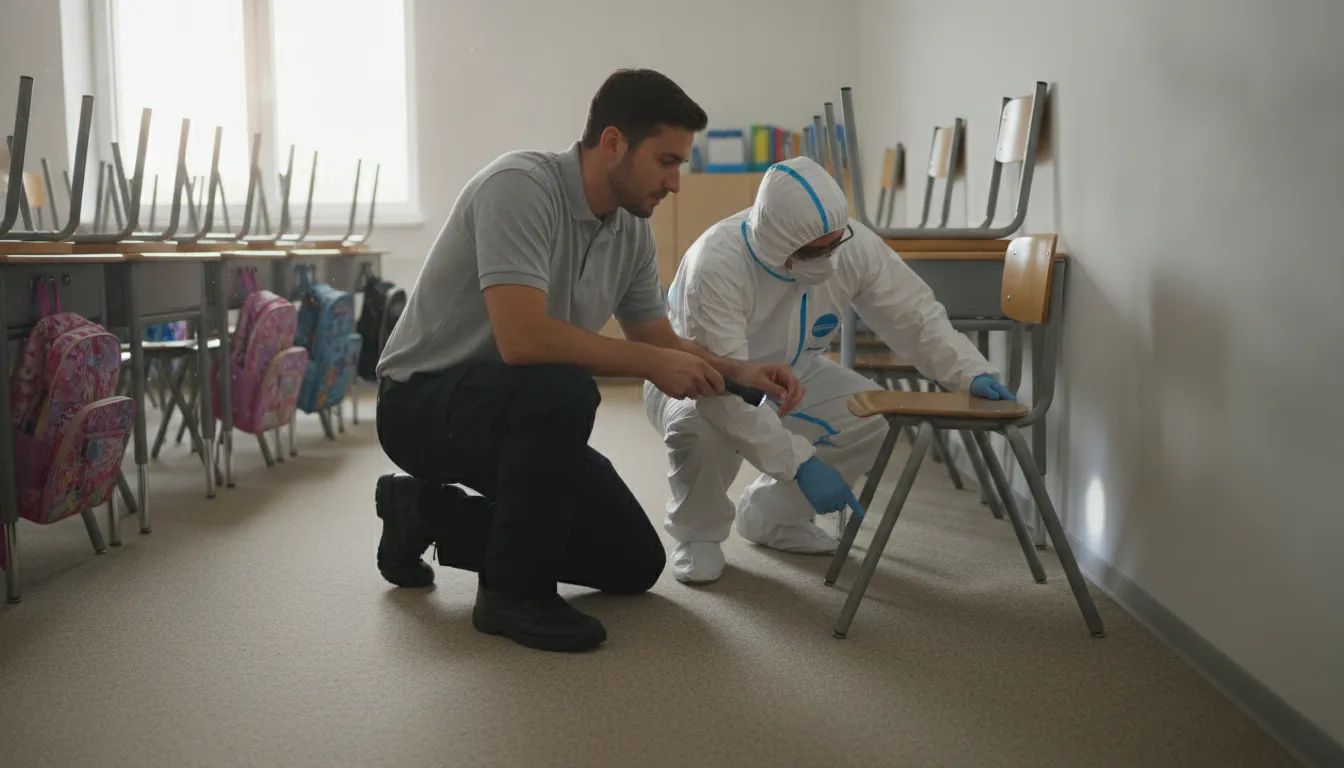
EPA guidance recommends inspecting potentially affected areas and surrounding spaces to determine the extent. It also identifies belongings, furniture, sanitation, trapping, steam, and heat as possible control considerations. The right response depends on the evidence, the material involved, and the school’s policy. TAMU notes that bed bugs do not normally live in clothing, although they may crawl onto clothing left on a floor or bed overnight. That distinction supports calm, practical handling rather than sending a student home or labeling clothing as contaminated without inspection.
How Should Schools Communicate With Families?
Family communication should be prompt, factual, and calm. A school can explain that a possible bed bug report is being assessed. Describe the steps being taken, and provide practical guidance without identifying a student, classroom, or household. The goal is to support cooperation while protecting privacy.
Share confirmed information, not speculation
Use plain language and distinguish between a report, an inspection finding, and a confirmed identification. Avoid describing bites as proof, since bites alone are not a reliable way to identify bed bugs. Do not circulate photographs of a student’s belongings, name an affected family, or suggest that anyone caused the issue. Stigma can discourage families from reporting concerns and can make a school-wide response harder.
Families generally need to know what was observed, which areas are being checked, whether any temporary steps are requested, and whom to contact with questions. If belongings may need to be handled, provide specific, written instructions that are practical for families to follow. Do not ask families to discard furniture or apply pesticides unless a qualified professional and applicable instructions support that recommendation.
Coordinate the message with the right authorities
Before sending a notice, administrators should check district procedures, school policy, and guidance from the local or state health department. New York schools can use the New York State Center for School Health bed bug resources, which points schools toward New York education and health resources as well as federal guidance. The EPA school guidance also emphasizes educating staff, students, parents, and guardians while avoiding stigma.
Choose one informed point of contact so families receive consistent updates. Keep a private log of reports, inspection results, dates, and locations, and share only the information necessary for safety and coordination. If the situation changes, update families with what is known, what remains under review, and what action comes next.
How Should a School Prepare for Treatment?
Preparation works best when one designated administrator or facilities lead owns the plan and keeps the provider, staff, and building team aligned. Confirm which rooms, vehicles, storage areas, and furnishings need access. Then schedule inspection or treatment windows that account for students, staff, custodial work, and any required closure or re-entry procedures. Schools should follow district, health department, pesticide-label, and provider instructions rather than assume that every building uses the same process.
Start with a written inventory of potentially affected items. Record the room, furniture, date, and item involved so the provider can assess the situation without relying on memory. EPA guidance recommends placing potentially infested items in sealed plastic bags and treating them. In a school, that may include removable fabric items, cushions, costumes, blankets, or personal belongings. But the facilities lead should confirm what can safely be bagged, moved, or treated. Do not send questionable items to another classroom or home without a containment plan.
Laundry and dryer instructions require care. EPA school guidance lists high-temperature drying for 30 minutes as a measure that can kill bed bugs. But that does not make every fabric, garment, or school-owned item safe for a dryer. Check the material, equipment, and applicable care instructions first, and follow the pest provider’s directions. Never use heat on an item that could be damaged or create a safety hazard.
Vacuuming may help remove bed bugs and debris from suitable surfaces, but it is not a substitute for inspection or a complete treatment plan. After vacuuming, EPA advises sealing the bag and discarding it outdoors. Use equipment and disposal procedures approved by the facilities team, and avoid moving a vacuum or contents through clean areas in a way that could spread pests.
For a practical residential reference, review this bed bug treatment preparation checklist. It can help identify preparation questions, but it is not school policy. A provider should confirm the final access, containment, item-handling, and re-entry plan with the person responsible for the building.
How Is Bed Bug Treatment for Schools Coordinated?
Effective coordination starts with an inspection, not a predetermined product or treatment promise. Integrated pest management, or IPM, combines information about bed bug biology, the school environment, monitoring, and appropriate control methods while limiting risks to people, property, and the surrounding environment. The EPA’s bed bug IPM guidance supports choosing controls based on the situation rather than relying on one measure.
The school should assign a point person who can share inspection findings with the district, facilities staff, administrators, and the pest-management provider. That team can define which rooms, furniture, belongings, or transportation areas need attention, determine whether access restrictions are necessary, and coordinate timing around students, staff, cleaning, and scheduled activities. Families may also need clear preparation instructions, while protecting the privacy of any student or household connected to the report.
How are treatment methods selected?
The provider should explain what was found, where activity was located, and which treatment options fit the site. Depending on the inspection, controls may include targeted product application, steam, heat, sanitation, trapping, or a combination of methods.
EPA school guidance notes that nonchemical approaches can be useful and that pesticides may not always be needed. Eggs can resist many control methods, so follow-up work or repeated treatment may be necessary. The school should not promise a universal timeline or assume that a method used in one room will be appropriate throughout the building.
Any pesticide decision requires extra review. Any pesticide used in a school should be labeled for bed bugs. It should be applied according to the label by appropriately licensed applicators and handled in line with applicable state and local requirements. State and local IPM, pesticide-notification, health, and district requirements may also apply. The administrator should ask the provider to document the product, directions, treated locations, re-entry instructions, and any preparation or ventilation requirements.
For schools seeking a specialist to help assess findings and coordinate a case-specific plan, NYC bed bug treatment services may include inspection, customized treatment options, and follow-up planning. Learn more about Ace’s bed bug specialists, and confirm that any proposed work fits the school’s district and local requirements.
What Follow-Up Should Happen After Treatment?
Follow-up turns a one-time treatment into a controlled monitoring process. Keep a dated location log that records where activity was reported, what was found, what action was taken, and when the area was checked again. Exact locations help the school and pest professional distinguish a new introduction from activity that may require additional attention. They also make it easier to coordinate classrooms, offices, buses, and shared spaces without identifying a student or family.
Schedule a reinspection based on the treatment plan and the findings from the initial visit. A single follow-up date may not fit every situation, particularly when the extent of activity is still being assessed. EPA DIY guidance advises continued checking for at least a year after treatment is finished. That is guidance for ongoing vigilance, not a universal school mandate, so administrators should also follow district procedures, local requirements, and the provider’s documented recommendations. For practical signs to watch between visits, review this guide to post-treatment bed bug monitoring.
What feedback should be collected?
Give designated staff a simple, private way to report new observations. Ask about the date, location, room or vehicle, and what was observed. Feedback from teachers, nurses, facilities staff, transportation personnel, and families can reveal patterns that a single inspection may miss. Keep reports factual and avoid treating bites alone as proof of ongoing activity. Physical evidence and inspection findings are more useful for deciding what happens next.
When should the plan be adjusted?
Escalate the issue to the pest professional and the school’s designated decision-maker when live bugs or other credible evidence reappear. Reports continue in the same location, activity is found in an adjacent area, or monitoring records show that the issue is spreading. The response may involve a targeted reinspection, revised preparation, another treatment step, or a review of access and prevention measures. Do not add products or change treatment methods independently. Prevention education should continue, including reminders about reporting observations promptly, protecting privacy, and following the school’s approved procedures for belongings and shared spaces.
A thoughtful inspection and coordinated plan can help school leaders respond clearly while protecting student privacy and keeping families informed. Ace can discuss the school setting, inspection needs, and treatment coordination considerations so your team can determine an appropriate path.
Frequently Asked Questions
What should a school do when bed bugs are reported?
Designate a point person, document the date and exact location, and arrange a careful inspection of the reported area and nearby spaces. Keep communication factual and private, and check district, health department, and pesticide requirements before choosing a response. EPA guidance says a sighting usually does not require closing the school or automatically sending students home, but local policy still controls.
Can a child attend school if there are bed bugs at home?
A family should contact the school privately and follow its local guidance rather than assuming a child must stay home. Bed bugs do not normally live in clothing, although they may crawl onto clothes left on a floor or bed overnight. Staff should avoid stigma and focus on practical support, such as handling belongings discreetly and coordinating with the family.
How can a school tell whether a suspected bug is a bed bug?
Bites alone cannot confirm an infestation because they are a poor indicator. Physical evidence, such as insects, eggs, eggshells, dark spotting, or signs in furniture seams, is more useful. A trained inspector can assess the specimen, hiding places, and surrounding areas, especially because low-level activity can be difficult to find and identify. EPA identification guidance provides additional examples.
Does a school need pesticide treatment after a report?
Not necessarily. The response should be based on inspection and an integrated pest management plan, which may include non-chemical measures and monitoring. If pesticides are used, EPA school guidance says they must be labeled for bed bugs, applied according to the label, and handled by appropriately licensed applicators while meeting applicable state and local requirements.
How long should a school monitor after treatment?
Follow-up should include a written log of dates, locations, findings, and actions, plus any planned reinspection or additional treatment. Bed bug eggs can resist many control methods, so one visit may not resolve every stage. EPA advises continued checking for at least a year after treatment, as general guidance rather than a universal school mandate.
One Response