
In a shelter, a suspected bed bug report deserves a calm, organized response that protects the resident and limits unnecessary disruption. Staff do not need to diagnose the problem on the spot. They need to listen without blame, document what was reported, reduce movement of belongings, and arrange a careful inspection.
Effective bed bug treatment for shelters starts with respectful intake and a professional inspection, then uses a customized plan for the sleeping area, belongings, shared spaces, follow-up, and resident communication.
Contact Ace Bedbug Exterminating to arrange a professional inspection and customized treatment plan.
The first staff interaction can shape whether residents feel supported and whether useful details are captured. A consistent reporting process helps the team respond promptly while preserving privacy, dignity, and continuity of care.
What Should Staff Do When a Resident Reports Suspected Bed Bugs?
Respond calmly, thank the resident for speaking up, and treat the report as useful information rather than a cause for blame. Bed bugs are not considered disease vectors, but they can contribute to anxiety, discomfort, and sleeplessness. Those effects can be especially disruptive in a shared living environment. A Toronto Public Health review published in the CDC’s Emerging Infectious Diseases journal documented complaints from 46 locations in 2003, including shelters. The review, “Bed Bug Infestations in an Urban Environment”, shows why a clear intake process matters.
- Listen and provide a private, respectful response. Ask what the resident observed, when it was noticed, and where. Avoid suggesting that the resident caused the problem or has poor hygiene. Do not promise that the report confirms an infestation. The goal at this stage is to gather useful details and keep the resident informed about the next step.
- Record the report without unnecessary personal detail. Note the date and time, room or bed location, visible insects or signs, reported bites or irritation, and any nearby areas that may need review. Keep access to the record limited to staff who need it for coordination. If the resident captured a specimen or photograph, preserve it for an inspector rather than relying on an unverified identification.
- Limit avoidable movement until the area is assessed. Ask the resident not to carry bedding, furniture, clothing, or personal items to another room. Do not begin extensive cleaning, rearranging, or disposal before inspection, because disturbing hiding places can make assessment harder and may spread insects. Continue essential support and explain that these temporary precautions are intended to protect residents, not isolate or punish anyone.
- Arrange a timely professional assessment. A thorough inspection helps determine how widespread the issue may be and what response is appropriate. Coordinate access to the reported sleeping area and nearby spaces, and share the intake notes with the provider. For an overview of what this assessment can involve, see our professional bed bug inspection guide.
Until an inspection is complete, describe the situation as suspected bed bug activity. That wording keeps communication accurate while staff coordinate a customized response and maintain the resident’s continuity of care.
How Can Shelters Protect Resident Dignity During Inspection?
A suspected bed bug issue can be stressful, especially for someone already coping with housing instability or past trauma. Bed bugs are not considered disease vectors, but people may still experience anxiety, discomfort, and sleeplessness. Staff can reduce that burden by treating the report as a practical health and housing concern, not a personal failing. The CDC describes these quality-of-life effects without assigning blame to affected residents.
Use private, respectful communication
Invite the resident to speak privately whenever possible. Ask what they have noticed, where they sleep, and whether bites, insects, or other signs are affecting their rest. Use neutral language such as “suspected activity” or “inspection,” rather than words that suggest an unclean room or careless behavior. Explain what will happen next, who needs access, and how personal information will be handled.
Inspection should be consent-aware and coordinated with the shelter’s policies. Do not assume that every resident can empty a room, move furniture, launder belongings, or remain away from a sleeping area without help. Offer an interpreter, mobility assistance, additional time, or another reasonable accommodation when needed. If the resident is not available, follow the facility’s established access process and document the reason for any delay.
Offer practical help without taking control away
Some residents may need hands-on support preparing a sleeping space and belongings. The resident treatment preparation steps can help staff explain tasks in plain language and divide them into manageable actions. Ask what the resident can do independently, then provide help with bags, laundry coordination, or moving items only as appropriate.
Keep essential medications, identification, mobility devices, and other necessities accessible. Avoid discarding belongings or moving items to another room without a clear plan. A calm explanation, consistent point of contact, and private follow-up can protect trust while allowing the inspection team to gather accurate information.
How Should Staff Limit Movement Without Isolating People?
Movement controls should reduce opportunities for bed bugs to spread while preserving residents’ dignity and access to services. The goal is not to label or punish a person. It is to keep belongings, sleeping areas, and shared spaces organized until an inspection clarifies what is happening.
Start by asking the resident to avoid moving bedding, furniture, bags, or other personal items to another room until the area has been assessed. Avoid broad restrictions on people when a narrower control on belongings and room-to-room movement will address the immediate concern. Explain the reason privately and calmly. And provide practical help if the resident needs somewhere safe to store essential items or continue receiving meals, medication, case management, and other services.
Coordinate the response with the staff member responsible for the affected room and nearby spaces. Bed bugs can move from a bed to nearby furniture and may spread farther when control measures are not used. So inspect connected sleeping areas and shared furniture based on the facility’s plan. A resource explaining how bed bugs spread between units can help staff understand why moving people or belongings without a plan may extend the problem.
During inspection, keep activity deliberate. Cornell shelter guidance recommends moving slowly and avoiding disturbance that could cause hiding bugs to scatter. Do not rush to clean, rearrange, or discard furniture before inspection unless there is an immediate safety reason. Items removed from nearby furniture can be placed in sealed plastic bags for inspection and cleaning, with the bag labeled according to the facility’s internal process.
Use consistent, neutral language in staff handoffs. Record which room or sleeping area is being assessed, what movement guidance was provided, and where contained belongings were placed. Reassure residents that these steps are temporary, focused on limiting spread, and not a judgment about cleanliness or personal responsibility.
What Does Bed Bug Treatment for Shelters Involve?
Bed bug treatment for shelters works best as a coordinated process rather than a single spray or room visit. The response should connect inspection, resident support, preparation, treatment, monitoring, and communication across sleeping areas and shared spaces. A thorough inspection helps determine how widespread the activity is and which management approach fits the site. Learn more about a customized bed bug treatment process.
Start with inspection and a written plan
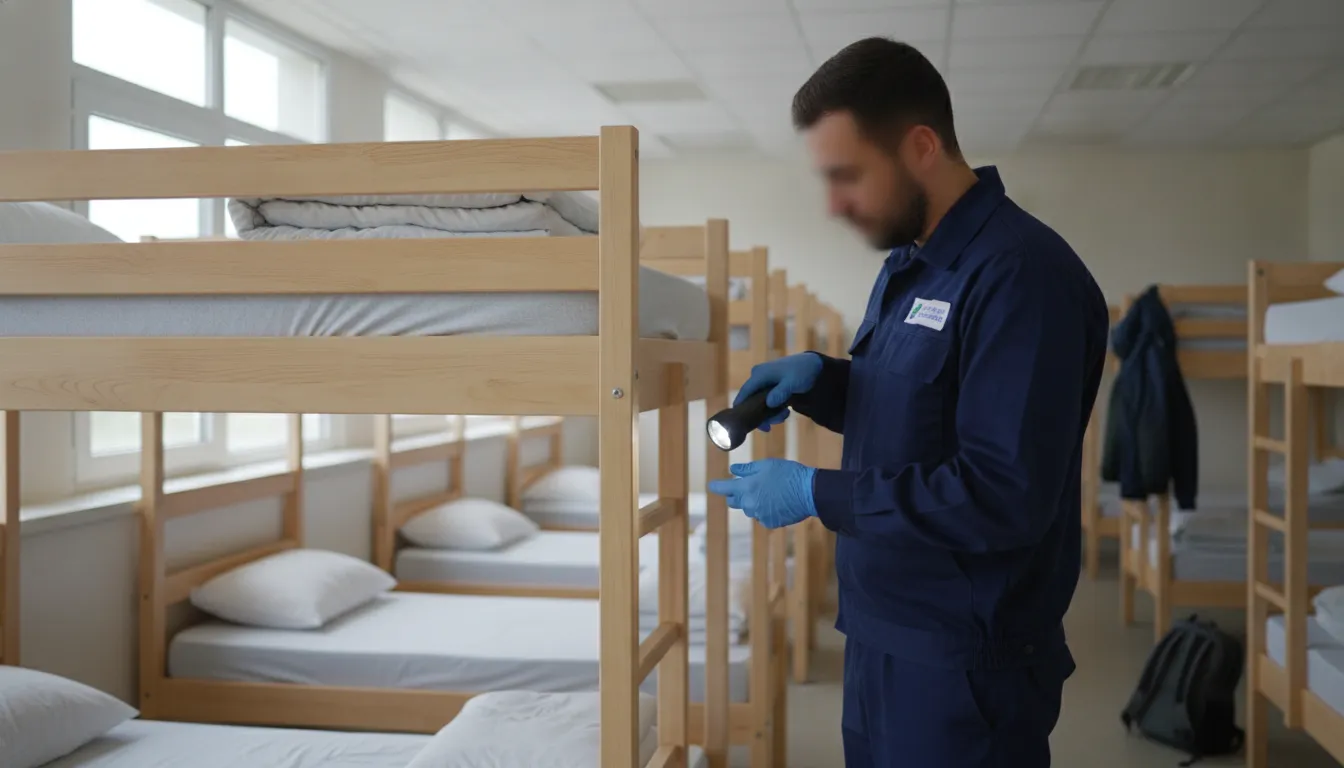
A qualified professional should inspect sleeping areas first, then examine nearby furniture, walls, floor edges, and other potential hiding places. Staff can provide access information, identify occupied and vacant beds, and share reports without assigning blame to residents. The inspection findings should guide the scope of preparation and treatment. Ace describes its own process as inspection and assessment, followed by a customized plan, monitoring, and prevention.
| Stage | What it may involve | Staff coordination |
|---|---|---|
| Inspection | Confirm activity, identify hiding places, and assess nearby beds and furnishings. | Arrange access, document findings, and protect resident privacy. |
| Preparation | Contain belongings and bedding according to the provider’s instructions. | Offer practical help and plan room access without unnecessary displacement. |
| Treatment | Use a customized integrated pest management plan, which may combine methods such as targeted product application, heat, steam, vacuuming, or encasements. | Follow product labels, provider directions, and any required safety precautions. |
| Monitoring | Reinspect and track signs of activity after treatment. | Keep a clear handoff between shifts and escalate unresolved signs. |
Coordinate methods and safety carefully
There is no universal treatment for every shelter room. Heat must reach lethal temperatures throughout treated items to kill all life stages, while monitors can help detect bed bugs but do not control an infestation. The Maine healthy-housing guidance distinguishes monitoring from treatment. A professional should select and explain methods based on the inspection, building conditions, belongings, and continuity-of-care needs.
Staff should not add pesticides, increase application rates, or return bedding to service contrary to label or provider instructions. The CDC warns that excessive insecticide use or use contrary to label directions can increase potential human toxicity. Document the provider’s instructions, treatment areas, precautions, and follow-up plan so every shift receives the same information.
In a shared setting, treatment coordination also means considering adjacent beds, rooms, laundry handling, and common areas. The goal is to contain activity without stigmatizing residents or interrupting essential services more than necessary. Professional follow-up helps the shelter adjust the plan when monitoring shows continued activity.
How Should Shelters Prepare Belongings and Shared Areas?
Preparation should follow the inspection, not replace it. Cornell shelter guidance recommends starting where people sleep and moving outward through the room before room preparation begins. This sequence helps the inspector understand the likely scope before belongings are rearranged or removed. Read the Cornell guidance for the full process.
Start with sleeping areas
Keep the bed, cot, mattress, nearby furniture, and floor area available for inspection. Avoid sweeping items into hallways, closets, laundry rooms, or another resident’s space. Furniture near a bed can become infested, and the problem may spread away from the bed without control measures. Inspectors should work slowly and avoid disturbing hiding bugs.
Contain bedding and loose belongings
After the inspection identifies what needs attention, place removable items into sturdy plastic bags and seal them before they leave the room. Items taken from nearby furniture can be bagged for inspection and cleaning. Bedding, pillows, and similar washable materials can be sealed in large plastic bags for laundering. Keep bags clearly associated with the original room or bed, and move them directly to the designated cleaning area rather than staging them in a shared space.
Follow the treatment provider’s instructions for laundering, drying, storage, and replacement. Do not assume that ordinary cleaning alone resolves an infestation. Staff should also avoid discarding furniture or personal property unless a qualified professional and the shelter’s policy support that decision.
Coordinate shared areas
Review lounges, storage areas, laundry rooms, offices, and other places where belongings are temporarily placed. Limit unnecessary movement between rooms while preserving access to essential services. Use labeled bags or containers, a clean staging area, and a simple handoff process so contained items do not get mixed with untreated property. Preparation should support continuity of care, not isolate or blame residents.
- Identify the sleeping area and nearby furniture for inspection first.
- Bag loose items and bedding before moving them.
- Keep untreated belongings out of shared staging areas.
- Record the room, bed, bag, and destination so items can be returned correctly.
- Use the provider’s written instructions for cleaning and re-entry.
What Should Shelter Teams Document and Communicate?
Clear records help a shelter coordinate a response without turning a resident report into a source of blame or confusion. Use one confidential incident record for each suspected case, then update it as inspection, preparation, treatment, and follow-up occur.
At minimum, record the date and time of the report, the room or bed involved, the observations that prompted the report, and the areas inspected. Note whether nearby sleeping spaces or shared areas were checked, what belongings were contained, and which actions were completed or deferred. A published study, Survey of bed bug infestations in homeless shelters in southern France, used a seven-level scale to assess infestation degree. A consistent rating system can help teams describe conditions over time without relying on vague labels.
Keep communication factual and privacy-aware. Share only the information each staff member needs to protect residents and coordinate the response. Avoid posting names, room details, or suspected infestation information where other residents or visitors can see it. Speak with the affected resident privately, explain the next step, and provide practical preparation help without suggesting that the person caused the problem. Bed bugs are not considered disease vectors, but they can contribute to anxiety, discomfort, and sleeplessness, so respectful communication is part of a responsible response (CDC guidance).
Ask the treatment provider for written instructions before work begins. The handoff should identify the areas to prepare, belongings that must remain contained, products or methods used, and provider instructions for label safety, ventilation, re-entry, bedding, and cleaning. Do not let staff guess about pesticide use. CDC reporting identified inadequate notification, untreated pesticide-exposed bedding, and excessive application among factors contributing to insecticide-related illness.
Close the loop with a short shift-to-shift handoff. Identify the current status, rooms awaiting inspection or treatment, resident support needs, restrictions on moving belongings, and the next review date. A bed bug treatment coordination and records guide can help property and facility teams structure that information while keeping this shelter response centered on privacy and continuity of care.
How Do Shelters Confirm Treatment Worked?
Confirmation requires more than finding no bugs during a single visit. A thorough inspection helps determine how widespread the infestation is and guides the management plan. So the provider and shelter team should agree on what will be checked, where, and when before treatment begins. Keep the plan practical for the affected sleeping areas, nearby rooms, and shared spaces.
Monitoring and control are different jobs. Adhesive tape or another monitoring method can help capture evidence of wandering bed bugs, but it is not a control strategy by itself. Record the location and date of any insect, cast skin, eggs, or new spotting, and share that information with the treatment provider. Do not treat an empty monitor as proof that the infestation is resolved.
Plan a re-inspection with the professional who assessed the site. The timing and scope should reflect the treatment method, the areas involved, and the provider’s instructions. During follow-up, compare the findings with the original inspection and look for activity in sleeping areas, nearby furniture, room edges, and other locations identified in the treatment plan. A live bug, fresh evidence, or continuing resident reports should trigger a prompt review rather than a quiet return to normal operations.
Follow-up education helps staff and residents recognize possible signs, report them without blame, and avoid moving belongings or people in ways that could spread an unresolved problem. Explain what monitors can and cannot show, how to preserve evidence, and whom to contact with concerns. Some residents may need additional help maintaining the agreed preparation and monitoring steps.
If activity continues, findings are unclear, or multiple rooms become involved, escalate to a qualified pest professional for another inspection and a revised plan. Ace describes a service model that includes follow-up visits and prevention education. Read what to do after treatment for additional follow-up considerations.
Frequently Asked Questions
How should shelters respond when a resident reports suspected bed bugs?
Thank the resident, avoid blame, document the location and reported signs, and arrange a careful inspection before cleaning or rearranging the space. Bed bugs are not considered disease vectors, but they can cause anxiety, discomfort, and sleeplessness, so a respectful response matters. CDC guidance supports taking the quality-of-life impact seriously.
How can shelters protect resident dignity during inspection?
Speak privately, explain each step, protect personal information, and offer practical help with preparation when needed. Some residents may need assistance preparing their living space for inspection and treatment, according to Cornell shelter guidance. Use neutral language and avoid implying that a resident caused the problem.
How should a shelter prevent bed bugs from spreading between rooms or residents?
Limit unnecessary movement of people, furniture, bedding, and personal items until the affected area is assessed. Inspect slowly so hiding bugs are not disturbed and scattered, and bag items removed from nearby furniture for inspection and cleaning. Coordinate any room changes with staff so belongings are not moved into uninspected areas.
What should staff do with potentially infested clothing and personal items?
Keep items contained rather than carrying them loose through the facility. Place bedding and other removable belongings in sealed plastic bags, then follow the treatment provider’s instructions for laundering, drying, inspection, or other handling. Do not discard or treat belongings with chemicals unless the method is appropriate and specifically directed.
When should a shelter contact a pest management professional?
Contact a qualified professional when inspection suggests bed bugs, multiple rooms may be involved, residents cannot safely complete preparation, or activity continues after initial response steps. A thorough inspection helps determine the infestation’s scope and the best management approach. Avoid excessive or off-label insecticide use because it can increase potential human toxicity, as noted by the CDC.