
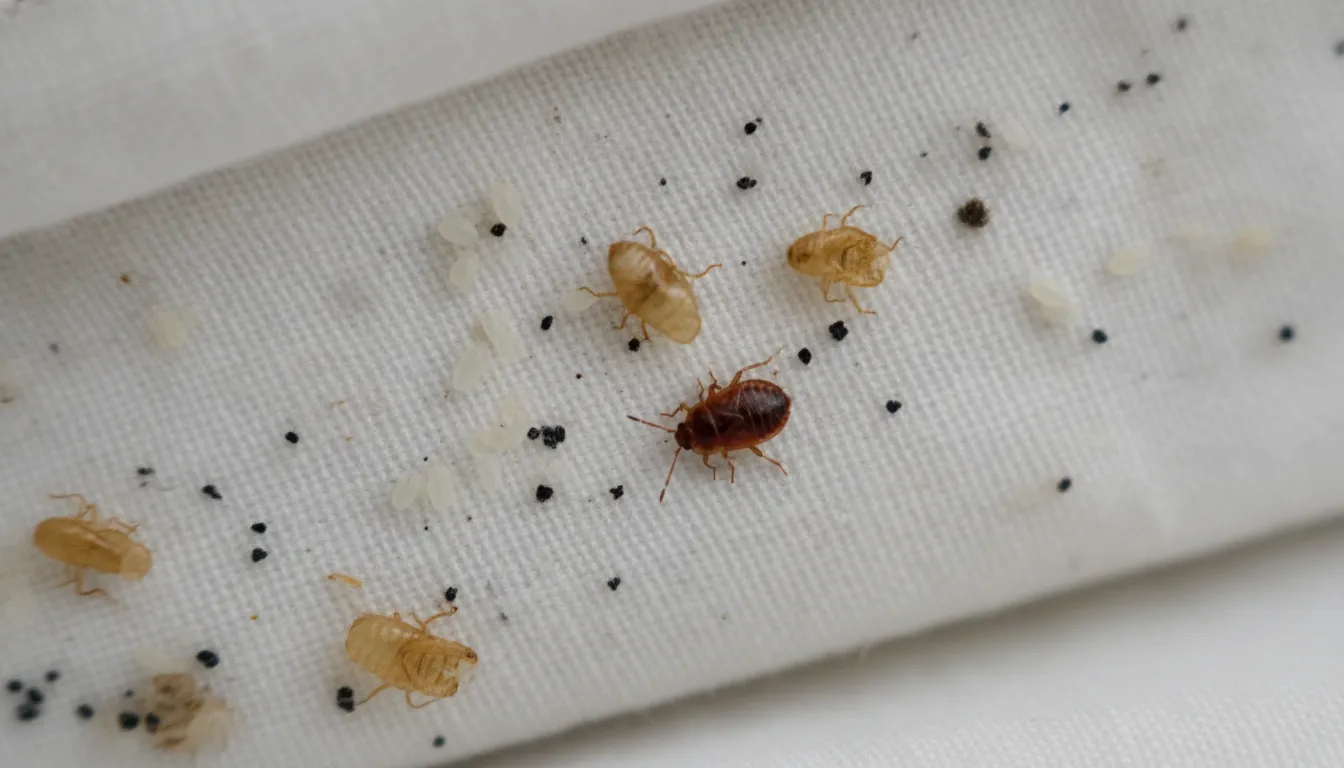
To find a bed bug nest, look for clusters of tiny eggs, dark fecal spots, shed skins, and live bugs in six key spots: mattress seams, box springs, bed frames, headboards, nearby furniture, and room perimeters including baseboards and outlets. Physical evidence is more reliable than bite marks alone, since roughly 30 percent of people show no skin reaction after being bitten.
Knowing where to look is only half the job. The other half is knowing what order to look in. This article focuses on that narrower problem: how to read the physical signs of a nest and work through hiding spots the way a professional would. For a broader walkthrough of the full inspection process, the guide on how do you check for bed bugs covers the complete five-step method.
What Does a Bed Bug Nest Actually Look Like?
Bed bugs do not build a nest the way wasps or ants do. What you are looking for is a harborage: a tight cluster of bugs, cast skins, eggs, and waste concentrated in one spot.
Eggs and nymphs. Eggs are about 1 mm long, pearl-white, and sticky enough to cling to fabric or wood. They are almost always laid in groups. Nymphs are translucent when unfed and turn red-brown after a blood meal.
Fecal spots. According to the US EPA's 2013 guidance, 20% of adult bed bugs and large nymphs excrete remains of previous meals while actively feeding. These spots look like small ink dots, bleed into fabric like a marker would, and cluster near where bugs rest.
Shed skins. Bed bugs molt five times before reaching adulthood. Each molt leaves behind a pale, hollow shell that holds the exact shape of the bug. Finding several skins in one place is a strong sign of an established harborage.
Live bugs. Adult bed bugs are apple-seed shaped, flat when unfed, and reddish-brown. They move quickly when disturbed. According to the University of Kentucky Entomology department, approximately 30 percent of people show no skin reaction after being bitten, which means bites alone are not a reliable way to confirm an infestation. Physical evidence is what counts.
Tools You Need Before You Start Inspecting
You do not need specialized equipment to do a thorough inspection, but a few simple items make a real difference.
- Bright LED flashlight. Bed bugs retreat from light and hide in gaps too dark to see without one. A narrow beam works better than a wide flood for probing seams and joints.
- Magnifying glass. Eggs and first-stage nymphs are small enough to miss with the naked eye. A basic magnifying glass is enough.
- Thin probe. A credit card, a playing card, or a thin plastic spatula lets you press into mattress seams and pry open gaps without damaging fabric or wood. Avoid sharp metal tools that can tear fabric and scatter bugs.
- Latex or nitrile gloves. Protect your hands and prevent you from accidentally transferring eggs to other areas of the room.
- White paper or a white sheet. Lay it under the area you are inspecting. Bugs, skins, and fecal debris that fall during the inspection show up clearly against white.
- Zip-lock bags. If you find live bugs or shed skins, seal them in a bag. This lets you show them to a professional for confirmation.
One monitoring tool worth adding to this kit is bed bug interceptors. These are plastic cups placed under each furniture leg. Bed bugs attempting to climb up or down get trapped inside. Interceptors do not eliminate an infestation, but they tell you whether bugs are present and help isolate the bed from the wall when the bed is moved away from any contact surface.
The 6 Hiding Spots Where Bed Bug Nests Are Found Most Often
Professionals check these spots in order, starting closest to where a person sleeps and working outward. Bed bugs stay near their food source, so the bed is always the first priority.
1. Mattress seams and tufts. Run your flashlight and probe slowly along every seam on the top, sides, and bottom of the mattress. Pay extra attention to tufts, handles, and any area where fabric is folded or stitched. Fecal spots and shed skins collect in these folds. Flip the mattress completely and check the underside.
2. Box spring. Research indicates that 34.6% of bed bugs found in bedrooms are located within the box spring. The fabric dust cover on the underside is a common entry point. Remove or cut it away carefully and inspect the wooden frame, staples, and any cardboard lining inside. This is often where the densest harborage is found.
3. Bed frame. Check every joint, screw hole, and crack in the frame. Bed bugs compress their flat bodies into gaps as thin as a credit card. Look at the slats, the side rails, and any area where two pieces of wood or metal meet. Use your probe to press into crevices and watch for bugs that scatter.
4. Headboard. Headboards are frequently overlooked because they are mounted to the wall. Remove the headboard if possible and inspect the back face, the mounting hardware, and the wall behind it. Screw holes and hollow sections are common harborage points [S2].
5. Nearby furniture. Nightstands, dressers, and upholstered chairs within a few feet of the bed are the next priority. Open every drawer and inspect the interior corners, the undersides, and the joints. Check the legs and any decorative carvings where a bug could wedge itself. A study published in Physiological Entomology found that 90% of recently fed bugs move to corner harborages within 24 hours, which explains why furniture corners accumulate evidence quickly.
6. Room perimeter: baseboards, outlets, and wall hangings. Once you have covered the bed and furniture, work around the room's edges [S3]. Press your probe along the gap between the baseboard and the floor. Remove outlet covers and switch plates and shine your flashlight inside. Take down picture frames and mirrors and check the back face and the wall behind them. For a full breakdown of what a thorough NYC bedroom inspection covers, the bed bug detection guide for New York City walks through each zone in detail.
Work from the bed outward and do not skip a zone because it looks clean at a glance. Fecal spots and eggs are small enough to miss in a quick pass.
How to Lure Bed Bugs Out of Hiding
Passive monitoring and mild heat are the two most practical ways to draw bed bugs into the open. Neither requires special skills, and both can confirm a nest location before you commit to a treatment plan.
Interceptors. Place bed bug interceptors under each leg of the bed after pulling the bed away from the wall and removing any bedding that touches the floor. Bugs moving toward or away from the mattress fall into the outer ring and cannot climb out. Check the cups every morning for three to five days. Finding bugs in the interceptors confirms active movement and tells you the infestation is not yet contained to one piece of furniture.
Body heat and carbon dioxide. Bed bugs navigate primarily by warmth and the carbon dioxide you exhale while sleeping. Sitting or lying near a suspected harborage area for 20 to 30 minutes in a quiet, dark room can trigger movement. According to the University of Tennessee, a bed bug can crawl at 7.6 ft./min., so once disturbed, bugs move fast. Have your flashlight ready and scan immediately when you shift position.
Steam over seams. Directing a clothes steamer slowly along mattress seams and furniture joints can push bugs out of tight crevices without scattering them the way a spray might. Keep the nozzle moving steadily and watch the surrounding fabric for bugs fleeing the heat.
When visual inspection and passive monitoring still leave you uncertain, canine detection is an option worth considering. Trained dogs locate live bugs and eggs in areas that are too confined for a visual check, and the method is reported as 95% effective for detection. This is particularly useful in large apartments or rooms with built-in furniture where you cannot pull everything away from the wall.
Bed Bugs vs. Lookalikes: Don’t Mistake These Insects for a Nest
Finding small brown insects near your bed does not automatically mean you have bed bugs. Carpet beetles, bat bugs, and booklice all share enough surface similarities to cause a false alarm. The treatment for each pest is different, so identifying the right one matters before you do anything else.
| Feature | Bed Bug | Carpet Beetle | Bat Bug |
|---|---|---|---|
| Shape | Oval, flat, apple-seed shaped | Rounded, dome-shaped | Oval, nearly identical to bed bug |
| Color | Reddish-brown (unfed); darker after feeding | Black, brown, or mottled with white and orange scales | Reddish-brown, very similar to bed bug |
| Wings | Has wing pads but does not fly | Has functional wings and can fly | Has wing pads but does not fly |
| Found near | Mattress seams, box springs, bed frames, baseboards | Carpets, wool, dried food, natural fiber clothing | Roosts where bats are present; near attic access points or chimneys |
The most common confusion is between bed bugs and carpet beetles. Carpet beetle larvae are fuzzy and elongated, while bed bug nymphs are smooth and teardrop-shaped. Adult carpet beetles are also far more likely to be found in closets and along carpet edges than clustered near a bed.
Bat bugs look nearly identical to bed bugs under the naked eye. The key difference is location: bat bugs are found near bat roosts, typically in attics, wall voids, or near chimney openings. If you find what looks like a bed bug infestation in a room that has no sleeping occupant, or near an attic access point, bat bugs are worth considering.
If you are not certain what you have found, seal a sample in a zip-lock bag and have it confirmed by a professional before starting any treatment.
What Causes Bed Bugs to Die, and Why DIY Sprays Often Make Things Worse
Bed bugs die when exposed to sustained high heat, prolonged cold, or targeted pesticides applied correctly. Of these, heat treatment is the most thorough because it reaches inside furniture, wall voids, and other enclosed spaces where sprays cannot penetrate. Cold can also be effective, but it requires consistent low temperatures held for an extended period, which is difficult to achieve in a typical apartment. You can read more about how heat is applied professionally in this step-by-step guide to bed bug heat treatment in NYC.
The problem with most consumer sprays is that many act as repellents rather than contact killers. When a bug detects a repellent chemical, it moves away from the treated area instead of dying in place. This scatters bugs from the main harborage into walls, adjacent rooms, or furniture that was previously unaffected. The infestation does not shrink; it spreads and becomes harder to map.
Pesticide resistance is also a real concern. Some bed bug populations have developed tolerance to common active ingredients, so applying the wrong product repeatedly can make an infestation harder to eliminate.
DIY sprays work best as a supplement to a confirmed treatment plan, not as a first response. If you have located a nest and want to understand what actually eliminates bed bugs rather than just displacing them, the breakdown of what kills bed bugs instantly separates the methods that work from the ones that only appear to.
How to Find a Bed Bug Nest: When to Call a Professional Exterminator in NYC
If you have found physical evidence in more than one hiding spot, or if interceptors keep catching bugs after several days, passive monitoring has done its job: it has confirmed an active infestation. Continued self-treatment at that point is likely to scatter bugs rather than eliminate them.
Ace Bed Bug Exterminating is a professional bed bug extermination service operating across all five NYC boroughs. Trained specialists assess the infestation, apply targeted biopesticide treatments that cover the full lifecycle from eggs to adults, and provide follow-up guidance.
Prices and plan limits verified as of October 2026.
FAQs
Do bed bugs go away if you shower?
Showering removes bed bugs from your skin but does nothing to an infestation. Bed bugs do not live on the body the way lice do. They feed quickly, usually at night, then retreat to a harborage in the mattress, furniture, or walls. Washing your body offers no protection against future bites and does not reduce the population in your home.
Do bed bugs fly or jump?
Bed bugs do neither. They have wing pads but cannot fly, and their legs are not built for jumping. They move entirely by crawling, which is why they stay close to sleeping areas and why interceptors placed under furniture legs catch them. Their crawling speed is faster than most people expect, reaching 7.6 ft./min..
Where do bed bugs come from and how do you get rid of them?
Bed bugs travel on luggage, used furniture, clothing, and bedding. Hotels, public transit, and second-hand stores are common pickup points. Getting rid of them requires locating the harborage, then applying a method that kills bugs at every life stage, including eggs. Heat treatment reaches into spaces that sprays miss. For a full overview of detection and treatment options in New York City, the complete NYC bed bug inspection guide covers both steps in detail.
How should you handle belongings during a move to avoid spreading bed bugs?
Inspect all furniture, bedding, and clothing before packing. Seal items in plastic bags or bins rather than cardboard boxes, which bugs can hide inside. Wash and dry all fabric items on high heat before moving them. Do not move upholstered furniture that has not been inspected and cleared. If you are moving because of an active infestation, have a professional treat the space before you pack anything that will go into a new home.
Where do bed bugs hide on your body?
Bed bugs do not live on the body between feedings. They bite exposed skin during sleep, typically on the arms, neck, shoulders, and legs, then return to a nearby harborage. You will not find a nest on or in your body. If you are waking up with bites, the harborage is almost always within a few feet of where you sleep, most often in the mattress, box spring, or bed frame.
Conclusion
Finding a bed bug nest comes down to reading physical evidence, including fecal spots, shed skins, and eggs, and checking hiding spots in the right order. Start at the mattress seams, work through the box spring and bed frame, then move outward to furniture and the room perimeter. Bite marks alone are not a reliable indicator, since a significant share of people show no skin reaction at all.
If your inspection turns up evidence in more than one location, or if passive monitoring confirms bugs are still moving after several days, the next step is professional treatment. Document what you found, where you found it, and how long the signs have been present. That information helps a specialist match the treatment method to the actual scope of the infestation.