
For Brooklyn renters and homeowners, choosing pet safe bed bug treatment Brooklyn families can plan around means more than finding a product labeled natural. You need a treatment method matched to the infestation, clear instructions for removing dogs, cats, birds, and other animals, and a written re-entry plan that accounts for your apartment, building, and pets.
Request a pet-conscious bed bug treatment plan for your Brooklyn home
What Does Pet Safe Bed Bug Treatment in Brooklyn Involve?
Pet safe bed bug treatment in Brooklyn is a customized plan that protects animals by combining inspection, targeted treatment, pet relocation, and clear re-entry instructions. The safest method depends on the home, infestation, materials, and product label. No provider should promise that every method is risk-free for every pet.
The phrase “pet safe” should describe a process, not an absolute guarantee. Dogs, cats, birds, reptiles, fish, and small mammals can have different sensitivities. Your provider should ask what animals live in the home, where their food and bedding are kept, and whether any pet has a respiratory or medical condition. Share those details before treatment, and ask whether your veterinarian should be consulted.
For a Brooklyn apartment, the plan also needs to account for shared walls, neighboring units, elevators, hallways, and the possibility that bed bugs arrived through used furniture, luggage, or another unit. A detailed inspection helps determine which rooms need attention and which belongings should stay in place. Ace Bedbug Exterminating describes its service as an inspection, treatment, and monitoring process rather than a one-size-fits-all spray visit. Learn more about the company’s bed bug treatment service before comparing providers.
Which Treatment Options Are More Practical for Brooklyn Homes With Pets?
Heat, targeted biopesticide applications, and other integrated pest management tools can each be appropriate in a pet household, but they have different preparation and re-entry requirements. The choice should follow the inspection, the treatment label, the condition of the apartment, and the provider’s documented safety instructions.
| Treatment approach | What pet owners should know | Questions to ask |
|---|---|---|
| Professional heat | Uses controlled heat rather than pesticide residue, but pets must leave and heat-sensitive belongings may need special handling. | How will temperatures be monitored? Which items must be removed? When may pets return after cooling? |
| Targeted biopesticide | Uses an exterminator-applied product in specific travel routes. Pets stay out until the label and technician instructions allow re-entry. | What product is being used? Where will it be applied? What ventilation and re-entry directions apply? |
| Integrated pest management | Combines inspection, preparation, targeted treatment, monitoring, and prevention instead of relying on repeated broad spraying. | How will adjoining rooms and follow-up activity be checked? |
| DIY retail spray | Creates the greatest risk of misapplication, residue on pet-accessible surfaces, and treatment failure when used without a full plan. | Is the product registered for indoor bed bug use, and does its label address the intended surface? |
Professional heat can be useful when the structure and belongings can be managed safely. It is not a reason to leave pets inside. Remove animals, plants, and any other items the provider identifies before work begins. Heat may also damage candles, aerosols, medications, waxes, some electronics, or other temperature-sensitive possessions, so ask for a written preparation list.
Targeted products can reduce unnecessary exposure when they are applied only where bed bugs travel and exactly as the label directs. Ace lists Aprehend among its treatment options. Read the company’s overview of Aprehend bed bug treatment in NYC, then ask the technician to explain the application area, drying or re-entry requirements, and what pets must avoid.
The Environmental Protection Agency recommends an integrated pest management approach, careful product selection, and following the label. Its guidance on pesticides used to control bed bugs also makes clear that products differ in registration, use site, and application directions. Do not assume that a product safe for one surface or pest is suitable for another.
How Should Brooklyn Pet Owners Prepare Before Treatment?
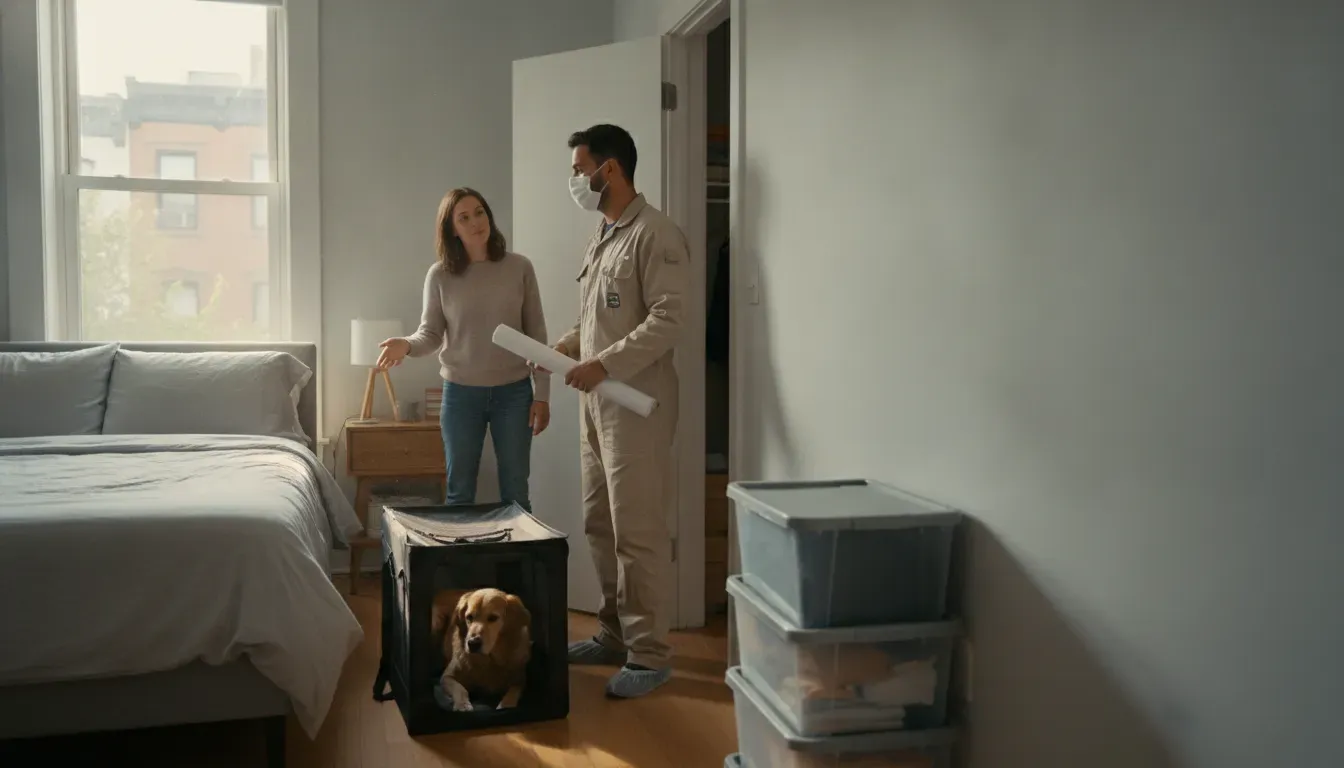
Before treatment, confirm the method, move every pet and its supplies away from the work area, reduce clutter without spreading belongings, and follow the provider’s preparation sheet. Keep infested items contained, tell the technician about adjoining rooms, and do not return animals until the provider gives specific re-entry instructions.
- Confirm the plan in writing. Ask which rooms will be treated, which method will be used, what products are involved, how long the home must remain vacant, and what conditions must be met before pets return.
- Arrange a real pet location. Take dogs and cats to a trusted caregiver or another approved location. Arrange safe housing for birds, reptiles, fish, and small mammals too. Do not move an animal to an untreated room if the provider says the infestation may have spread there.
- Remove pet supplies. Take food, water bowls, medication, toys, bedding, crates, litter, grooming tools, and aquariums or cages out of the treatment area as directed. Ask how each item should be cleaned or isolated.
- Bag and label movable items. Use sealed bags or containers for clothing, linens, and pet fabrics. Keep treated and untreated items separate. Do not carry loose belongings through common Brooklyn hallways or into another apartment.
- Reduce clutter carefully. Clear access to baseboards, bed frames, sofas, and closets. Avoid throwing items into a neighboring room, basement, or building trash area before they are sealed or handled according to the plan.
- Protect building coordination. Tell the provider about shared walls, adjacent units, a landlord or property manager, elevator restrictions, and any access window. In a multifamily building, ask whether nearby units should be inspected.
- Follow the exact label and provider directions. The EPA’s bed bug preparation guidance emphasizes preparation that supports treatment. A provider’s instructions may be more specific to your method and home.
Do not fog, bomb, spray, or apply an extra product because you are worried about your pet. Adding an unapproved product can increase exposure, interfere with the planned treatment, or scatter bed bugs. The EPA’s guidance on DIY bed bug control explains why preparation and careful, label-directed methods matter.
What Are Safe Pet Removal and Re-Entry Practices?
Pets should remain outside the treatment area during service and return only after the provider confirms that the required re-entry conditions are met. Re-entry may depend on drying, ventilation, cooling, treated surfaces, and the product label. Do not substitute a guessed number of hours for the technician’s written instructions.
Ask the technician to state the re-entry process in plain language. For a chemical or biopesticide application, ask whether surfaces must be dry, whether windows or fans should be used, and which areas pets must not contact. For heat treatment, ask when the space is cool enough and whether any item needs inspection before it comes back inside. Keep the instructions where every household member can see them.
Before bringing a pet back, remove any remaining service materials, check that food and water areas are clean as instructed, and confirm that crates, bedding, and toys have been handled correctly. Do not wipe or wash a treated surface unless the provider tells you to, because cleaning can remove a treatment intended to remain in place. If a pet shows unusual symptoms after accidental exposure, move the animal away from the area and contact a veterinarian or animal poison resource promptly.
After return, monitor both the home and the animal. A bed bug sighting does not automatically mean treatment failed, but it should be reported according to the follow-up plan. Use the practical guidance in what to expect after bed bug treatment and record dates, locations, and observations rather than applying a second product on your own.
What Should You Ask a Licensed Brooklyn Provider?
A reliable provider should explain the inspection findings, treatment method, product label, pet relocation steps, re-entry conditions, follow-up plan, and building coordination. Ask for answers specific to your Brooklyn apartment, not a generic promise that a treatment is safe for every animal in every home.
- Are you licensed and experienced with bed bug work in Brooklyn apartments and multifamily buildings?
- What evidence did you find, and which rooms or adjoining areas need inspection?
- Which treatment method do you recommend for this home, and why?
- What is the product’s EPA registration and label-directed use, if a pesticide or biopesticide is involved?
- Where must each pet, cage, tank, food dish, medication, and bedding item go?
- What must be removed, bagged, laundered, heated, or left in place?
- What exact conditions must be met before people and pets re-enter?
- How will you monitor for activity after treatment, and who should we call if we see a bug?
- Should the landlord, property manager, or neighboring units be involved?
- Can you provide the preparation and re-entry instructions in writing?
These questions help separate a real safety plan from a vague “pet-friendly” label. The EPA also recommends choosing a professional with bed bug experience and asking about the company’s approach. You can review Ace Bedbug Exterminating’s specialist background and compare the answers with your household’s needs.
For additional preparation details, keep the company’s bed bug treatment preparation checklist available. If heat and chemical approaches are both being considered, review the heat treatment versus chemical treatment comparison and ask which differences apply to your apartment.
Contact Ace Bedbug Exterminating to discuss a pet-conscious Brooklyn treatment plan
Pet Safe Bed Bug Treatment Brooklyn FAQs
What is the safest bed bug treatment for pets in a Brooklyn apartment?
There is no single safest method for every home or animal. A professional should inspect the apartment, review the pets and their supplies, and choose a method that can be applied according to its label. Heat, targeted biopesticide applications, and integrated pest management may each be considered, with pets removed during service and returned only when the provider confirms it is appropriate.
Do pets need to leave the home during bed bug treatment?
Yes. Pets should be removed from the treatment area, and often from the home, during professional service. The correct location depends on the method and the provider’s instructions. Do not leave a dog, cat, bird, reptile, fish, or small mammal in a room being heated or treated, and do not return the animal until the provider gives specific re-entry guidance.
How long should pets stay away after bed bug treatment?
The answer depends on the treatment, the product label, ventilation or drying, cooling, and the technician’s directions. A fixed number copied from another service is not a safe substitute. Ask for the re-entry conditions in writing, and keep pets away until every condition is met.
Can I use a store-bought bed bug spray around my dog or cat?
Do not use a product around a pet unless it is registered for the intended indoor bed bug use and you can follow every label direction. Never use an outdoor pesticide indoors, spray an animal, or apply more product than the label permits. When an infestation is suspected, an inspection and integrated plan are safer than layering several DIY products.
Should Brooklyn tenants tell their landlord about bed bugs?
Tenants should check their lease and local requirements and notify the landlord or property manager when appropriate. Bed bugs can move through shared walls and connected units, so building coordination may be important. Ask the provider how the inspection and treatment plan should be communicated without moving loose belongings through the building.
Plan Treatment Around Your Household
A pet-conscious bed bug plan is built around accurate inspection, label-directed treatment, controlled preparation, and verified re-entry. Brooklyn households can reduce risk by relocating every animal, containing belongings, coordinating with the building, and choosing a provider willing to explain the method and follow-up in writing. If you are comparing options, start with an inspection and a plan tailored to your apartment rather than a broad promise that a product is harmless.