
Professional bed bug removal Staten Island residents can rely on starts with a careful inspection, not a quick spray and guess. A trained specialist looks for activity, identifies likely hiding places, assesses the property, and explains which treatment and follow-up steps fit the situation.
Contact Ace Bedbug Exterminating for help with bed bugs in Staten Island.
Professional bed bug removal Staten Island usually follows an inspection-first process: a specialist assesses the infestation, creates a property-specific plan, applies appropriate methods, and provides preparation and monitoring instructions. Treatment may take a few hours to a full day, while complete control can require follow-up over two to four weeks.
This guide explains what Staten Island renters, homeowners, landlords, and businesses can expect from the first inspection through post-treatment monitoring.
What does professional bed bug removal involve?
Professional removal is a coordinated service, not simply an application of product where someone noticed a bite. The provider should connect each decision to inspection findings, the property layout, and the way occupants use the space. That is especially important in Staten Island apartments, attached homes, and multifamily buildings where belongings, shared walls, or neighboring units can affect control.
Ace Bedbug Exterminating focuses exclusively on bed bug services in New York City. Its service information describes a three-phase model: inspection and assessment, treatment, and monitoring or prevention. The company serves homes, apartments, hotels, offices, care facilities, and other commercial properties throughout Staten Island and the other New York City boroughs.
A sound plan should identify where activity was found, which areas need treatment, what the resident must prepare, and when to report continuing signs. It should not ask a household to move every possession without a reason. Targeted preparation can improve access while reducing the risk of spreading bugs to clean rooms.
For more background, see Ace’s bed bug removal service information and its guide to choosing a bed bug professional.
What happens during an inspection-first visit?
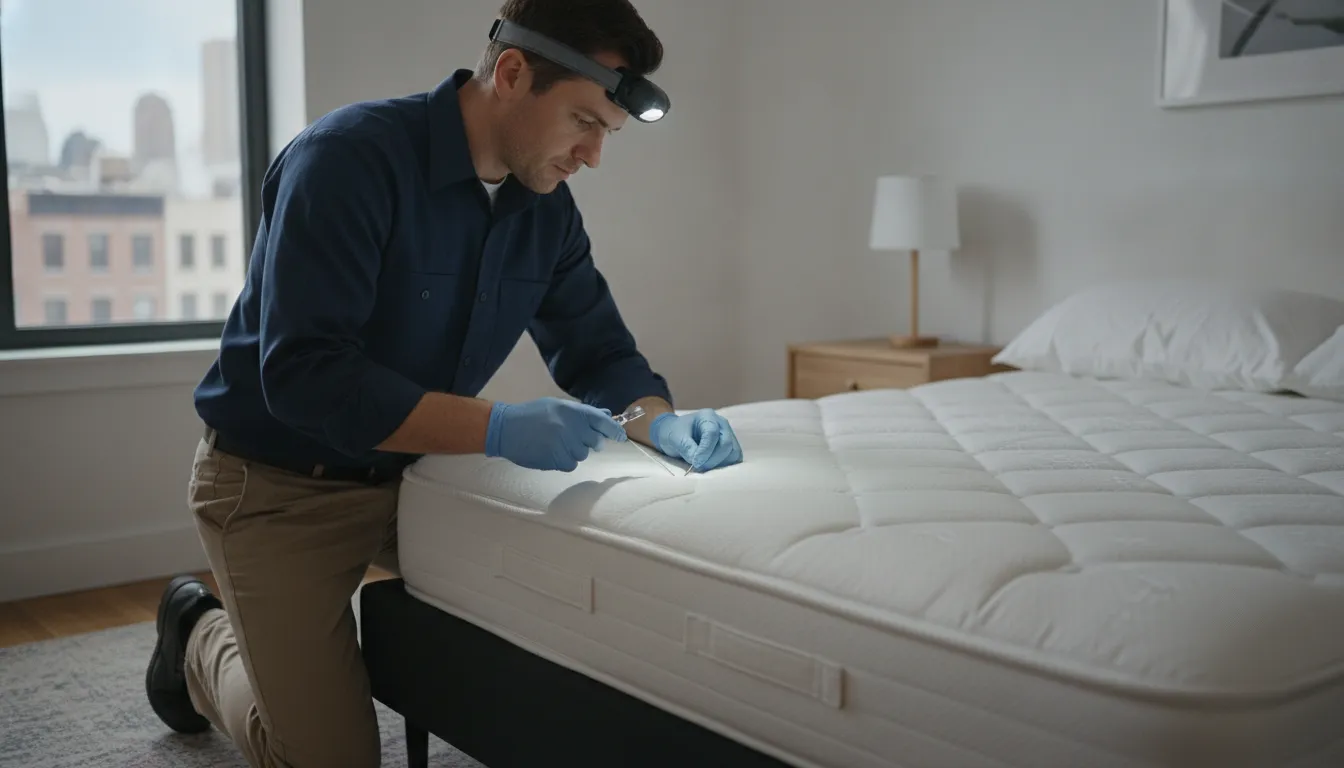
The inspection is the foundation of professional bed bug removal Staten Island homeowners and renters receive. Bed bugs often hide close to sleeping areas, but activity can extend to nightstands, sofas, luggage, closets, baseboards, and cracks. A specialist looks beyond the room where someone first noticed a bite or insect.
- Discuss the concern. The technician asks when signs appeared, where activity was noticed, whether anyone recently traveled, and whether other rooms or units may be involved.
- Inspect likely hiding places. Beds, frames, box springs, furniture joints, upholstery, baseboards, and nearby belongings receive focused attention. Furniture may be moved when necessary.
- Assess the extent. Findings help distinguish a suspected isolated sighting from broader activity and identify conditions that could affect treatment.
- Build the treatment plan. The provider explains which physical, chemical, heat, steam, or monitoring methods may fit the property and what preparation is required.
- Plan monitoring. The household receives re-entry, observation, and reporting instructions. Additional visits may be recommended based on findings.
The U.S. Environmental Protection Agency’s bed bug guidance recommends prompt professional help, preparation for multiple visits, careful laundering and cleaning, and an Integrated Pest Management approach. Those principles support inspection-first service rather than a one-size-fits-all application.
How long does professional bed bug removal take?
There is no responsible universal timeline for every Staten Island property. The schedule depends on the space, number of rooms, infestation extent, treatment method, preparation, and whether a neighboring unit or shared building area requires coordination. Same-day inspection or urgent response may be available, but a same-day inspection does not mean the entire infestation will be eliminated that day.
Before treatment
The initial call and inspection may happen quickly when the situation is urgent. The resident then receives preparation instructions. These may include laundering bedding and clothing, reducing clutter, moving selected items, vacuuming as directed, and keeping clean items sealed. Do not carry unbagged belongings from an affected room into another part of the home.
On treatment day
Ace states that treatment length generally ranges from a few hours to a full day, depending on severity and the plan. Ask which rooms are included, how long people and pets must remain away, and what ventilation or re-entry instructions apply. Follow the provider’s written directions rather than relying on a general internet rule.
After the first visit
Ace’s service information explains that significant knockdown may occur within four to seven days, while complete removal can take a few treatments over two to four weeks. Follow-up is not automatically evidence that an inspection failed. Bed bug eggs and hidden activity make monitoring an important part of responsible control.
Use Ace’s bed bug infestation timeline resource to organize observations between visits. Record new signs, locations, dates, and questions for the technician.
Which treatment methods may be used?
Integrated Pest Management, or IPM, combines information about the pest’s life cycle with appropriate control methods while seeking the least possible hazard to people, property, and the environment. The EPA’s IPM overview describes a process built around monitoring, prevention, and a combination of control options.
| Method or step | What it can do | Why the plan matters |
|---|---|---|
| Inspection | Locates signs and likely hiding places | Prevents treatment from focusing only on the first visible clue |
| Targeted product application | Addresses areas where bed bugs travel or shelter | Products must be selected and applied according to label directions |
| Heat treatment | Uses controlled heat for suitable items or spaces | Temperature, exposure time, and monitoring must be managed throughout |
| Steam or physical removal | Supports localized control in appropriate areas | It does not replace inspection of adjacent hiding places |
| Monitoring and follow-up | Checks for continuing activity after treatment | Hidden eggs and missed areas make observation important |
Ace describes targeted Aprehend biopesticide applications, heat, steam, vacuuming, mattress encasements, and other IPM techniques. The exact combination should follow the inspection, property conditions, resident needs, and product labels. Eco-friendly or low-odor does not mean residents can skip safety instructions.
Heat treatment and laundry are not interchangeable. The EPA’s bed bug guidance supports careful laundering and heat use rather than improvised methods. Room or article heat treatment requires controlled equipment and enough exposure to reach lethal conditions throughout the treated material. Do not improvise with a space heater or raise a home’s thermostat.
Residents can compare this information with Ace’s New York bed bug removal approach and its explanation of why natural bed bug remedies may fall short.
Why choose professional treatment instead of DIY?
DIY steps can support a professional plan, but they rarely replace an inspection and coordinated treatment. A household can accidentally spread bed bugs by moving furniture, clothing, or bags into rooms that were not affected. Repeatedly applying products without identifying hiding places can also create confusion and expose people or pets unnecessarily.
- Keep sleeping arrangements consistent unless a professional instructs you otherwise.
- Place clothing and bedding in sealed bags before moving them to the dryer or another approved location.
- Reduce clutter without moving loose possessions into clean rooms.
- Record sightings, locations, dates, and photos if available.
- Ask a building manager or landlord about nearby units in multifamily housing.
A trained technician can inspect places residents may overlook, evaluate the pattern of activity, select an appropriate treatment combination, and provide property-specific preparation instructions. Professional bed bug removal Staten Island residents choose should include monitoring, not a promise that one quick application solves every case.
The EPA recommends involving a professional promptly because time spent trying to control an infestation alone can allow it to spread. That does not mean every household must discard furniture. In many cases, targeted treatment and careful containment are more useful than replacing belongings without addressing the source.
How should Staten Island residents prepare?
Preparation makes access easier and helps keep affected items from spreading bugs. The technician’s instructions take priority because each treatment plan is different. Ask for directions in writing, including what to launder, what to bag, what to leave in place, and what must be removed from the treatment area.
For apartments and multifamily buildings
Tell the property manager or landlord promptly when appropriate. Shared walls, adjoining units, common areas, and service elevators may affect the inspection. Coordination can prevent a resident from treating one room while activity continues in a neighboring space.
For families and pets
Ask what must be removed, how long occupants should stay away, and when pets can return. Keep children and animals away from treated areas until the provider confirms that re-entry is allowed. Never assume that a product’s marketing description replaces its label directions.
After treatment
Continue monitoring as instructed and avoid adding unapproved products that could interfere with the plan. Contact the provider if signs continue, describing exactly where and when they appeared. Specific observations are more useful than a general report that bugs are still present.
What should you ask before hiring a provider?
Choosing a bed bug professional is a service decision, not only a price comparison. A provider should be willing to explain the inspection, treatment method, preparation, safety instructions, and follow-up expectations before work begins.
- Will a trained specialist inspect the property before treatment?
- Which rooms, furniture, and adjacent areas will be evaluated?
- Which methods may be used, and why do they fit this property?
- What preparation is required, and what should remain in place?
- How long should residents and pets stay out of treated areas?
- What monitoring or follow-up is included in the plan?
- How will the provider coordinate with a landlord or building manager?
- What factors determine the cost and number of visits?
Pricing depends on infestation extent, property size and type, treatment methods, geographic location, and the number of visits needed. A consultation-based estimate is more credible than a fixed promise that ignores those variables. Ace offers residential and commercial bed bug services throughout Staten Island and the other New York City boroughs.
Request an inspection plan from Ace Bedbug Exterminating for your Staten Island property.
Frequently Asked Questions
How many visits are usually needed for bed bug treatment?
The number of visits depends on the infestation, property, treatment method, preparation, and follow-up findings. The EPA advises residents to prepare for multiple visits because very few infestations are controlled with only one treatment. A provider should explain the monitoring plan rather than guarantee a universal number.
How should I prepare my Staten Island home before treatment?
Follow the provider’s written instructions. Typical directions may involve laundering or drying bedding and clothing, sealing items before moving them, reducing clutter, and leaving specified furniture accessible. Do not move loose belongings from an affected room into another room unless instructed.
Can I stay home during or immediately after treatment?
Re-entry depends on the products, equipment, rooms treated, ventilation, and label directions. Ask the technician exactly when people and pets may return. Leave treated areas for the full period stated by the provider, even if there is no noticeable odor.
What should renters do if they live in a multifamily building?
Notify the landlord or property manager promptly when appropriate and ask how nearby units will be evaluated. Bed bugs can move through shared structures and belongings, so coordinated inspection may be important. Keep records of notices, inspections, treatment dates, and preparation instructions.
Is professional treatment better than trying to handle bed bugs myself?
Professional treatment offers an inspection, property-specific plan, trained application, preparation guidance, and monitoring. Residents still play an important role by following instructions and reporting signs. DIY laundering and careful containment can help, but repeated unplanned applications or moving belongings can make control harder.