
Finding tiny red spots on your mattress or waking up with itchy welts can trigger instant panic. The emotional stress of a home infestation often drives people to search for any quick fix that promises immediate relief. Understanding the science of pest control is key to finding a real solution that works. Schedule a professional bed bug inspection today to get a science-backed assessment before you waste time and money on ineffective DIY fixes.
Determining what kills bed bugs instantly depends on using correct tools and temperatures. High-temperature steam near 212 degrees Fahrenheit destroys all life stages, including eggs, on contact. Professional heat treatments that raise room temperatures above 122 degrees Fahrenheit for several hours also successfully wipe out whole colonies. However, popular home remedies like rubbing alcohol or bug bombs fail to solve the root problem. Most DIY options do not reach hidden pests and lack the lasting power needed to prevent a rapid return. Lasting success requires a careful, science-backed approach rather than relying on a single quick spray.
Worrying about hidden pests in your home is exhausting, but getting the right facts helps you take back control of your living space. Ace Bedbug Exterminating, a family-owned company trusted since 1966, recommends starting with a proper inspection to identify the scope of the problem before choosing a treatment plan. Learning about the strengths and limits of heat-based solutions is the first step toward reclaiming your peace of mind.
Does Steam Really Kill Bed Bugs Instantly?
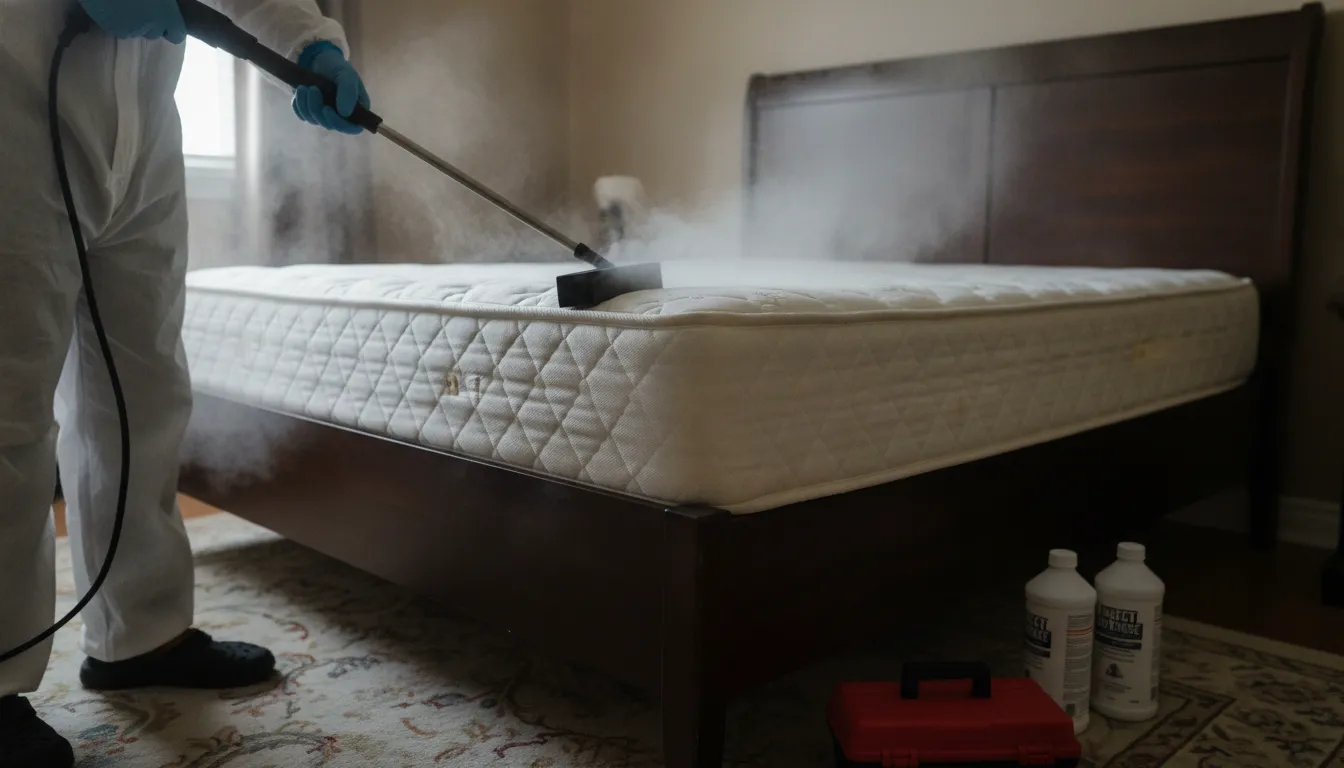
Yes, steam kills bed bugs instantly on contact when it reaches 212 degrees Fahrenheit. The high temperature breaks down the insect’s outer shell and cooks its cells, causing immediate death. Steam also destroys eggs, which resist most chemical sprays. However, steam only kills what it touches directly, so thorough coverage of every crack and seam is essential.
When you want to know what kills bed bugs instantly, look no further than steam. This method is one of the very few do-it-yourself options that can destroy these pests on contact. High heat breaks down the outer shell of the pest and cooks their cells, causing immediate death. If you have been searching for ways to tell if you have bed bugs and prepare for treatment, steam is a fast way to treat any spots where you find them hiding in your home.
How High Heat Destroys Pests
The secret to steam is its high temperature. When water turns to steam, it reaches 212 degrees Fahrenheit (100 degrees Celsius). Research from Rutgers University shows that steam near 212 degrees Fahrenheit kills bed bugs instantly. This intense heat does not just kill the adult bugs. It also destroys their eggs, which are usually resistant to common chemical sprays. Using steam on furniture is a very effective and low-cost way to reduce bug numbers in a room. Because steam has no residual effect, it must touch the bug directly to kill it, but it works as soon as contact is made.
Where and How to Apply Steam
To use this method well, you must focus on the spots where bed bugs like to hide. Move the nozzle slowly across mattresses, box springs, and bed frames. You should also treat baseboards, carpet edges, and upholstered chairs. Hold the steam nozzle about an inch away from the surface and move it at a rate of one inch per second. This slow movement gives the heat enough time to penetrate deep into cracks and seams where the bugs tuck away. Do not use too much pressure, or you might blow the bugs away instead of killing them.
Choosing the Right Steamer
Not all steamers are equal when dealing with pests. A small handheld clothes steamer may work for a very small spot, but it lacks the water capacity and heat needed for a full room. It is best to use a larger commercial cylinder steamer or a dry steam system. Dry steam has less moisture, which means your bed and couch will dry much faster and will not grow mold. Look for a unit that has a continuous flow design so you do not have to wait for the tank to cool down before you can refill it.
Important Safety Steps
Steam is very hot and can cause severe burns if you are not careful. Always point the nozzle away from your skin, other people, and pets. Do not use steam on electrical outlets or near power cords. After you finish steaming, let the treated furniture dry completely before you put on mattress covers or bed sheets. You can use a fan to speed up this process and keep mold from growing. Steam is a great tool, but it only kills what it touches, so you should combine it with other treatment steps for full control.
Can High Heat Eliminate an Entire Infestation?
Yes, sustained high heat can eliminate a whole infestation when applied correctly. The target temperature is 122 degrees Fahrenheit maintained for six to eight hours. This sustained heat penetrates deep into mattresses, wall voids, and furniture to kill all life stages including eggs. Professional heat treatments raise room temperatures to between 122 and 140 degrees Fahrenheit using industrial-grade heaters and fans.
While many people want to find out what kills bed bugs instantly, true thermal elimination is a game of both temperature and time. You cannot simply blast a room with a quick wave of hot air and expect a complete cure. Scientific research shows that heat is highly effective, but it must be applied correctly to do the job.
The Science of Thermal Death Points
Bed bugs cannot survive when their body temperature reaches a certain level. Research from Purdue University shows that bed bugs exposed to 113 degrees Fahrenheit die within 22 to 30 minutes. This is a very short window, which makes heat a powerful tool for rapid pest control. However, to ensure that you reach every single bug and egg throughout a home, the target temperature must be higher.
The same study found that keeping a space at or above 122 degrees Fahrenheit for six to eight hours is the standard needed to kill all life stages. This sustained heat ensures that the warmth penetrates deep into the items where pests hide. This includes the inner layers of mattresses, thick carpets, and wood furniture frames.
How Professional Heat Treatments Work
To wipe out an active infestation, professional exterminators from Ace Bedbug Exterminating use heavy, industrial-grade heaters. These machines are placed inside the home to slowly raise the air temperature to between 122 and 140 degrees Fahrenheit. Large fans circulate the hot air to make sure it reaches every corner of the room.
This process takes several hours because the heat must sink into walls, clutter, and personal belongings. Our technicians use special thermal sensors to track the heat in real-time. This helps them confirm that even the deepest cracks reach the lethal temperature threshold needed to destroy both adult bugs and their eggs. For a detailed comparison of heat treatment versus chemical options, read our guide on bed bug heat treatment vs chemical.
The Benefits and Limits of Using Heat
Using high heat has major benefits. It is a chemical-free method that can treat an entire room at once. It also destroys eggs, which are often highly resistant to common chemical sprays. It is one of the closest things to a whole-house solution available today.
But heat also has its limits. The main drawback is that some bed bugs may run away from the rising warmth. They can tuck away deep inside wall voids or floor vents where the thermal energy does not fully penetrate. To solve this issue, researchers suggest combining heat treatments with targeted chemical barriers. Ace Bedbug Exterminating uses this multi-step approach to stop escaping pests from starting a new colony elsewhere.
Why DIY Heat Often Fails
Many homeowners try to use space heaters or home hair dryers to treat their rooms. This is highly dangerous and rarely works. Standard home heaters cannot generate or hold the high temperatures needed to warm an entire room. They also lack the power to push heat deep into walls or furniture.
Using small heaters can also cause bed bugs to scatter into neighboring rooms or deeper into the walls. This spreads the problem and makes it much harder to fix. If you suspect you have pests, it is best to get professional bed bug treatment in the Upper East Side from Ace Bedbug Exterminating, beginning with an inspection. This step ensures you get an accurate assessment before starting any treatment plan.
Do DIY Sprays Like Alcohol or Essential Oils Work?
No, DIY sprays like rubbing alcohol and essential oils are not effective for bed bug control. Rubbing alcohol may kill on direct contact but evaporates too fast to reach hidden bugs and does not kill eggs. Essential oils lack scientific evidence of effectiveness. Over-the-counter pyrethroid sprays face widespread resistance. Professional biopesticides like Aprehend provide up to 90 days of residual protection, unlike any retail spray.
When people find pests in their beds, they often search for a quick home fix. Many hope to find a household spray that kills bed bugs on contact. Common options like rubbing alcohol, plant oils, and store sprays seem cheap and fast, but they do not solve the main issue. To understand why, we must look at how these liquids act on the pests.
The Real Story on Rubbing Alcohol
Many homeowners try using rubbing alcohol because they want to clear bed bugs fast. Liquid alcohol can dry out a pest and kill it on direct contact. However, a major study by Rutgers University shows that rubbing alcohol is ineffective for controlling bed bugs (Rutgers NJAES). It dries too fast to sink into cracks where the pests hide. It also fails to kill eggs, which means the infestation will soon return.
Essential Oils and Store Sprays
Some people use plant-based essential oils like mint or tea tree oil to repel pests. These oils have very little scientific proof to back up their use. Other people buy over-the-counter sprays from local stores. These chemical sprays contain pyrethroids, but they rarely get rid of a whole colony. A joint report by the Centers for Disease Control and Prevention and the Environmental Protection Agency notes that bed bugs have developed resistance to common pesticides (CDC). This high resistance makes retail sprays a poor choice for long-term control.
Why Retail Products Fall Short
The main issue with home sprays is their lack of lasting effect. A spray might kill a bug that is out in the open, but it does not reach those tucked inside walls or floorboards. Unlike retail liquids, Ace Bedbug Exterminating uses professional tools designed to keep working after they dry. For example, experts use advanced biopesticides like Aprehend, which provides up to 90 days of active residual control. This long-lasting barrier catches pests as they emerge, which stops the breeding cycle in its tracks. Learn more about biopesticide treatments for NYC apartments.
| Treatment Type | Direct Contact Kill | Residual Power | Kills Hidden Eggs |
|---|---|---|---|
| Rubbing Alcohol | Yes, but weak | None (evaporates fast) | No |
| Store Pyrethroid Sprays | Yes, on some bugs | Very low (high resistance) | No |
| Essential Plant Oils | Rarely | None | No |
| Professional Biopesticides | Yes | High (up to 90 days) | Yes (kills emerging nymphs) |
Common Myths: Bug Bombs, Ultrasonic Devices, and Other Ineffective Methods
Bug bombs and foggers are generally ineffective for bed bug control because the insecticide mist lands on exposed surfaces and does not reach deep cracks. Ultrasonic repellent devices have zero scientific support. Moving to another room simply spreads the infestation. Freezing small items for four days and using mattress encasements are the only reliable low-cost physical controls.
When you discover pests in your bed, you want to clear them fast. Many homeowners turn to quick DIY tricks or store tools to solve the issue. However, many popular methods do not work and can make the problem worse. Knowing which tactics fail will save you time and money.
The Failure of Bug Bombs and Foggers
Many people buy over-the-counter bug bombs or foggers. They believe these tools will spray a mist that kills bed bugs instantly. In truth, foggers are generally ineffective for bed bug control according to Rutgers research. The insect mist stays in the air and lands on top of floors or carpets. It does not go deep into the tiny cracks and wall gaps where the pests hide. The harsh spray also scares the bugs. It drives them deeper into walls or nearby rooms, which spreads the infestation.
Ultrasonic Devices and Home Remedies
Some sellers offer electronic plug-in tools that use high-pitch sound waves to scare pests away. There is no proof that these electronic devices work on bed bugs. The insects do not care about the sound. Other people try home sprays like rubbing alcohol or essential oils. As noted by academic and state studies, rubbing alcohol is ineffective for pest control. These liquids only kill a few bugs if you spray them directly, but they leave no lasting shield. They are also highly flammable and present a major fire hazard in your home.
Changing Sleeping Spots and Insect Resistance
If you get bites, you might think about sleeping on the couch or in another room. However, switching sleeping locations is ineffective because the insects will follow you. They find you by sensing the carbon dioxide you breathe out and your body heat. Moving to a new room simply spreads the bugs to other parts of your home. Additionally, using standard store sprays rarely works. Public health reports from the Centers for Disease Control and Prevention show that these pests have developed strong resistance to common pesticides. Store chemicals often fail to kill them and only cause more stress.
What Actually Works for Small Items
While DIY sprays fail, some simple physical tactics do work for specific items. For instance, placing infested small items in a freezer for four days is a safe way to kill all life stages. This freeze method works well for shoes, toys, or books. For beds, installing tight mattress and box spring encasements reduces pest numbers right away and seals off hiding spots. These small steps help protect your items while you prepare for a real treatment. Consult the complete New York bed bug guide from Ace Bedbug Exterminating for a full rundown of what works and what does not.
Why Instant-Kill Methods Don’t Solve the Root Problem
Instant-kill methods fail because they only target visible adult bugs while leaving behind eggs and hidden pests. A single female bed bug can lay hundreds of eggs, which hatch every 6 to 10 days. Most DIY sprays do not kill eggs. Without treating the eggs and reaching deep hiding spots inside walls and furniture, the infestation rebounds within weeks. Integrated Pest Management combines multiple tools over 2 to 4 weeks for lasting control.
When you find pests in your home, you want them gone fast. Many people search for what kills bed bugs instantly to find a quick fix. They buy store sprays, rent small steam tools, or try rubbing alcohol. These DIY steps can kill some bugs on contact. But they do not solve the main pest problem. You may kill a few bugs you see, but thousands more remain safe in their dark hiding places.
The Hidden Pest Life Cycle
Visible bugs are only a small part of a home infestation. A female bug can lay hundreds of eggs during her life. These tiny eggs hatch every 6 to 10 days. Most DIY sprays do not kill the eggs at all. If you only kill the adult bugs you see, the hidden eggs will hatch a week later. This starts the whole pest cycle over again. To stop the pest for good, you must use a plan that kills both the active bugs and their eggs. Without a plan to stop the eggs, you will face new bugs week after week.
Where Bed Bugs Hide
These pests are experts at hiding from danger. They do not live out in the open where sprays can reach them. Instead, they tuck deep into wall voids, behind wood baseboards, and inside tight furniture joints. Research from Purdue University shows that some bugs tuck away inside walls or furniture where heat or steam does not fully penetrate. Alcohol also fails because it evaporates far too fast to reach these deep spots. Direct contact is needed for these tools to work, which is why simple DIY tools miss the root of the problem.
The Power of Integrated Pest Management
To clear your home, you need to use a method called Integrated Pest Management (IPM). Ace Bedbug Exterminating specializes in IPM, which combines different tools over a period of 2 to 4 weeks. For example, you can buy mattress and box spring encasements. Studies from Rutgers University show that these covers reduce bug numbers immediately and eliminate many hiding spots. You should also wash and dry your bed sheets at high temperatures weekly. This simple heat step kills any bugs and eggs hiding in your fabrics, which helps lower the pest count in your room. Learn more about the full bed bug extermination process and what to expect during professional treatment.
A Combined Professional Attack
True control requires more than just one tool or a single visit. Our experts at Ace Bedbug Exterminating often combine high heat with targeted chemical sprays. This joint method is much more effective than heat alone because it leaves a barrier behind. The heat flushes out the pests, and the sprays stop any bugs that try to escape into wall cracks. By using steam, heat, and barriers together, you can clean your home and keep the pests from coming back. This is why a complete plan works while instant sprays fail.
When Should You Call a Professional Exterminator?
You should call a professional exterminator if bed bugs return after DIY treatment, if you find live bugs in multiple rooms, if you live in a multi-unit building where pests travel through walls, or if you cannot identify the source of the infestation. Professional treatment using Integrated Pest Management combines heat, steam, chemical barriers, and follow-up visits over 2 to 4 weeks for complete elimination.
For small, fresh bed bug issues, simple home methods like washing sheets or steaming small areas can help. But mature bed bugs reproduce quickly and hide in deep cracks. If you want to know what kills bed bugs instantly across your whole home, you need to use an integrated approach. Professional extermination from Ace Bedbug Exterminating is the most reliable way to find and stop an active pest problem.
The Power of Integrated Pest Management
An expert exterminator at Ace Bedbug Exterminating does not just spray one chemical and leave. Instead, we use a system called Integrated Pest Management (IPM). This method combines several tools to target bugs at every life stage. It uses high heat, dry steam, and targeted treatments. Research from Purdue University shows that combining heat treatments with pesticides is more effective than using heat alone. The heat kills the bugs on contact, while the pesticide creates a long-lasting guard to catch any survivors.
Our team also has tools that you cannot buy at local shops. This includes Aprehend, a special biopesticide made of natural fungal spores. When bugs walk through this spray, they carry the spores back to their hidden nests, which kills the colony. This bio-spray provides up to 90 days of active protection. This is much longer than the standard 14-day chemicals you find at retail stores. Read our guide on where to find Aprehend for bed bugs in NYC.
What to Expect During Professional Treatment
Working with Ace Bedbug Exterminating is a clear, step-by-step process. First, one of our experts will perform a professional bed bug inspection. Our team holds Associate Certified Entomologist (ACE) credentials, which means we have deep, science-based knowledge of bug behavior. We look for bugs, eggs, and shed skins in spots that most people miss.
After the inspection, we give you clear prep steps. You will need to clear clutter, wash your linens, and prep your rooms so the treatment can reach every crack. Our step-by-step bed bug treatment preparation checklist covers everything you need to do before our team arrives. During the actual application, our team uses specialized heat chambers and commercial steam tools. We apply these tools to your furniture, bed frames, and baseboards. Because eggs and bugs can hide deep inside wall voids, a single visit is rarely enough. A full, lasting treatment plan usually requires careful follow-up visits over a period of two to four weeks.
Signs You Need Professional Help
You should call Ace Bedbug Exterminating if you notice any of these key warning signs in your home:
- The bugs return a few weeks after you try a DIY spray or steam treatment.
- You find live bugs or fresh bites in more than one room of your house.
- You live in an apartment building where pests can travel through walls and pipes from next door.
- You cannot find where the bugs are hiding despite seeing bites or blood spots on your sheets.
- Someone in your home has an allergic reaction to bites, such as severe swelling or skin infection from scratching.
- You are losing sleep because of stress or anxiety about a pest problem.
If any of these signs sound familiar, take the next step toward a pest-free home. Learn about bed bug extermination costs in NYC and what factors affect your treatment investment.
Frequently Asked Questions
Does rubbing alcohol kill bed bugs instantly?
Rubbing alcohol can kill bed bugs on direct contact by drying out their outer shell, but it evaporates too quickly to be a practical treatment. It does not reach bugs hiding in cracks and crevices, and it has no effect on eggs. Rutgers University research classifies rubbing alcohol as ineffective for bed bug control. It is also highly flammable, making it a fire hazard when sprayed near bedding and furniture.
What temperature kills bed bugs instantly?
Steam at 212 degrees Fahrenheit kills bed bugs instantly on contact. For sustained whole-room treatment, maintaining a temperature of 122 degrees Fahrenheit or higher for six to eight hours is the standard required to kill all life stages, including eggs. Temperatures of 113 degrees Fahrenheit kill bed bugs within 22 to 30 minutes according to Purdue University research, but consistent whole-room heat at 122 degrees Fahrenheit or above is the professional standard.
Can a hair dryer kill bed bugs?
A standard hair dryer cannot kill bed bugs effectively. Hair dryers do not generate enough sustained heat to reach lethal temperatures across a meaningful surface area. They also blow air at high speed, which can scatter bed bugs into neighboring rooms or deeper into wall voids. Attempting to use a hair dryer for bed bug treatment is both ineffective and potentially counterproductive because it can spread the infestation.
Do bed bug bombs work?
Bed bug bombs and foggers are generally ineffective according to Rutgers University research. The insecticide mist settles on exposed horizontal surfaces and does not penetrate the cracks, crevices, and wall voids where bed bugs hide. The pesticide residue can also repel bed bugs, driving them deeper into walls and spreading the infestation to adjacent rooms. Foggers are not recommended for bed bug control by any major pest management organization.
Why do bed bugs keep coming back after I spray?
Bed bugs keep coming back because most DIY sprays only kill the adult bugs you can see while leaving eggs and hidden populations untouched. A single female bed bug can lay 200 to 500 eggs in her lifetime, and these eggs are resistant to most retail sprays. The eggs hatch within 6 to 10 days, restocking the infestation. Professional Integrated Pest Management (IPM) is the only approach that targets all life stages, including eggs, and combines multiple treatment methods over several weeks to break the breeding cycle permanently.
Is it safe to use a space heater to kill bed bugs?
No, using a space heater to kill bed bugs is not safe and rarely works. Standard space heaters cannot raise an entire room to the 122 degrees Fahrenheit required for thermal death. They also create fire hazards when left unattended for hours. The slow temperature rise can cause bed bugs to scatter into walls and neighboring rooms, worsening the infestation. Professional heat treatments use industrial-grade equipment with thermal sensors to safely and evenly raise room temperatures to lethal levels.
Ready to Eliminate Bed Bugs From Your Home?
You now know what kills bed bugs instantly and what does not. Steam at 212 degrees Fahrenheit kills on contact. Professional heat treatment at 122 degrees Fahrenheit sustained for hours eliminates entire colonies. DIY sprays, bug bombs, and ultrasonic devices are not effective. The key takeaway is that instant-kill methods treat symptoms, not the root cause. Eggs survive most DIY approaches, and hidden bugs escape quick fixes.
Ace Bedbug Exterminating has been helping families in New York, New Jersey, Connecticut, Michigan, Indiana, and Ohio regain their peace of mind since 1966. Our Associate Certified Entomologists use science-backed Integrated Pest Management to find, treat, and prevent bed bug infestations at every life stage. Do not let an infestation grow while you experiment with products that do not work. Call (347) 378-7070 today to schedule your professional bed bug inspection and treatment plan.