
A bed bug concern at camp can unsettle campers, families, and staff, but a calm record keeps the issue manageable. A useful bed bug response for summer camps starts by checking the report, limiting movement of affected items, and arranging a qualified assessment before anyone decides on treatment or room use.
Request an inspection discussion
What should a bed bug response for summer camps do first?
Respond promptly, and do not treat a bite, a dark mark, or one insect as proof of an infestation. Skin reactions vary, and other insects or marks can look like bed bug evidence. For a time-sensitive situation, this emergency bed bug response guide offers extra planning context.
Ask the person who noticed the concern what they saw, when they saw it, and where. If you can, have them show the object or location instead of carrying a suspected insect through the building. Keep the response proportionate. Do not blame a camper, family, or staff member. Bed bugs can travel with belongings, and a report does not show where an insect started.
Limit the details to staff who need them, and protect the privacy of the people involved. In a camp with shared cabins, bunks, luggage areas, and a packed schedule, a simple location map helps staff record where reports occur. A research paper on close-proximity interactions in summer camps measured how people share complex camp spaces. It is not a bed bug study, but it shows why activity and location records matter (research on close-proximity interactions in summer camps).
Use this first-hour checklist:
- Name one staff lead who owns the report until the next handoff.
- Write the time, place, and what was seen before anyone moves bedding or bags.
- Keep the reporter with the item when it is safe, instead of walking a specimen through camp.
- Hold the sleeping area only as long as needed for a careful check.
- Tell the director what is confirmed and what is still unknown.
How can staff check a report without spreading belongings?
Ask the reporter to leave bedding, bags, and furniture in place until the site has a plan. If an insect or shed skin is found, do not crush or discard it right away. A clear photo, or a safely contained specimen, can help a qualified professional identify it. Do not handle a suspected insect with bare hands.
Check the immediate resting area in order, rather than searching the whole camp at random:
- Look at mattress seams, labels, and the edges where the mattress meets the frame.
- Check bed-frame joints, nearby furniture, and cracks close to where someone sleeps.
- Use a flashlight and write the exact spot of any suspected evidence.
- Stop before pulling fixtures apart or using any spray.
- Separate confirmed evidence from observations you cannot identify.
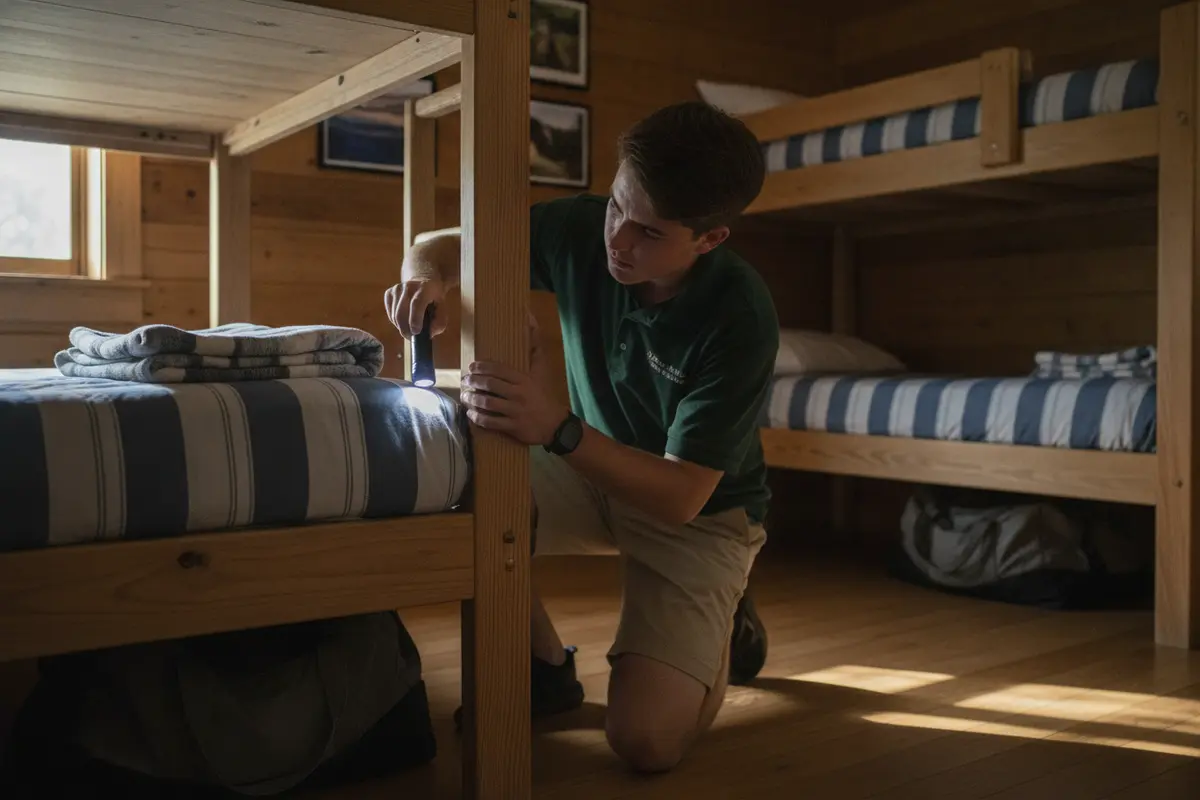
Improvised pesticide use can create needless exposure and can interfere with a later assessment. If you cannot identify the evidence with confidence, describe it. Do not label it a bed bug. A professional bed bug inspection can clarify what is present and which areas need attention.
Capture these log fields while the details are fresh:
- Who made the report, plus the date and time.
- Building, room, and the item or surface involved.
- What was observed, in plain words.
- Any immediate step already taken, including who took it.
How should a camp limit movement while it assesses the concern?
Focus on belongings and the affected room, not on singling out a person. Ask the camper or staff member to leave the bag and bedding in place while a staff lead explains the next step. If they need to move, give them a clean route and a temporary place for belongings that will not put those items into another sleeping area. Keep clean items and possibly affected items apart.
Do not move a mattress, bag, or loose bedding to another cabin as a quick fix. Avoid a shared laundry area or a vehicle until you decide how to contain the items. When containment is appropriate, use a sturdy sealed bag or container. Label it discreetly with the date and source location. Do not seal damp or wet items. Follow a qualified professional’s directions for handling and laundering. Heat settings, materials, and the type of concern all change what is appropriate.
Avoid moving campers between rooms without planning their belongings and the receiving space. If a temporary move is needed for comfort or operations, plan it with the site lead. Record which items move, how they are contained, and where they go. A careful approach to clothing and personal items reduces confusion while the camp sets the next steps.
Think through the camp’s real layout before you decide how wide the check should be. Shared bunks have different contact points from a day program where children do not sleep on site. Record the bed, locker, chair, or storage area involved. Do not mark a whole building without evidence. Staff can read a guide to common bed bug hiding places to see why checks focus on nearby seams, joints, and cracks. Identification still belongs to an informed assessment.
For overnight programs, the person who assigns rooms should know which spaces are on hold and which stay in use. For day camps, ask whether a bag or costume sat in shared storage, and note that for the assessor. Keep routine cleaning separate from any special handling plan so housekeeping does not carry bedding to another cabin by mistake.
Who should be notified, and what should the camp say?
Use one communication plan. Notify the camp director or operations lead, the relevant facilities staff, and the people directly affected. Explain what was observed, what the camp is doing to assess it, and when families or staff should expect an update. Do not call an unconfirmed report a confirmed infestation. Do not promise that a room, a building, or the whole camp is pest-free before an appropriate assessment.
Keep messages calm, factual, and private. Do not name a camper or family in a broad message. Name one contact person for questions, and tell people how to report more evidence. If the camp is in a shared or leased building, notify the property contact required by the camp’s agreements. For camps in New York City, follow local requirements and qualified professionals instead of a generic online checklist.
Record every message: the audience, the date, the facts shared, and the follow-up you promised. A written record stops conflicting instructions when shifts change. Review the camp’s service-area page to see whether Ace covers the site, then call to arrange a camp-specific assessment. What is appropriate depends on that individual site.
How should the camp choose an assessment and treatment path?
Identify a suspected insect before the camp commits to a broad treatment. The next step depends on what an inspection finds, where evidence appears, the building layout, and whether nearby rooms share walls or furnishings. A professional can assess those details and explain options, preparation, and follow-up. Do not treat one report as proof that every cabin needs treatment.
Ask the provider these questions before you agree to a plan:
- What is the inspection scope, and what evidence would change it?
- How should campers and staff prepare, and which areas should stay undisturbed?
- How should belongings be handled, and what safety steps apply?
- How will results be checked afterward, and who gets the written notes?
Do not assume one method fits every building, or that one application solves the concern. Confirm that the provider understands the camp’s sleeping arrangements, schedule, and site restrictions. Ace Bed Bug Exterminating focuses on bed bug services and uses inspection to guide a treatment plan. Available approaches vary by findings and site needs.
Read about bed bug removal and prevention and Aprehend bed bug treatment as background. Then ask a professional whether any option fits this camp. Product information is not a substitute for site-specific instructions.
How do common response options compare?
| Situation or choice | Useful next step | What to avoid |
|---|---|---|
| Unclear bite or mark, no insect evidence | Document the report and arrange a careful check of the reported sleeping area. | Calling it a confirmed infestation or treating many rooms based only on symptoms. |
| Possible insect or physical evidence found | Photograph or safely contain it, record its exact location, and request identification. | Discarding evidence, spraying it, or carrying loose items through the camp. |
| Assessment confirms bed bug evidence | Follow a written, site-specific plan with preparation, safety, and follow-up steps. | Moving uncontained belongings or applying one room’s plan to every building. |
| Concern involves a leased or shared property | Coordinate with the responsible property contact and document decisions and notices. | Assuming who is responsible without checking the agreement or applicable rules. |
The table is a starting point, not a diagnosis, and not a promise that one action will solve the problem. Evidence, building construction, room use, and the provider’s findings all matter. Ask why those rooms or items need attention, what should stay undisturbed, and what would prompt a new look. Written instructions reduce the chance that one shift moves a bag while another shift is trying to keep it separate.
On a multi-building site, organize notes by cabin or room. A general note such as “north camp area” is not enough. Staff should see which locations were reported, inspected, or placed on a temporary hold, while camper identities stay protected. If the issue appears in more than one place, share the timeline and locations with the assessor. Do not assume the reports have the same cause. A guide to evaluating bed bug evidence offers general context, but a professional has to interpret findings at the site.
What should a bed bug response for summer camps document afterward?
Keep one incident record from the first report through closure. A useful log includes the reported location, observations, inspection findings, room or item handling, communications, provider instructions, and follow-up dates. Record uncertainty honestly. A note that says “small insect, not identified” is more useful than an unsupported conclusion.
After the assessment, review whether staff followed the handling plan and whether any new reports came in. Ask the professional what follow-up observations matter, whom to contact if evidence appears again, and whether specific rooms or belongings need monitoring. Keep those instructions where room-turnover, housekeeping, and family-communication staff can find them.
Before the next session, hold a short review with the staff who handled the report. Ask what was missing at intake, whether the room map and contact chain were easy to use, and whether any instruction was misunderstood. Revise the checklist so one person preserves evidence, one person contacts the assessor, and one person sends updates. A written handoff matters when seasonal staff or several shifts share the work.
Do not use the incident record to label a camper or household as the source. Keep notes factual and store them under the camp’s privacy practices. If the report involved a personal item, explain the next steps to its owner or family, and give them a private way to ask questions. Better records improve continuity. Discretion keeps trust.
Use the event to improve preparation, not to invent a blanket rule about campers’ belongings. Update the reporting route, the staff handoff checklist, and the process for isolating a bag or bedding item. If the camp is planning ahead, managers can also review a bed bug checking guide and early signs to recognize. Suspected evidence still needs to be assessed in context.
Discuss a camp bed bug concern with Ace
Frequently Asked Questions
Should a camp close a cabin after one report?
Not automatically. A report needs an assessment, and the right response depends on the evidence and the room. A site lead can pause use for a short time while arranging a prompt inspection. The camp should not announce a confirmed infestation before identification.
Can campers keep their bags in the cabin during an inspection?
Ask the inspection professional for instructions based on the report and the items involved. Until there is a plan, do not move bags between sleeping areas or place them with other campers’ belongings. If an item must move, record where it came from and keep it separate as directed.
Should staff spray a suspected bed bug?
No. Unplanned pesticide use can create avoidable exposure and can complicate identification or professional treatment. Photograph or safely contain possible evidence, keep people from disturbing the area, and ask a qualified professional what to do next.
What information should a camp give families?
Share verified facts, the steps underway, any instructions families need, and the name of the person handling questions. Protect individual privacy, and do not promise an outcome before an assessment. Update families when meaningful new information is available.
How can a camp reduce the chance of a repeat disruption?
Keep a simple reporting process, train staff to document observations without guessing, and define how possibly affected belongings stay apart while a concern is assessed. After an incident, review the steps with the people who manage cabins and talk with families.