

A suspected bed bug in a restaurant calls for a calm, documented response: not guesswork or a rushed public announcement. This guide to bed bug treatment for restaurants gives NYC owners and managers a practical sequence for discreet reporting, inspection, food-area precautions, professional coordination, and reopening decisions.
Discuss a restaurant inspection and response plan
What should a restaurant manager do first after a suspected sighting?
Start by treating the report as information to verify, not proof of an infestation. Bed bugs are small, and other insects or debris can be mistaken for them. Do not dismiss the report, but avoid making a diagnosis from a quick glance or a customer’s description alone.
Assign one manager to lead the response. Ask the person who found the insect to describe where and when it was seen, whether it was moving, and whether they have a photo or specimen. Record the exact area, such as a booth seam, coat-storage area, waiting bench, or staff break space. Keep the conversation respectful and private. Avoid blame or assumptions about how the insect arrived.
If a specimen is available, do not crush or discard it. Place it in a sealed container or bag if that can be done safely, and label the location and time. A clear photo can help an inspector, but it does not replace an in-person assessment. For an overview of what to look for, see this guide to early signs of bed bugs and the explanation of how bed bugs may appear.
Keep the affected item or area from being disturbed while you decide what to do next. Do not move upholstered furniture through dining areas or into another room. Do not spray a store-bought product, fogger, or household chemical. Unplanned treatment can scatter items, complicate inspection, and create unnecessary exposure concerns around a food-service setting.
How can staff report a concern discreetly?
Make it easy for employees to report a possible pest without turning the report into a public incident. Tell staff whom to contact, what details to provide, and what not to do. A simple procedure works better than a long policy that no one remembers during a busy shift.
- Notify the shift manager or designated response lead promptly.
- Describe the location, time, and circumstances; include a photo or specimen only if available.
- Do not post customer names, photos, or incident details in public or group channels.
- Do not carry suspected insects, cushions, bags, or clothing through the restaurant.
- Wait for the manager’s direction before cleaning, moving furniture, or treating anything.
Managers should thank the reporter, record the details, and explain the next step without promising that the report is confirmed or resolved. If the report comes from a customer, use a quiet, private conversation. Avoid discussing another guest’s belongings or making claims about the source. If a guest requests assistance, follow the restaurant’s established customer-service process while protecting their privacy.
A written response plan can help teams handle a report consistently. The hospitality-focused article The Truth About Bed Bugs: Proactive Policies for Hospitality Professionals discusses proactive policies and response planning when an infestation is first reported. Adapt any general guidance to your building, operations, and professional advice rather than assuming one procedure fits every restaurant.
What should the manager document?
Keep a factual incident record in a secure place. Write down what people observed, not conclusions they cannot verify. A useful log helps the inspector focus the assessment and gives management a clear timeline for follow-up.
- Date and time of the report, and the manager who received it.
- Precise location, including the table, booth, room, or staff area when known.
- What was observed and whether a photo or specimen was collected.
- Any immediate steps taken, such as temporarily holding a specific seat or isolating a removable item.
- Who was contacted, when the inspection was arranged, and what instructions were received.
- Inspection findings, treatment records, preparation steps, and any follow-up appointment.
- Reopening decision, the person who approved it, and any restrictions or monitoring steps.
Keep records limited to people who need them to manage the response. Store customer details securely and avoid unnecessary personal information. Do not label the incident as confirmed until a qualified inspection supports that conclusion. If the issue affects a multi-tenant building, coordinate with the property manager as appropriate and keep communications focused on verified facts and next steps.
How should bed bug treatment for restaurants begin with an inspection?
Inspection should begin with the reported location and nearby areas that make sense to assess. Bed bugs tend to hide in narrow crevices and protected seams. In a restaurant, possible inspection points may include upholstered seating, seams and joints, cracks around furniture, waiting-area benches, storage spaces, and staff areas where people sit or store personal belongings. The right scope depends on what was reported and what the inspector finds.
Before the visit, explain how the room is used: service hours, seating layout, cleaning practices, recent furniture moves, and any areas with repeated reports. Point out the original location and preserve access to it. Avoid doing a deep clean or rearranging furniture immediately before inspection unless the inspector requests it. If you need to continue service, ask the professional how to manage that specific area while the assessment is pending.
Do not assume every mark, shed skin, or insect is a bed bug. A suspected finding needs proper identification and a broader assessment of the relevant area. For preparation ideas, review how to check for bed bugs and the guide to common bed bug hiding spots. These resources can help staff understand why a quick look at a visible surface may not answer the question.
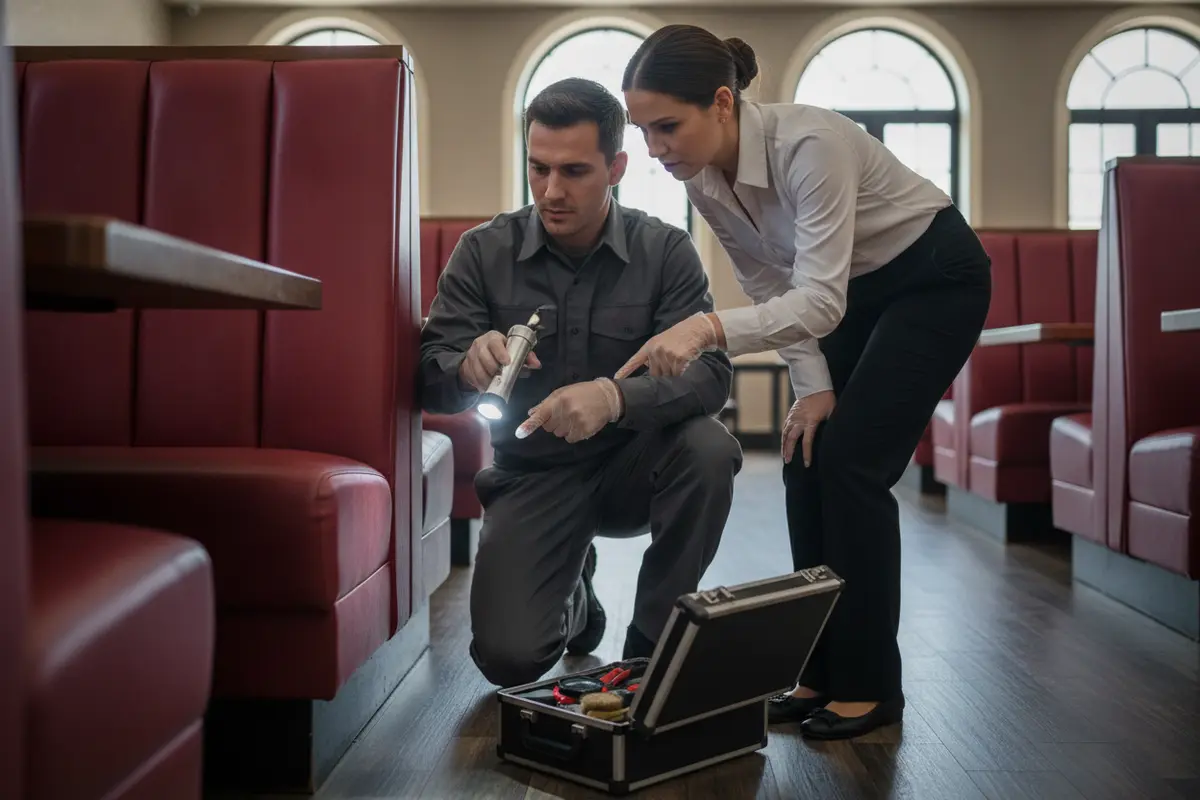
An inspection is not the same as treatment. Ask the pest professional to explain what was inspected, what was identified, what remains uncertain, and whether more monitoring or a follow-up visit is recommended. You can learn about the company’s bed bug inspection process and its specialized bed bug work before arranging a conversation.
How should bed bug treatment for restaurants protect food areas?
A suspected bed bug report does not justify improvising around food, equipment, or chemical products. Keep the response focused on the affected area and follow the product label and the pest professional’s site-specific instructions if treatment is recommended. A restaurant’s food-handling procedures and any applicable requirements remain in force; this guide does not determine whether a particular space must close or establish regulatory requirements.
Until the inspection clarifies the situation, do not apply pesticides near food, food-contact surfaces, utensils, or equipment. Do not place a treatment product on tables, chairs, or storage areas unless the label permits that use and the licensed professional directs the work. Keep food, dishes, linens, and supplies away from any area being treated as instructed. Do not move materials into a prep space or another seating area as a workaround.
Ask the professional for written, specific directions covering the proposed treatment area, what should be removed or protected, who must leave the area, any required waiting period, and what cleaning or re-entry steps apply. Follow the label and the professional’s instructions exactly. If instructions are unclear or appear to conflict with food-service practices, pause and seek clarification before proceeding.
Whether a particular table, room, or the whole restaurant can remain in use depends on the inspection findings, the work planned, and site-specific instructions. Do not make broad health claims, promise that a space is risk-free, or assume a bed bug sighting means food is contaminated. Keep decisions factual and limited to the affected area unless the inspection indicates a wider scope.
How do you coordinate treatment without disrupting more of the restaurant?
If an inspection confirms bed bugs, the professional should explain the treatment plan, preparation, access needs, and follow-up. The plan may depend on the site, the affected materials, and the extent of findings; there is no single treatment schedule suitable for every restaurant. Ask which items or rooms are included and what the restaurant team must do before and after service.
Use a written coordination checklist:
- Confirm scope. Record the locations to be treated and the reason for including each one. Ask whether adjacent or connected areas need inspection or monitoring.
- Agree on timing. Coordinate access around service, deliveries, staff schedules, and any time the treated area must remain unused. Do not infer a return-to-service time; get it from the professional and product instructions.
- Prepare only as directed. Assign a manager to coordinate moving or protecting furniture and supplies. Avoid shifting items to other rooms unless instructed.
- Protect food-service operations. Clarify how food, utensils, equipment, linens, and food-contact surfaces must be handled. Follow the label and written treatment directions.
- Record completion and follow-up. Keep the treatment documentation, instructions, and dates for any inspection or monitoring visit together.
Ask what method is being proposed and why it fits the findings. Ace describes using a multi-method approach that may include Aprehend, heat, steam, or integrated pest management depending on the situation; learn more about bed bug removal services, Aprehend treatment, and heat treatment. These are options to discuss with a professional, not a recommendation that one method is right for every commercial kitchen or dining room.
For a restaurant operating in New York City, confirm service availability and logistics before setting a schedule. The company’s service-area information lists its coverage, and the New York bed bug removal guide offers additional context about response planning.
How should owners communicate with customers and employees?
Keep messages brief, accurate, and consistent. Tell employees what they need to know to follow the response plan, including who is leading it, which area is being assessed, and whether any work or schedule changes apply. Do not identify the person who reported the concern or speculate about a guest, employee, delivery, or neighboring business as the source.
If a customer asks about a specific area, respond calmly and state only what is known: a concern was reported, management is assessing it, and any next steps are being coordinated. Do not claim that an inspection has confirmed or ruled out bed bugs until that is accurate. Avoid posting unverified details on social media. If the inspection identifies a confirmed issue, management should decide what additional communication is appropriate based on verified findings and professional guidance.
Assign one spokesperson for external questions. That keeps staff from giving conflicting explanations during a busy service. A simple internal message might say: “A possible pest concern was reported in [area]. Management has arranged an assessment. Please do not move items or apply products; direct any questions to [manager].” Adjust the wording to what is actually known.
When can the affected area reopen?
Base reopening on the inspection and treatment instructions, not on a fixed number of hours or a visual glance alone. If no bed bugs are identified, ask the inspector whether any monitoring or recheck is sensible in light of the report. If treatment occurs, follow the product label and professional’s instructions about when people may re-enter, what surfaces need attention, and what conditions must be met before service resumes.
Use a short decision record. Note the work completed, any restrictions that remain, the follow-up plan, and who made the decision to return the area to use. If the professional recommends a reinspection or monitoring, assign a manager to schedule it and keep the record with the original incident log. If new evidence appears, reopen the investigation rather than assuming the earlier response settled the matter permanently.
| Situation | Manager’s next step | Before using the area |
|---|---|---|
| Unidentified insect or unverified report | Record details and arrange an appropriate inspection. | Ask the inspector whether temporary limits or monitoring are advisable; do not diagnose from a report alone. |
| Bed bug confirmed in a defined location | Coordinate a written, site-specific treatment plan and follow-up. | Use the area only when the professional’s instructions and product-label directions allow it. |
| Treatment completed, follow-up still planned | Keep the service and monitoring records; assign an owner for the next visit. | Follow any stated restrictions and re-entry directions; do not substitute a manager’s guess. |
| New evidence after initial response | Document the new location and contact the professional for reassessment. | Reconsider the affected area based on the new findings and updated advice. |
What is a practical restaurant response checklist?
Use this sequence when a suspected bed bug is reported. It is a management aid, not a substitute for inspection, product instructions, or site-specific advice.
- Receive the report privately and thank the person who raised it.
- Record the time, exact location, description, and any photo or specimen.
- Ask staff not to move furnishings, carry items elsewhere, or apply pesticide.
- Choose one response lead and limit incident details to the people who need them.
- Arrange a qualified inspection and preserve access to the reported location.
- If confirmed, obtain written treatment scope, preparation, food-area precautions, re-entry directions, and follow-up details.
- Document the work and base reopening on the professional’s instructions and the label’s instructions.
- Monitor as advised and record any new reports or findings.
Restaurant managers looking for urgent guidance can review the emergency bed bug response information and discuss the specific site with a specialist. The aim is not to interrupt more service than necessary. It is to verify the concern, protect food-service operations from improvised treatment, and act on clear findings.
Request help coordinating a restaurant bed bug assessment
Frequently Asked Questions
Does one reported bed bug mean the restaurant must close?
Not by itself. A report is a reason to document the location and arrange an appropriate assessment, not proof that the whole restaurant is affected. Any decision to limit use or close an area should reflect verified findings, the planned work, and site-specific professional instructions.
Should staff spray a suspected bed bug with an insecticide?
No. Staff should not improvise pesticide use, especially around food, equipment, utensils, or food-contact surfaces. Preserve the report details and let a qualified professional determine whether treatment is appropriate and what products and precautions apply.
Can the restaurant keep serving food during an inspection or treatment?
That depends on the location, inspection, work planned, product directions, and professional instructions. Ask which area must be kept clear and whether any food, equipment, or surfaces need protection. Do not assume that every case requires a full closure or that service can continue unaffected.
How should a restaurant respond if a customer reports a bed bug?
Listen privately, document the reported location and time, and thank the customer for telling a manager. Avoid blaming anyone or making claims before inspection. Explain that management will assess the report and coordinate appropriate next steps.
What records should a restaurant keep after treatment?
Keep the original incident notes, inspection findings, treatment scope and completion details, written preparation and re-entry instructions, and follow-up or monitoring records. Also record the manager who approved return to use and the basis for that decision.
A calm, consistent process helps restaurant teams respond to a suspected bed bug without relying on rumors or improvised treatment. Document what is known, get a suitable inspection, follow written instructions, and revisit the plan if new findings emerge.