
Finding a mark on a sheet or a small insect near a crib can be frightening. If you suspect bed bugs in a crib, pause before moving the mattress, washing everything, or applying a product. The safest first steps are to keep the baby away from the suspected area while you look for reliable evidence, preserve the normal safe-sleep setup, and coordinate any treatment with a qualified professional.
Contact Ace to discuss a bed bug inspection
What signs should you look for around a crib?
A bite or a spot on a sheet alone cannot confirm bed bugs. Skin marks can have many causes, and small stains may come from ordinary household activity. Look for physical clues in the sleeping area and nearby places where an insect could hide. If you are unsure what you found, take a clear photo or save the specimen in a sealed container for identification; do not handle it with bare hands.
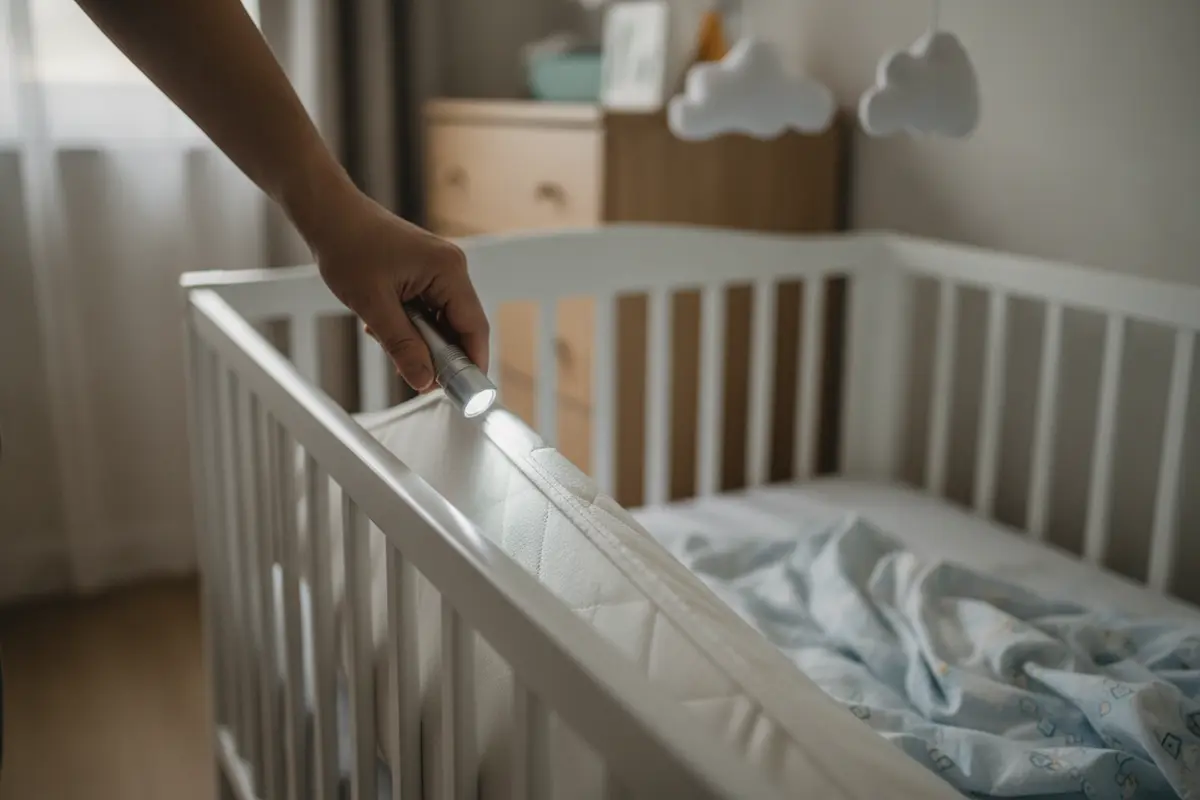
With the baby safely elsewhere and another adult available if needed, use a flashlight to inspect the crib mattress seams, piping, labels, and corners. Check the frame joints, screw holes, slats, and the area immediately around the crib. Look for live insects, pale shed skins, tiny eggs, or dark spotting. Avoid taking the crib apart unless the manufacturer’s instructions allow it and you can reassemble it correctly.
Bed bugs tend to hide in narrow, protected spaces rather than remain exposed on a sheet. Widen the check to the bed or chair where a caregiver rests, the baseboards, and nearby furniture—but do not turn a focused inspection into a whole-home cleanout. Our guides to early signs of bed bugs and common bed bug hiding spots can help you know what evidence to look for. A professional bed bug inspection can help distinguish a suspected infestation from an uncertain sighting. Record where and when you found each clue, and note whether you saw an insect or only a mark. Photos with a familiar object for scale can help a professional understand what you observed, but do not delay help to collect more evidence. Avoid repeatedly checking or disturbing the same area, which can scatter items and make it harder to describe what was present. If you rent, notify the landlord or building manager promptly and ask how the inspection and any next steps will be coordinated; do not attempt treatment on your own while waiting.
How can you keep the baby safe while you investigate?
Take the baby out of the room during the inspection. Keep the child in a safe, supervised place away from the area under review. If the crib seems unsafe to use, ask your pediatrician or another qualified child-safety professional about an appropriate temporary sleep arrangement. Follow safe-sleep guidance; do not improvise with a sofa, adult bed, loose bedding, or an unattended carrier.
Do not move the crib, bedding, or soft toys to another room as a first response. Carrying potentially infested items through the home can spread insects. If you must remove an item, place it directly into a sealed bag or lidded container before moving it, and keep it separate until you know how it will be handled. Do not seal a baby or any living thing inside a bag or container.
Keep the crib’s sleep surface clear. Do not put plastic sheeting, loose covers, powders, or unapproved encasements on a crib mattress. Never use a mattress cover, barrier, or device that changes the fit or firmness of the sleep surface or introduces loose material. If an adult needs to protect a mattress or isolate a bed as part of a treatment plan, that is a separate task and does not make a crib safe for improvised barriers.
Try to keep the baby’s usual safe sleep routine as consistent as possible. If you suspect bugs in another sleep space, get professional advice about what to do rather than moving the child from room to room. The goal is to protect the baby without carrying belongings around or creating a new sleep hazard.
What should you do with crib sheets, clothes, and soft items?
Handle laundry in a contained, deliberate way. Gather only items you need to clean, place them in a sealed bag before carrying them, and empty the bag directly into the washer or dryer. Follow the item’s care label and the appliance instructions. Where the fabric permits, use a hot dryer cycle; heat from a properly used dryer can help treat washable items, but a laundry step alone does not eliminate an infestation in a room.
After drying, put clean items in a fresh sealed bag or clean container and keep them separate from untreated belongings. Do not set cleaned sheets back on a crib that has not been inspected or cleared as appropriate. For delicate items, toys, or anything that cannot be laundered safely, ask the pest professional how to handle that specific item. Do not use an oven, microwave, hair dryer, or household heater to try to treat belongings.
For more on containing and laundering garments, see this guide to bed bugs in clothes and safe laundry handling. If you need to move household items, use the same sealed-transport principle described in our guide to moving with bed bugs. Do not discard a crib or mattress on the sidewalk unless a professional advises you and you follow local disposal rules; replacing furniture without addressing the room may not solve the problem.
How do you coordinate safe treatment in a nursery?
Tell the pest professional that an infant sleeps in the home and identify the crib, nursery, and any areas where the baby spends time. Share what you observed, when you noticed it, and any steps you have already taken. Ask for an inspection before deciding that a crib or mattress needs treatment. A written plan should explain what areas and items are included, what preparation is required, whether the baby must leave, how long to stay out, and what conditions must be met before the room is used again.
Never apply a pesticide, insecticide, essential oil, alcohol, or household remedy to a crib, mattress, bedding, or a baby’s skin. Do not use foggers or sprays as a quick fix. A product’s label gives directions and restrictions for its use; do not use a product on a surface or in a way its label does not allow. Keep the baby, pets, toys, and feeding items away from any product or treated area as directed by the product label and the licensed applicator.
Ask the professional to explain the proposed approach in plain language, including the products or methods, the exact areas treated, and the re-entry instructions. Do not assume every treatment method is suitable for every room or item. Ace describes its service as beginning with inspection and assessment, followed by a treatment plan and follow-up; families can ask how a case-specific plan would address a nursery. Learn more about bed bug treatment and prevention or the New York bed bug removal process. Treatment methods such as Aprehend or heat treatment should be discussed with a professional in the context of the specific home and its occupants.
For a family coordinating care with a childcare provider, communicate only the facts needed to protect the child and follow the provider’s procedures. Penn State Extension’s guidance for dealing with bed bugs in child care environments addresses prevention and safe elimination in that setting. It is not a substitute for an individual home treatment plan, but it can inform a practical conversation about belongings and shared spaces.
Compare common next steps
| Situation | Safer next step | What not to assume |
|---|---|---|
| One uncertain mark or insect | Take a photo or safely contain a specimen; arrange identification if needed. | A bite or stain by itself proves bed bugs. |
| Washable bedding or clothes may be affected | Bag items before carrying them; follow care labels and use a dryer cycle when fabric allows. | Laundry alone has treated the room or crib. |
| Evidence appears on or near the crib | Keep the baby away during inspection and request professional advice before treating or moving the crib. | A household spray or improvised cover is safe for a baby’s sleep space. |
| Infestation is suspected in a larger area | Request a room-by-room assessment and written preparation and re-entry instructions. | One treatment method or one visit fits every home. |
What is a careful step-by-step plan for tonight?
- Move the baby away from the room being checked. Keep the child supervised in a safe place, and do not place the baby on an adult bed, sofa, or other improvised sleep surface.
- Photograph the evidence. Use a phone camera and a flashlight. If you can safely capture an insect, use a sealed, rigid container; avoid crushing it or spreading it.
- Inspect only the immediate area. Check mattress seams, crib joints, and nearby furniture without using sprays or dismantling the crib.
- Contain items before moving them. Bag laundry or toys individually as appropriate. Do not carry loose bedding through the home or move the crib to another room.
- Call for case-specific advice. Share the evidence and tell the professional an infant lives there. Ask what to do before the inspection and what the family must do before returning to the room.
- Contact the pediatrician about symptoms. If the baby has skin marks or discomfort, describe what you see and ask for medical guidance rather than diagnosing the cause yourself.
When should you ask a pediatrician about bites?
Bed bug bites cannot be reliably identified from appearance alone, and not everyone reacts in the same way. A skin mark does not establish that a bed bug caused it. Contact the child’s pediatrician if you have questions about a rash, itching, swelling, discomfort, or any symptom that concerns you. Explain when you noticed it and mention the suspected exposure. Do not apply a pesticide or an adult’s medication to the baby, and do not use creams or other treatments unless a clinician says they are appropriate for your child.
Seek urgent medical help if the baby has trouble breathing, becomes unusually difficult to wake, or develops a rapidly worsening or severe reaction. For less urgent concerns, the pediatrician can advise whether the child should be seen and what, if anything, is suitable to ease symptoms. The Head Start resource Bed Bugs: Managing the Itch Factor discusses health checks and support around bed bug concerns in early-childhood settings; it does not replace an individual clinician’s advice.
If you are still unsure whether the evidence is bed bugs, a focused inspection can help avoid unnecessary treatment or moving belongings. See also how to check for bed bugs and how infestation signs can vary. Families in the city can review Ace’s service areas when arranging local help.
Ask Ace about an inspection and nursery treatment coordination
Frequently Asked Questions
Should I move the crib to another room?
Not as a first step. Moving furniture or loose belongings may carry bed bugs elsewhere. If the crib appears unsafe to use, keep the baby out of the area and ask a pediatrician or child-safety professional about a safe temporary sleep arrangement while a pest professional advises you about the crib.
Can I spray the crib mattress or frame?
No. Do not apply a pesticide, household spray, or home remedy to the crib, mattress, bedding, or baby. Ask a qualified pest professional to assess the situation and explain any proposed treatment, including label directions, restricted areas, and re-entry steps.
Do bites mean the baby has bed bugs in the crib?
No. Skin marks can have many causes, and bites alone cannot confirm an infestation or show where it is located. Have the crib and surrounding area assessed, and ask the pediatrician about the baby’s symptoms.
Does washing the sheets solve the problem?
Laundering and drying items safely can be one useful part of handling them, but it does not establish that the crib or room is clear. Bag items before carrying them, follow care labels, and coordinate the wider inspection and treatment plan with a professional.
When can the baby return to the nursery after treatment?
Follow the exact re-entry instructions provided for the products and methods used. Ask the applicator to explain when the room, crib, and any treated items may be used again; do not rely on a generic waiting period or return before the stated conditions are met.
When bed bugs are suspected near a crib, steady and careful steps matter more than rushing to spray or move furniture. Protect the baby’s sleep routine, contain items before moving them, and rely on pediatric and pest professionals for the decisions that require individual advice.