
If you are asking how to find bed bugs in a headboard, use a calm, methodical inspection instead of pulling the whole bed apart. Headboards have seams, joints, screw holes, brackets, and sheltered rear edges where insects or signs may be easier to notice than on a broad, smooth surface. Look for several kinds of evidence, record what you see, and keep belongings in place while you check.
Contact Ace about an inspection
What signs should you look for on a headboard?
Search for live insects, shed skins, eggs, and dark spotting in protected areas. No single speck or skin-like fragment proves that bed bugs are present. Dust, wood marks, and debris can look similar, so note the exact location and whether multiple clues appear together. A photo of the area can help you compare details later without repeatedly handling the object.
- Live insects: adults are oval, flat, and reddish brown; younger insects are smaller and may look pale.
- Shed skins: thin, pale, shell-like remains that may collect near a crack, seam, or joint.
- Eggs: tiny pale objects attached in sheltered locations. They can be difficult to identify without magnification.
- Dark spots: ink-like marks on fabric or unfinished wood, sometimes clustered near a hiding place.
For a comparison of visible features, review this guide to what bed bugs look like. Bite marks alone cannot confirm the source; consider them alongside physical evidence and the other early signs of bed bugs.
How do you inspect a headboard step by step?
Work from the easiest visible surfaces toward narrow crevices. A flashlight held at an angle can reveal texture and small deposits that disappear under flat overhead light. If you use a card to check a gap, slide it gently along an accessible edge rather than scraping or forcing it into a seam.
- Prepare the area. Gather a bright flashlight, phone or camera, and a small sealable bag or container in case you find a specimen. Keep the container beside you so you do not carry evidence around the home. Do not spray chemicals before or during the check.
- Look over the front and perimeter. Examine fabric piping, stitched seams, tufting, decorative trim, corners, and the lower edge where the headboard meets the frame. Use angled light and check each side in a consistent order.
- Inspect fasteners and joins. Look at brackets, screw heads, drilled holes, panel intersections, and places where wood or metal pieces meet. These sheltered gaps deserve more attention than a clean, exposed panel.
- Check the back only if safely accessible. If a freestanding headboard can be viewed without strain, inspect its rear and wall-facing edge. Ask for help with a heavy item. Do not detach a mounted piece or risk injury to see behind it.
- Record findings before moving on. Photograph the clue in place, note its position and the date, and seal any sample. Then inspect nearby frame joints and mattress seams without carrying bedding through the home.
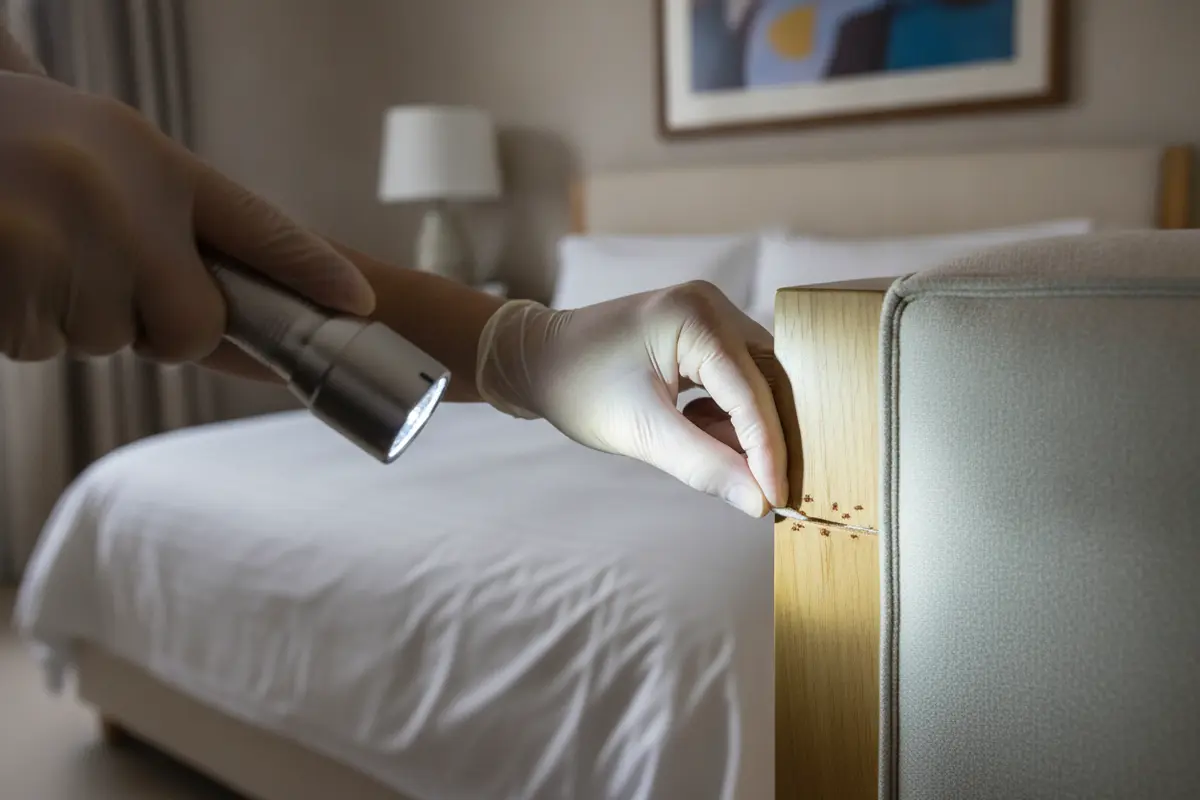
A room check works best when it follows a repeatable path rather than jumping from one object to another. Use this step-by-step bed bug inspection guide to consider nearby areas, and see common hiding places for context. Keep your immediate search focused on the headboard and its connection to the bed.
How should the inspection change for different headboards?
Material changes which details deserve attention, but it does not make a headboard automatically safe or suspect. Upholstery offers folds and seams; wood and metal offer joins, hardware, and gaps. Check accessible places without pulling fabric, opening panels, or taking apart heavy components. If a surface is smooth, inspect its edges and attachments rather than assuming the whole object is clear.
| Headboard type or area | Details to examine | Safer inspection approach |
|---|---|---|
| Upholstered | Piping, seams, tufts, folds, staple line | Shine light across seams; do not tear or stretch fabric |
| Wood panels | Cracks, joints, screw holes, rear edges | View accessible gaps; do not pry panels open |
| Metal or frame-mounted | Fasteners, brackets, joints, hollow openings | Look closely without dismantling heavy parts |
| Wall-facing side | Mounting points and narrow wall gaps | Inspect only when safely visible; do not force it loose |
Upholstered headboards
Follow the seam lines with light, paying attention to piping, buttons, tufting, and folded fabric. Do not pull staples, cut a fabric cover, or press sharp tools into padding. A stain or loose fiber is not enough to identify an insect. If a clue is caught deep in upholstery, photograph the location and let a qualified inspector decide whether further access is needed.
Wood headboards
Check where boards meet, around screw holes, and along the underside and rear perimeter if visible. A crack in wood may contain ordinary dust or finish residue. Avoid sanding, scraping, or applying liquid products to test a mark; those actions can destroy useful evidence and damage the finish. Notice whether a clue is on the surface, inside a joint, or near a fastener, because that context may help someone assess it later.
Metal and adjustable frames
Pay attention to bracket connections, seams in hollow tubing, and fasteners. Do not dismantle a bed mechanism or remove a wall-mounted assembly as part of a first check. If the headboard moves when touched or the hardware seems unstable, stop and ask for help with safe access. Use light to examine a joint rather than inserting a tool into a hollow part.
What should you avoid while checking?
Do not shake the headboard, carry it through the home, or set it in another room. Avoid crushing possible insects or brushing material onto the floor. Keep the search orderly so you can remember where each clue was found. Do not apply a household pesticide to furniture unless its label specifically permits that use, and follow all label directions. Foggers and improvised chemical mixtures may create exposure risks and may not reach hidden insects.
If the headboard is attached to a wall, do not pry it loose. Check visible edges and ask a building contact or qualified professional to assess access when disassembly may be needed. In a multi-unit building, document the date and room and promptly notify the appropriate property contact about credible evidence. The U.S. Environmental Protection Agency provides general pesticide safety and environmental information at its official website; follow the product label and seek case-specific guidance rather than improvising treatment.
How do you document a possible sign without spreading it?
Good documentation is specific and restrained. It helps a professional understand what prompted your concern while reducing unnecessary handling. Use the following sequence:
- Take a close photo and a wider photo that shows the clue’s location on the headboard. Include a familiar object for scale only if it can be placed without touching the evidence.
- Write down the room, side of the headboard, nearby seam or fastener, date, and what the clue looked like. Separate what you observed from what you think it might be.
- If you can safely collect a loose specimen or shed skin, place it directly into a small sealable container. Label it; do not leave an open sample on a counter.
- Keep bedding and belongings in the room until there is a clear handling plan. If laundry must be moved, contain it in a bag first rather than carrying loose items through the home.
- Tell a property manager or building contact when appropriate, and retain the message and photographs. Ask about coordinated next steps rather than treating an apartment as unrelated to the rest of the building.
A short, useful record could read: “November 5, bedroom, rear-left bracket; two dark marks beside the screw hole; photo saved.” That description does not claim the marks are bed bugs. It gives a professional the location and visible details to consider, and it helps you avoid relying on memory if you notice another clue later.
Do not discard the headboard based on one uncertain speck. Disposal involves moving the item through shared halls or elevators, and it does not establish whether other nearby areas need attention. If a piece truly must be removed later, get advice on how to contain and label it so it does not create an avoidable route through the building.
What should you check around the headboard?
Finding one clue in a headboard does not map the full extent of a problem. Conversely, seeing no clue on the headboard does not establish that every nearby surface is clear. If the initial check raises concern, look methodically at the bed frame, mattress seams, and the immediate floor-edge area, then stop if access becomes unsafe or the signs are uncertain. Avoid a chaotic whole-room search that moves possessions from place to place.
Use a consistent route: headboard front and edges, accessible rear, frame joints, mattress seams, and nearby furniture closest to the bed. Keep each category distinct in your notes. For example, record a spot on the rear bracket separately from an unrelated mark on a bedside table. A broader bed bug inspection in NYC can assess connected areas and help interpret clues that are hard to identify at home.
If there are bites but no visible evidence, do not assume the headboard is the source or keep moving sleeping locations. Review the guide to bed bug bites for why skin reactions can be inconclusive, and consider whether there are physical signs elsewhere. Avoid bringing secondhand furniture into a room until it has been checked; see how bed bugs can travel into a home for practical context.
What a clear-looking headboard can and cannot tell you
A careful visual check can identify visible evidence in the spots you examined. It cannot reveal every hidden space, certify an entire room, or explain a skin reaction by itself. Treat “nothing noticed” as a record of what you could see at that time, not a guarantee. If concern remains, make a note of what you checked and what access was blocked, then ask for help interpreting the situation instead of repeating a more disruptive search.
When does a professional assessment make sense?
Consider a professional assessment when you find a live insect, repeated clustered marks, multiple kinds of evidence, or a clue you cannot confidently identify. It is also reasonable to ask for help if the headboard is fixed in place, the inspection would require dismantling furniture, or you live in a multi-unit building where coordination matters. An inspection can consider the bed and surrounding room rather than treating one furniture piece as the whole situation.
Before arranging help, have a few practical details ready: the room and furniture type, where and when you saw the clue, whether you have a clear photo or safely sealed sample, and whether the item is mounted or difficult to reach. You do not need to diagnose the object yourself. Avoid presenting an uncertain mark as a confirmed insect; explain precisely what you observed and let the assessment address identification and next steps.
A qualified specialist can evaluate the evidence, explain what areas need further attention, and discuss possible next steps based on the findings. Ace’s bed bug removal information describes the broader service context. Readers can also review the New York bed bug removal guide before deciding what questions to ask. To understand the company’s background, see Ace’s company information.
How can NYC renters and property managers coordinate a check?
In a shared building, a calm record and prompt communication are more useful than moving furniture between apartments. A renter can share a dated photo, describe where it was found, and ask the property manager what inspection process applies. A manager can record the unit and room, coordinate access, and avoid relying on an uncertain photograph as a final identification. Do not make claims about adjacent homes without evidence; pass along observations and let the appropriate professional assess the situation.
For example, a concise notice might say: “I found a small cluster of dark marks along the rear headboard bracket in the bedroom on November 5. I have left the furniture in place and can share photos. Please let me know how the building wants to coordinate an assessment.” This states location, date, and action without declaring a diagnosis or suggesting a neighbor is affected. Keep copies of relevant messages and follow any building procedures for access and reporting.
A property manager can use the same disciplined approach across reports: log the unit and room, preserve photos, keep observations separate from conclusions, and arrange appropriate inspection. Consistent notes make it easier to compare reports without spreading assumptions. Ace’s service-area information can help readers understand whether a location may be covered; check the NYC and nearby service areas. For borough-specific information, see Manhattan or Brooklyn. Those pages are service information, not proof that a particular apartment has bed bugs.
Frequently asked questions
Can bed bugs hide inside a headboard?
They can shelter in cracks, joints, upholstery folds, and hardware openings. Check visible crevices, but do not dismantle a mounted or heavy piece to search inside it.
Does one dark spot prove there are bed bugs?
No. A spot can have several causes. Look for additional evidence such as a live insect, shed skin, or repeated similar marks, and preserve a photo or sample for assessment.
Should I throw away a headboard if I find a possible sign?
Not based on a single uncertain clue. Moving or discarding furniture may carry items through shared spaces and does not answer whether other areas need checking. Get the evidence assessed first.
Can I spray the headboard myself?
Use a pesticide only when its label permits that exact use, and follow all directions. Avoid improvised mixtures and foggers; ask a qualified professional about appropriate options after assessment.
What if I cannot safely see behind the headboard?
Do not force it away from the wall or remove heavy hardware. Photograph the visible area and ask a building contact or qualified professional to evaluate safe access.
Reach out to discuss an inspection
A careful check focuses on evidence, protects the surrounding room, and helps you choose a sensible next step without disturbing more than necessary.