
Finding bed bugs in a Manhattan apartment can make every hour feel urgent, especially when you are losing sleep or trying to protect neighboring units. The right first move is not to scatter belongings or apply several DIY products. It is to arrange a professional inspection, explain what you have seen, and ask how quickly the treatment team can reach you.
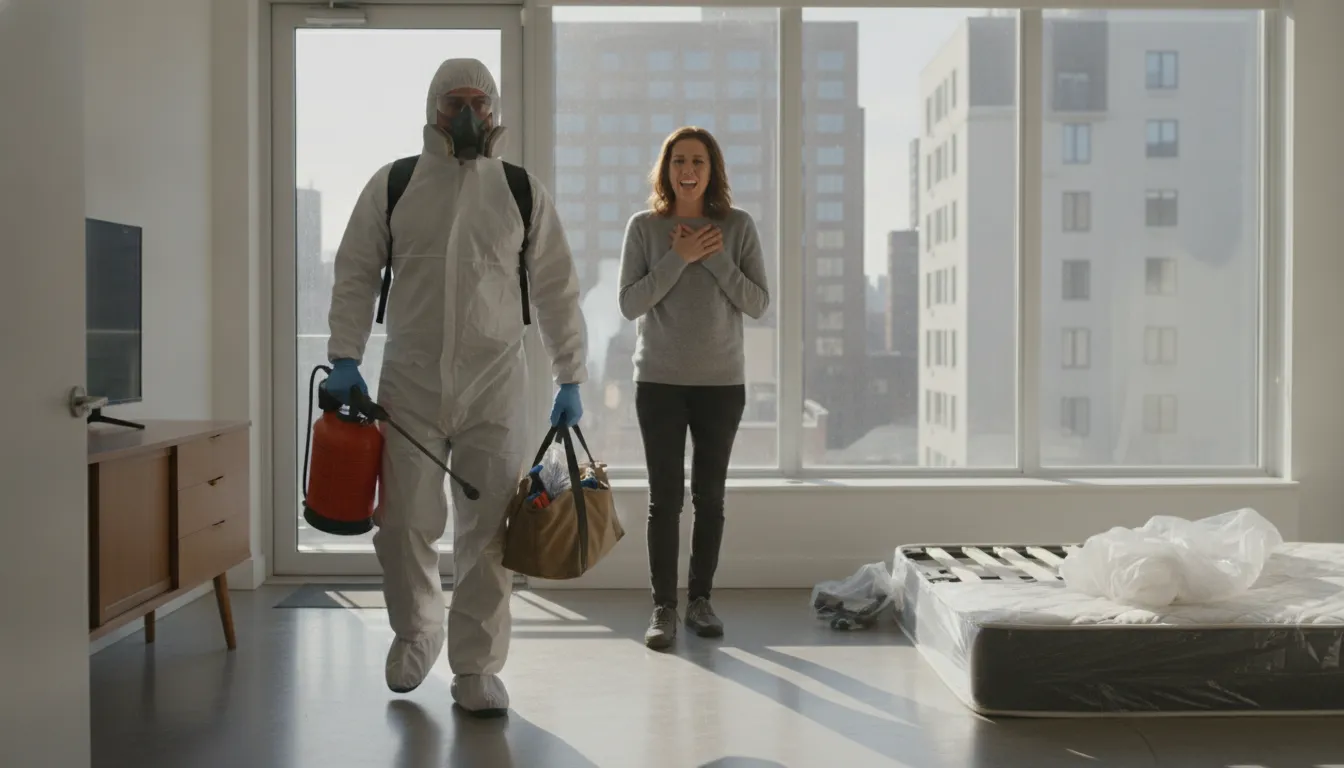
A same day bed bug exterminator Manhattan service may be able to inspect and treat an active infestation on an urgent schedule, but same-day does not mean skipping diagnosis or guaranteeing that every egg and hidden bug is eliminated in one visit. Ace typically aims to schedule inspections and treatments within 24 to 48 hours, with emergency options available for high-severity outbreaks.
Your response time, preparation, and the treatment method all affect what can happen in one day. Start by understanding what same-day service actually includes, then prepare the space so the inspection can be thorough and the treatment can begin without avoidable delays.
Request a same-day inspection from Ace Bedbug Exterminating today
What Does Same-Day Bed Bug Extermination in Manhattan Actually Mean?
When people search for a same-day bed bug exterminator in Manhattan, they usually need two things at once: a fast response and a trustworthy answer about what is happening in their home. Same-day service means a qualified professional can often arrange an urgent inspection, assess the evidence, and begin an appropriate treatment plan as soon as scheduling and site conditions allow. It does not mean rushing into an unplanned chemical application or promising that every bed bug and egg will be gone before the technician leaves.
That distinction matters in Manhattan apartments, hotels, offices, and other connected buildings. A professional inspection should come first. The technician looks for live bed bugs, eggs, fecal spotting, shed skins, harborages, and signs that the problem may extend beyond one room. This helps establish the likely scope of the infestation and prevents treatment from being based on a bite report alone. Ace’s Manhattan bed bug specialists can use that assessment to recommend the most suitable next step. For apartment-specific guidance, see how bed bug treatment works in Manhattan apartments.
What can happen during a same-day visit?
- Inspection: The technician examines sleeping areas, furniture, wall edges, cracks, and other likely harborages.
- Assessment: Findings are documented, the apparent extent of activity is discussed, and access or preparation requirements are explained.
- Initial treatment: When appropriate, the technician may begin an emergency treatment during the visit. The method depends on the property, infestation conditions, safety requirements, and the inspection results.
- Follow-up planning: If additional monitoring, preparation, or visits are needed, the service plan and schedule are established rather than left to guesswork.
New York City providers advertise same-day options because active infestations create urgent concerns for residents and property managers. Emergency services may also offer around-the-clock contact or flexible scheduling, particularly when a severe outbreak needs prompt attention. Ace commonly aims to schedule inspections and treatments within 24 to 48 hours, with emergency treatments available for high-severity situations.
Multiple visits may still be the responsible recommendation. Bed bug eggs can resist many control methods, and the infestation’s life cycle, neighboring units, clutter, and treatment type can all affect the timeline. A same-day appointment should therefore be viewed as the start of a professional response: identify the problem, reduce immediate activity when possible, and build a treatment plan designed for lasting control. Fast action is valuable, but accurate diagnosis is what keeps speed from becoming a false promise.
How Fast Can a Bed Bug Treatment Really Work?
Speed depends on more than how quickly a technician arrives. The treatment must reach hiding places, maintain the right conditions, and account for eggs as well as adult bed bugs. A same-day appointment can begin quickly, but it should not be presented as an automatic one-treatment cure. Inspection findings, room layout, infestation size, and follow-up needs all affect the timeline.
| Approach | How fast it can work | Effectiveness across life stages | Important cautions |
|---|---|---|---|
| Professional heat treatment | Heat can kill exposed bed bugs during the treatment when the entire space reaches lethal conditions. In laboratory testing, adults exposed to 48 degrees Celsius reached 99% mortality in about 71.5 minutes. | Adults and eggs can be addressed without relying on insecticide susceptibility, but eggs require more heat. The reported lethal temperature for 99% egg mortality is 54.8 degrees Celsius, compared with 48.3 degrees Celsius for adults. | Technicians must monitor temperatures throughout the room and protect heat-sensitive belongings. Effective treatment balances mortality with the risk of damage, energy use, and cost. Learn more about professional bed bug heat treatment in NYC. |
| Chemical treatment | It may be completed during a scheduled visit, but results are not always immediate. Residual products and follow-up applications may be needed as hidden bed bugs emerge or eggs hatch. | Coverage depends on the product, application, contact, and the life stage. Bed bug eggs are resistant to many chemical and non-chemical control methods, and insecticide resistance can reduce the reliability of repeated applications. | Do not judge success only by what you see immediately afterward. Follow the technician’s re-entry, cleaning, and monitoring instructions, and avoid adding unapproved products that can interfere with treatment. |
| Whole-room heat or targeted steam | Steam can act quickly on bed bugs and eggs that it directly contacts. Whole-room heat takes time to raise and verify temperatures, and room conditions can vary from one location to another. | Direct steam is limited by reach and contact. Whole-room heat can provide broader coverage when temperatures are properly measured, but every treatment area still needs careful preparation and monitoring. | At 45 degrees Celsius, adults required about 94.8 minutes for 99% mortality in testing, while eggs survived as long as seven hours at that temperature. A warm room is not automatically a treated room. |
These figures explain why a professional cannot responsibly promise that a quick visit alone solves every infestation. Heat must reach the necessary temperature for long enough, while chemical and targeted methods must account for harborages and resistant stages. A trained technician can recommend the fastest practical approach after identifying where bed bugs are active and what the property can safely support.
For Manhattan residents, the useful question is not simply, “Can treatment happen today?” It is, “What method can address this infestation thoroughly today, and what monitoring or follow-up will protect the result?”
Why Bed Bugs Are So Hard to Eliminate in a Single Day
A fast response is valuable, but bed bug biology does not always follow a one-visit schedule. The common bed bug, Cimex lectularius, has lived closely alongside humans and other warm-blooded animals for thousands of years. Today, infestations are resurging in North America, and their ability to hide, reproduce, and survive control attempts makes a careful plan more reliable than a promise of instant results.
Eggs are one reason a single pass may not be enough. The U.S. Environmental Protection Agency explains that bed bug eggs resist many pest-control methods, including both chemical and non-chemical approaches. A treatment may kill exposed adults and nymphs while eggs remain protected in cracks, seams, furniture joints, or other concealed locations. Those eggs can hatch later, creating the impression that treatment failed when the real issue is that a new life stage has emerged. Learn more about bed bug control through the EPA’s IPM guidance.
Insecticide resistance adds another layer of difficulty. Research on bed bug management reports increasing resistance to conventional insecticides and notes that infestations may require multiple applications when product efficacy is limited. Repeating the same method without reassessing the infestation is not a complete strategy. The technician may need to adjust the treatment approach based on evidence from the inspection, the building, and the insects’ response.
Reproduction also works against rushed expectations. Bed bugs reproduce quickly, and even a small number of survivors can restart an infestation if hiding places are missed. In a Manhattan apartment or multi-unit building, nearby rooms and units may also matter. That is why a professional inspection should establish where activity is located before treatment begins, rather than treating only the most obvious bite area or piece of furniture.
Effective control follows Integrated Pest Management, or IPM. The EPA describes IPM as a science-based approach that uses pest life-cycle information and combines prevention, surveillance, education, and appropriate control methods. In practice, that can mean targeted treatment, preparation, monitoring, and a scheduled follow-up visit when conditions warrant it. A repeat visit is not an admission that the first service was pointless. It is often the responsible way to address eggs that hatch later, hidden activity, or an infestation that extends beyond the initial inspection.
If you need urgent help, a complete bed bug removal plan for New York homes should set realistic expectations: same-day service can begin the process quickly, while lasting control may require monitoring and follow-up.
How to Prepare for a Same Day Bed Bug Exterminator Appointment in Manhattan
A few practical steps can help the inspection move efficiently and give the technician better access to the places bed bugs may be hiding. You do not need to throw away furniture, empty every cabinet, or try several do-it-yourself pesticides before the appointment. Focus on access, heat, and safety. For a more detailed room-by-room guide, review this bed bug treatment preparation checklist.
- Clear clutter from floors and around sleeping areas. Pick up clothing, bags, boxes, toys, and other loose items near beds, sofas, baseboards, and walls. Place belongings in sealed bags or containers rather than moving them to another room, which can spread bed bugs. Leave furniture in place unless the technician gives you different instructions.
- Vacuum carefully if you can do so without spreading items. Pay attention to mattress seams, bed frames, upholstered furniture, floor edges, and cracks. Empty the vacuum outdoors into a sealed bag immediately afterward. Vacuuming can remove some visible insects and debris, but it does not replace a professional inspection or treatment.
- Launder bedding and washable fabrics. Wash sheets, blankets, pillowcases, and recently used clothing in water reaching at least 120 F when the fabric allows. Follow with a dryer cycle on high heat for at least 20 to 30 minutes, or longer for bulky items. The dryer heat is especially important. Put clean items directly into sealed bags or lidded containers until the technician advises that they can return to the room.
- Keep suspected items accessible. Do not tightly seal mattresses, box springs, bed frames, closets, or upholstered furniture before the technician arrives. The exterminator needs to inspect seams, joints, cracks, and surrounding areas. Keep a clear path to each room included in the appointment, and mention where you have seen bites, spotting, shed skins, or live bed bugs.
- Secure pets and remove people from the treatment area. Place pets in a safe untreated location and follow the technician’s instructions for aquariums, birds, and other animals. During a professional heat treatment, everyone, including pets, must leave the treated areas. Do not re-enter until the technician confirms that the treatment is complete and the space is safe.
What to Do (and Not Do) While You Wait for the Exterminator
Once you suspect bed bugs, the safest short-term goal is containment, not an improvised cure. A professional inspection should confirm the problem and identify how far it has spread before treatment begins. Until the appointment, keep your actions simple and consistent.
- Stay in the room where you normally sleep. Moving to a sofa, guest room, or another apartment can give bed bugs more opportunities to spread. Avoid carrying bedding, clothing, bags, or other belongings from the suspected room into clean areas.
- Seal items that must be moved. Place potentially exposed clothing, linens, and small personal items in tightly closed plastic bags or containers. Keep them sealed until the exterminator provides handling instructions. Do not leave loose piles in hallways, elevators, or shared laundry areas.
- Document what you found. Take clear photographs of insects, shed skins, dark spotting, or suspected harborages. Note when you noticed bites or physical evidence, where it appeared, and which rooms may be affected. Bites alone do not confirm bed bugs, so preserve evidence for the inspection rather than relying on symptoms alone.
- Tell your landlord or property manager promptly. For renters, early communication helps coordinate access, inspection, and any building-level response. NYC property managers may need immediate, discreet, reliable professional intervention to address tenant concerns and comply with housing regulations, as outlined in Ace’s service guidance (Ace Bedbug Exterminating). For a closer look at who is responsible for what under local rules, read about NYC bed bug laws and landlord-tenant responsibilities. Keep communication factual and save copies of your messages.
What not to do before treatment
Do not throw out mattresses, sofas, or other furniture simply because you found evidence. Premature disposal can spread bed bugs through hallways and stairwells, and it may remove useful evidence before the inspection. If an item ultimately needs to be discarded, follow professional and building instructions so it is wrapped, marked, and transported safely.
Do not use foggers or bug bombs, and do not spray rubbing alcohol. These shortcuts can expose people and pets to unnecessary hazards while failing to address hidden harborages. Avoid layering multiple DIY products or applying chemicals to bedding, clothing, or furniture unless the product label specifically permits that use.
Instead, follow the appointment instructions, keep the suspected areas accessible, and tell the technician about every product or cleaning method already used. A calm, accurate handoff gives the exterminator better information and supports a more targeted treatment plan.
Request your same-day bed bug treatment in Manhattan now
Frequently Asked Questions
Can an exterminator get rid of bed bugs in one day?
A professional may complete an initial inspection and treatment on the same day, especially for an urgent Manhattan appointment. However, one visit does not guarantee that every bed bug or egg is gone. Treatment choice, infestation size, neighboring units, and follow-up monitoring all matter. Bed bug eggs can resist many control methods, so a thorough plan may include additional visits or integrated pest management. The EPA recommends an integrated approach rather than relying on one method alone.
How quickly can a same-day appointment happen in Manhattan?
Availability depends on the technician’s schedule, your location, the severity of the infestation, and whether the property is ready for inspection. Ace typically aims to schedule inspections and treatments within 24 to 48 hours, with emergency treatment options for high-severity outbreaks. Contact the team as soon as you identify possible signs so the scope can be assessed and the fastest appropriate response arranged.
How much does a bed bug exterminator cost in NYC?
There is no single NYC price because cost depends on the size and layout of the space, infestation severity, treatment method, preparation, and whether follow-up service is needed. An inspection allows the exterminator to evaluate the situation before recommending a treatment plan. For a clearer picture of what to budget for, review typical bed bug extermination costs in NYC. Ask for a clear scope of work and pricing details, including any follow-up visits, before authorizing service.
What should I do before an emergency bed bug treatment?
Follow the technician’s preparation instructions, avoid moving furniture or belongings to another room, and do not apply additional pesticides immediately before the visit. Keep the affected area accessible for inspection, bag washable items as directed, and tell the technician about recent DIY products or treatments. These steps help prevent spreading bed bugs and allow the professional to diagnose the infestation accurately.
Get Same-Day Bed Bug Help in Manhattan
A bed bug problem does not wait, and neither should you. Ace Bedbug Exterminating specializes exclusively in bed bug elimination and offers same-day emergency response for urgent Manhattan infestations, with trained specialists, EPA-approved treatments, and a three-phase inspection, treatment, and follow-up process built to get your home back to normal fast.
Do not let an infestation spread overnight. Reach out today to schedule your same-day treatment and reclaim your peace of mind.