
Bed bug treatment for gyms NYC operators can plan begins with a calm, evidence-led response. A suspected insect or bite alone does not confirm an infestation. Limit movement of potentially affected items, record what was found and where, and arrange a professional assessment before deciding which areas need treatment or whether operations must change.
Contact Ace to discuss a gym assessment
Quick answer: Identify and document the evidence, keep implicated items and equipment from being moved between areas, communicate practical precautions to staff, and get a case-specific professional assessment. The right treatment and any temporary closure depend on confirmed findings, the affected materials and spaces, and safe preparation and re-entry requirements.
Why does a gym need a measured response to a bed bug concern?
Gyms bring people together and include changing areas, lockers, benches, and shared equipment. A concern may involve an item carried in by a visitor or staff member, or a pest found near a place where personal belongings are stored. That possibility does not establish where an insect originated, how long it has been present, or whether it has spread through the facility.
Bed bugs do not live on people like lice. They can hitchhike on belongings and hide in small cracks and seams. A sighting in a locker room therefore merits attention, but it is not proof that every locker or workout area is affected. Avoid blame or speculation. Focus on evidence, location, and next steps.
The New York City Department of Housing Preservation and Development describes prevention, early detection, and rapid treatment as key strategies for limiting spread. Its bed bug guidance is a useful general reference. A commercial gym still needs a site-specific assessment; residential guidance is not a substitute for a facility response plan.
Where should staff look in locker rooms and workout areas?
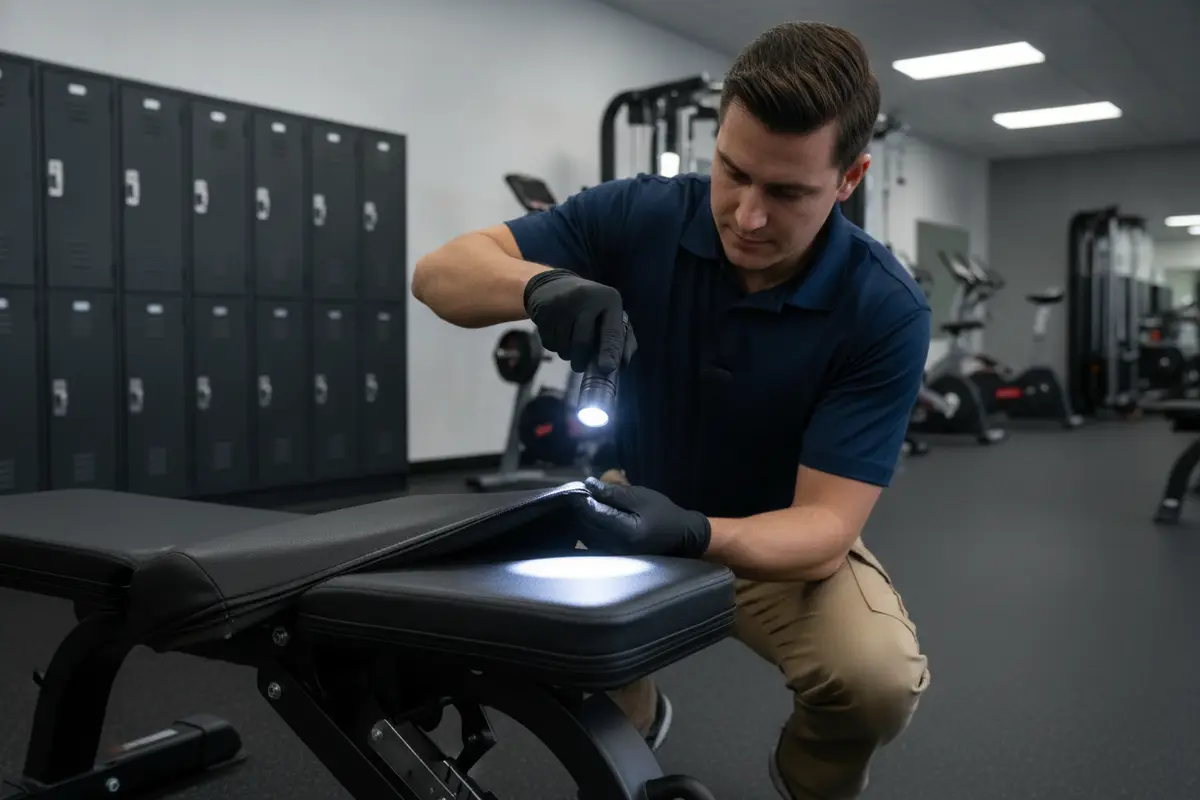
Start with the precise location of the report or insect. With a flashlight, visually check seams, folds, joints, and narrow gaps in the immediate area. Bed bugs can hide in small, protected spaces. Do not dismantle equipment, open electrical fixtures, or apply a household pesticide during an initial check.
- Locker rooms: Check the reported locker, nearby locker joints, benches, and cracks around built-in fixtures. Do not assume a whole bank of lockers is affected based on one report.
- Upholstered equipment: Inspect the seams, piping, folds, fasteners, and underside of padded benches or other upholstered items. Non-upholstered machines may still have joints and gaps, but do not treat all equipment as equally likely.
- Shared items: Note any reports involving loaned towels, mats, bags, or other items, and where they were kept. Keep any item connected to a specific finding separate until a professional advises how to handle it.
- Staff and member belongings: Ask where the item was placed and when the concern was noticed. Do not search personal bags or clothing without the owner’s permission.
Photographs can help record the location and context, but use them to supplement—not replace—preserving a specimen for identification where practical. Avoid crushing or discarding a suspected insect before its identity can be checked. If you need an inspection plan, see the information on professional bed bug inspection and the practical bed bug checking guide.
For a useful first record, note whether the finding was a live insect, a shed skin, eggs, or marks that still need identification. Do not label stains or skin reactions as bed bug evidence on sight. Photograph the object in place before anything is moved, then take a closer image only if it can be done without disturbing it. Include a familiar object nearby for scale, but avoid touching or picking up the specimen with bare hands. Record the time and the staff member who observed it. These details help a professional compare the report with the inspection findings.
How can a gym limit movement while the concern is assessed?
Containment means reducing unnecessary movement, not making a sweeping closure decision before the facts are known. Keep the affected item in place if safe and practical, or isolate it without carrying it through the building. If moving it is necessary for safety, use a controlled route and a sealed container or bag where appropriate. Do not move potentially affected furniture, towels, or equipment into another room for storage.
Temporarily restrict access to the specific reported item or small area when warranted. Mark it discreetly for staff, and keep members from handling it. Do not put equipment or belongings out for pickup, donate them, or send them to another site until an assessment clarifies the risk and handling steps.
For clothing or soft goods, avoid shaking items or carrying them loose through the facility. Ask a qualified professional how to handle items based on the material and circumstances. Advice on bed bugs and clothing can help explain why handling and containment matter, but the gym should follow instructions tailored to its specific items and operations.
Do not use foggers, sprays, or improvised heat on shared equipment. Products and methods have different label directions, material limits, and safety requirements. A professional must determine what is appropriate for the site. If the report involves a couch or other upholstered seating, this guide to bed bugs in upholstered furniture offers more context on possible hiding places.
Think through the route members and employees use around the concern. If a piece of equipment or a bench is restricted, place a temporary barrier or staff notice so people do not touch it while still keeping exits and accessible routes clear. Avoid relocating nearby chairs, mats, or lost property simply to make the space look tidy. Ask cleaning staff to leave the specific item undisturbed until they receive instructions; routine wiping or vacuuming could move an item or obscure evidence. If a member reports a personal item, let the owner decide how to manage it while you provide a private, practical point of contact.
What should the facility document and communicate?
Use one point person to collect reports and coordinate the response. Record observable facts, not conclusions about who introduced bed bugs or how widespread the issue is. Keep the record private and share information only with people who need it to carry out the response.
- Date and time the concern was reported and when the item was found.
- Exact location, including room, locker number if known, and nearby equipment.
- Description of the insect or signs and whether a specimen or clear photograph is available.
- What was done immediately, such as restricting access or isolating an item.
- Who was notified, what areas or items were assessed, and the professional’s recommendations.
- Any follow-up inspection, preparation, treatment, or monitoring instructions, with dates and responsible staff.
Tell staff what is known, what remains unconfirmed, and whom to notify if they find additional evidence. Avoid naming a member or employee, sharing their personal information, or sending alarmist messages. Member communications should be factual and proportionate: explain the affected area or equipment, temporary precautions, and how the facility will provide updates. Do not claim the entire gym is clear or contaminated unless that conclusion is supported by assessment.
A simple internal update can follow this pattern: “A concern was reported near [location] at [time]. That item or area is temporarily restricted while it is assessed. Please do not move belongings or equipment from the location; report additional observations privately to [contact]. We will share an update when the assessment gives us confirmed next steps.” Fill in only details that are verified, and avoid circulating a member’s name or an unconfirmed diagnosis.
Staff should not attempt to diagnose bites. Skin reactions vary and are not a reliable way to identify bed bugs. If a person has a health concern, direct them to an appropriate healthcare professional rather than making medical claims.
How should managers plan assessment, treatment, and re-entry?
A professional assessment should establish what evidence is present, where further inspection is warranted, and what options fit the building and its contents. The response may differ for a single movable item, a cluster of lockers, or evidence in several rooms. Request a clear scope, preparation instructions, safety guidance, and a plan for follow-up before choosing operational changes.
- Share the site details. Provide the report location, photographs or specimen if available, facility layout, operating hours, and steps already taken. Identify sensitive areas and equipment that cannot be moved easily.
- Agree on inspection boundaries. Ask which rooms, fixtures, adjacent spaces, and items need checking, and what findings would change the plan. Do not infer a building-wide infestation from an unverified report.
- Review options and preparation. Ask which method is being considered, what materials it can be used around, how belongings and equipment should be handled, and what access restrictions apply. The bed bug removal service information describes treatment as a professional service; the actual plan should reflect the assessment.
- Coordinate operating changes. Determine whether a specific room, item, or a larger area must be unavailable, and for how long. The decision should be based on professional directions and the facility’s safety obligations, not a fixed timeline borrowed from another site.
- Confirm re-entry conditions. Get written or clearly documented instructions on when people may return, which areas are ready, whether any cleaning or other steps are required, and who will verify completion.
- Monitor and respond to new evidence. Assign a staff contact, keep incident notes current, and follow the professional’s recommendations for follow-up. A new report should be assessed on its own details.
Before scheduling, map the facility’s practical constraints: class times, peak check-in periods, access to changing rooms, delivery or laundry schedules, and equipment that cannot be taken out of service without affecting safety. Give the assessor a current floor plan if available and identify connected spaces such as staff rooms or storage closets. Ask whether the inspection needs to occur when the gym is quiet, whether staff must accompany the assessor, and how to secure the area afterward. These logistics help managers prepare without guessing at the size of the response.
Do not promise a specific treatment outcome or reopen based only on elapsed time. Re-entry depends on the treatment applied, product or equipment directions, the areas involved, and the professional’s safety instructions. For background on how treatment approaches can differ, read about heat treatment and Aprehend treatment. Those pages do not determine which option is suitable for a particular gym.
How do response options compare?
The table below is a planning aid, not a diagnosis or treatment recommendation. A qualified professional should confirm the scope and requirements for the facility.
| Response option | When it may fit | What the gym should do | Key limitation |
|---|---|---|---|
| Targeted restriction and documentation | A report is unconfirmed or limited to a specific item or location. | Keep people away from the item as needed, record details, and avoid moving implicated items. | Does not establish whether bed bugs are present or eliminate them. |
| Professional inspection | Evidence needs identification or the affected area is uncertain. | Provide access and site history; agree on areas to assess and how findings will be documented. | An inspection’s scope and findings are specific to the site and time of assessment. |
| Professional treatment | Assessment supports treatment in identified areas or on particular items. | Follow the preparation, access, safety, and re-entry instructions for the selected plan. | Methods, timing, and suitability vary; no universal approach fits every gym. |
| Follow-up and monitoring | Recommended after treatment or when a professional identifies a need to check progress. | Maintain a reporting contact, record new evidence, and complete scheduled follow-up. | Monitoring alone is not treatment and should not replace response to confirmed activity. |
What questions should operators ask before choosing a provider?
Gyms need a plan that accounts for their equipment, public hours, staff access, and member communications. Ask prospective providers to explain:
- What evidence supports the proposed scope, and which locations or items will be inspected?
- What treatment methods are being considered, and why do they fit the findings and materials?
- What should staff move, isolate, clean, or leave untouched before service?
- Which areas must be vacated, what safety steps apply, and who will confirm re-entry?
- Will the provider document inspected areas, findings, work performed, and follow-up recommendations?
- How should the facility report new evidence after the visit?
Choose a provider able to explain limitations as well as proposed actions. Ace Bed Bug Exterminating serves the New York City area; confirm whether the facility’s address falls within its current service area. A commercial site should request an assessment tailored to its conditions rather than assume any treatment is pre-approved for every gym or building.
For additional context, review the company’s background and approach, the guide to common bed bug hiding spots, and information about assessing signs of infestation. These resources can help frame questions; they cannot confirm what is happening at a specific facility.
Request a case-specific gym assessment
Frequently Asked Questions
Should a gym close as soon as someone reports a bed bug?
Not automatically. Record the report, restrict access to the specific item or area if appropriate, and arrange professional assessment. A broader closure decision should reflect confirmed findings, the affected spaces, and safety instructions rather than an unverified report alone.
Can bed bugs spread through gym equipment?
Bed bugs can hitchhike on belongings and hide in protected spaces, including seams and gaps. Equipment risk depends on its design and the evidence found. Inspect the reported item and nearby relevant areas rather than treating every machine as affected by default.
Should staff use spray on a locker or padded bench?
No improvised application is a good substitute for identification and an appropriate plan. Pesticides have label directions and may not be suitable for every surface or occupied setting. Keep people away from the reported location as needed and ask a qualified professional how to proceed.
How long should a gym keep an area closed after treatment?
There is no single timeline that applies to every method or facility. Follow the treatment-specific safety and re-entry directions provided by the professional, including any requirements for access, ventilation, cleaning, or follow-up.
What should the gym tell members?
Communicate only verified information and practical steps. Explain which area or item is affected, what temporary precautions are in place, and how members can report a concern. Protect individual privacy and avoid stating that an infestation is widespread unless an assessment supports that conclusion.
Keep the response evidence-led
A well-managed gym response does not begin with panic or an unsupported promise. It begins with precise documentation, sensible limits on moving items, clear staff communication, and a professional assessment. Use the findings to decide what should be treated, which spaces need restricted access, and when they can safely return to use.