
Bed bugs in books are uncommon, but a borrowed novel, a library return, or a secondhand buy can still carry one into an NYC apartment. Isolate the book before you flip through it or set it on the bed. A sealed bag or a lidded bin stops a hitchhiker from reaching the mattress, the couch, or the next shelf. Then look for real evidence and decide whether the rest of the room needs an inspection.
Contact Ace to discuss an inspection
How do bed bugs in books get there?
Bed bugs do not eat paper, glue, or cloth covers. They need a blood meal, so a book is a hiding place, not a food source. The CDC notes that bed bugs are small, wingless insects that feed on people and can live for months without a meal. A narrow crack is enough. The spine gutter, the dust-jacket fold, and the gap under a raised cover all work.
Most books pick up a bug because they sat near a person who was bitten, not because the paper itself is attractive. Common paths in New York include:
- A library book or textbook that rested on an infested bed, couch, or nightstand.
- A used bookstore or stoop find that came from a home with activity.
- Luggage or a tote that sat on a hotel bed, then got unpacked next to a reading pile.
- A shared shelf, office desk, or classroom cubby where bags and books mix.
One insect on a single volume does not prove the whole shelf is infested. It does prove you should stop the item from moving until you know more. Shaking the book over the floor, or carrying it loose to another room, is how a small problem becomes a second one.
Paper items that are not books can follow the same path. A magazine stack on a nightstand, a child’s folder left on the bed, or a canvas tote of library holds can hide an insect in a fold. Treat that pile as one group. Seal it before you sort titles on the kitchen table, and do not use the sort as a reason to spread items across three rooms.
What are the signs of bed bugs in books?
Look before you decide the book is the source. Work in a bright room, over a pale surface you can wipe, and keep a sealable bag within reach. Check these spots in order:
- The outside edges of the closed pages, where a flat insect can sit in the shadow.
- The spine, the headband, and any torn cloth at the binding.
- Under the dust jacket and inside raised cover corners.
- The first and last few page gutters, without fanning the whole book.
- The shelf, the bin, or the nightstand where the book was sitting.
Useful evidence is a live insect, a shed skin, an egg, or a dark fecal spot that looks like a fine ink mark in a seam. Lint, paper fibers, and food crumbs are not evidence. Bites are a weak clue on their own, because many skin reactions look the same. If you see an insect, photograph it in place before you move it. A clear photo helps an inspector more than a crushed specimen in a tissue.
Write down three facts while you still remember them: which room, what the book had been touching, and whether other soft items traveled with it. A library due date or a store receipt can matter if the book just entered the home. That note is for the inspector. It is not a reason to disinfect every volume on the shelf the same night.
If you want a wider checklist of marks and look-alikes, use Ace’s guide to the early signs of bed bugs and the room-by-room notes on whether you can see bed bugs. Those pages cover the bed and furniture. This one stays on the book in your hand.
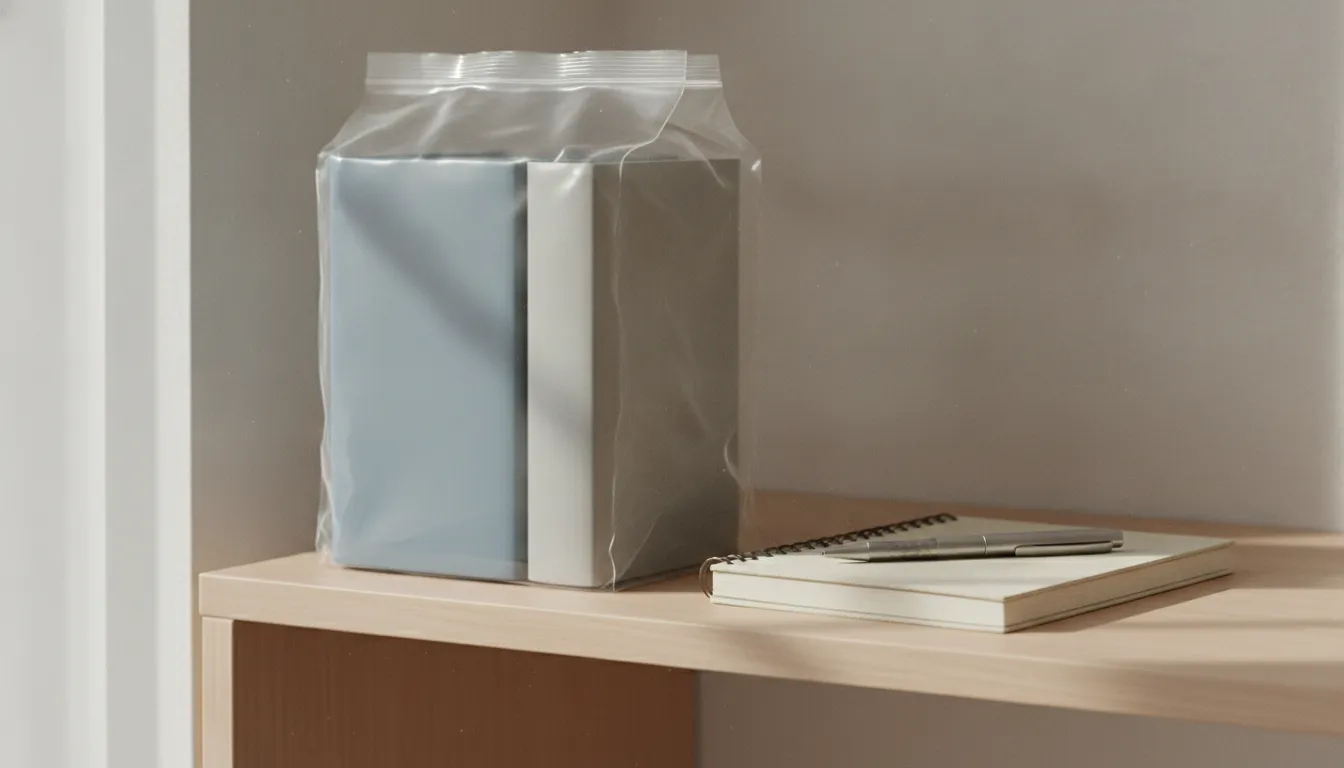
How should you isolate bed bugs in books?
Isolation means the book cannot shed an insect while you decide what to do next. Do it where the book already is. Do not walk it through a hallway, into a bedroom, or down to the laundry room first.
- Set a clear zipper bag or a smooth plastic bin with a tight lid beside the book.
- Photograph anything you can see on the cover, edges, or shelf.
- Close the book. Slide it into the bag or bin without shaking it.
- Seal the bag, press out extra air, and label it with the date and the room.
- Leave the sealed item in that same room, off the bed and off upholstered furniture.
- Wash your hands. Vacuum the spot where the book sat, then empty the vacuum outside.
A rigid bin is better than a thin bag for a heavy hardcover, because a torn corner defeats the point. Do not use a cardboard box. Cardboard has its own seams, and the EPA’s home-prep guidance says to replace cardboard storage with plastic when bed bugs are a concern. Keep the sealed book out of direct sun in a hot parked car unless you have a reliable way to know the temperature inside the item. Not just the air around it.
If several books came from the same used-book bag or the same overnight bag, isolate that group together. Do not mix them with a clean shelf “just to sort later.” Sorting later is how clean books get exposed.
Renters should tell the super or property manager when a live insect is confirmed, and keep the sealed book available to show. In a co-op or condo, follow the building’s notice rule instead of moving the item to a neighbor’s unit for a second opinion. A shared compactor room is the wrong place to examine a suspect book.
Should you throw the book away or try to treat it?
Most people do not need to throw a book away because of one suspect insect. You also should not spray it. Household foggers and pesticide sprays can stain pages, miss eggs in a gutter, and push insects out of the book and onto the floor. Ace does not recommend a do-it-yourself pesticide on books, bedding, or furniture.
Compare the realistic options before you act:
| Option | When it fits | What to know |
|---|---|---|
| Seal and wait | One low-value paperback and no other signs in the room | Keeps the insect contained. It does not inspect the bed or the shelf. |
| Discard in a sealed bag | A damaged, low-value book you do not need | Bag it where it sits and take it straight outside. Do not drop loose books in a hallway bin. |
| Dryer heat | Only items the dryer will not ruin | The EPA says a hot dryer for 30 minutes can kill bed bugs and eggs on items that can take that heat. A dryer can destroy a book. |
| Professional inspection | A live insect, repeated marks, or bites plus signs on the bed | An inspector looks at the room, not just the book, and recommends a plan. |
Freezing a book in a home freezer is a popular tip and a weak plan. Home freezers vary, thick books warm slowly, and you can put the book back on a bed before you know it worked. Heat is more reliable for fabrics, which is why laundry guidance belongs on clothing, not on a novel. If the worry started with clothes in the same bag, read bed bugs in clothes for that path and keep this book sealed separately.
The EPA’s page on preparing for treatment against bed bugs is the right external reference for clutter, sealed bags, and dryer heat. It is not a book-treatment recipe, and it is not a reason to empty a bookcase into another room.
Can bed bugs in books spread through the apartment?
They can, if you give them a ride. A bed bug does not fly and does not jump across a room. It crawls, or it stays in a seam until a person carries the object. The risky moves are ordinary ones: reading the suspect book in bed, stacking returns on the couch, or “just checking” a box of used books on the mattress.
Keep the risk small with a few habits:
- Read isolated books only after they have been cleared, or not at all until then.
- Do not store a reading pile on the bed, the sofa, or under the frame.
- Carry library returns in a smooth tote you can empty and vacuum, not a cloth bag you then drop on the bed.
- Inspect a secondhand buy before it joins the shelf. The same idea applies to used furniture, which is a separate hiding-place problem.
- If you are packing for a move, keep suspect books sealed and out of clean boxes. Ace’s notes on moving with bed bugs cover the rest of the apartment.
A bookcase against the bed is a reason to look at more than the book. Headboards, outlet plates, and the frame are better long-term hiding spots than paper. The bed bug hiding spots guide walks through those places. Use it after the book is sealed, not instead of sealing it.
When should you call for an inspection?
Call when the book is a clue, not the whole case. That includes a live insect, shed skins, dark spotting on the shelf or mattress, or a used-book haul that arrived with other soft goods. A single unmarked paperback with no insect and no room signs can stay sealed while you watch the bed.
Ace Bedbug Exterminating inspects homes and businesses in New York City. The visit starts with the room, not with a promise that one book needs a whole-home treatment. A trained specialist looks for activity, notes where evidence is and is not, and explains the next step. Treatment, when it is needed, can include targeted methods such as Aprehend, steam, vacuuming, mattress encasements, or heat, chosen after the inspection. Heat treatment for a structure is a different job from heating a paperback. Read the heat treatment page if that option comes up, and do not try to copy a structural heat job on a shelf of books.
Before someone arrives, leave the sealed books where they are, skip store-bought foggers, and do not drag the mattress into the hall. A short how to check for bed bugs pass on the bed and sofa gives the inspector a cleaner starting point. If you want the visit itself, the NYC bed bug inspection page explains what that service covers. Pricing depends on the property, so Ace quotes after a look rather than from a photo of one book. The bed bug removal cost page is the place for that question.
Ace’s recorded service area is New York City, including Manhattan, Brooklyn, Queens, the Bronx, and Staten Island, plus limited work tied to that metro area. This article is a handling guide, not a claim that a book found in another state is an Ace service call. If you are unsure the address is covered, ask before you book. The service area page and the bed bug removal overview are the right next reads.
Ask Ace to inspect the room, not just the book
Frequently asked questions
Can bed bugs live in books?
They can hide in books for a while, especially in the spine, under a dust jacket, or along the page edges. They do not feed on paper. A book near a bed is a possible harbor, not proof that every book in the home is infested.
Should I throw away books that might have bed bugs?
Not automatically. Seal the book first. Discard it only if you do not want it and you can bag it where it sits, then take the bag outside. Throwing loose books into a shared trash chute can spread the insect.
Does a dryer or a freezer make a book safe?
A hot dryer can kill bed bugs on items that tolerate high heat, which the EPA describes as 30 minutes on high for suitable fabrics. Most books will be damaged. A home freezer is unreliable because the center of a thick book may never get cold enough for long enough.
Do bed bug bites mean the book is the source?
No. Bites are easy to misread, and the insect may be in the mattress, the couch, or a bag that sat beside the book. Confirm with a sighting, a skin, or spotting, then isolate the book while the room is checked.
Who do I call in New York City?
Call Ace Bedbug Exterminating at (347) 378-7070 or email info@acebedbugexterminating.com. You can also use the contact page to ask for an inspection. Say which room the book came from and whether you saw an insect or only a suspect mark.