
Learning how to prevent bed bug bites starts with reducing contact between bed bugs and sleeping people. No single step can guarantee you will avoid bites, and bites alone cannot confirm that bed bugs are present. Use practical habits at home and while traveling, then investigate carefully if you find signs of an infestation.
Ask about an inspection for your property
Quick answer: What can help reduce bed bug bites?
Keep beds separated from walls and bedding off the floor, inspect sleeping areas when you have a reason to suspect bed bugs, and avoid placing luggage on beds or upholstered furniture while traveling. When returning home, keep travel items contained until you can check them and launder or heat-dry suitable clothing according to its care label. These steps can reduce opportunities for contact, but they do not eradicate bed bugs already established in a room.
Bite prevention and infestation prevention overlap, but they are not the same. Covering skin may reduce the area accessible to a biting insect, but it does not remove bugs or eggs from a mattress, furniture, or belongings. If you spot signs, focus on identifying and addressing the source rather than relying on personal protection alone. For broader background, see this New York bed bug removal guide.
How can you make a bedroom less accessible to bed bugs?
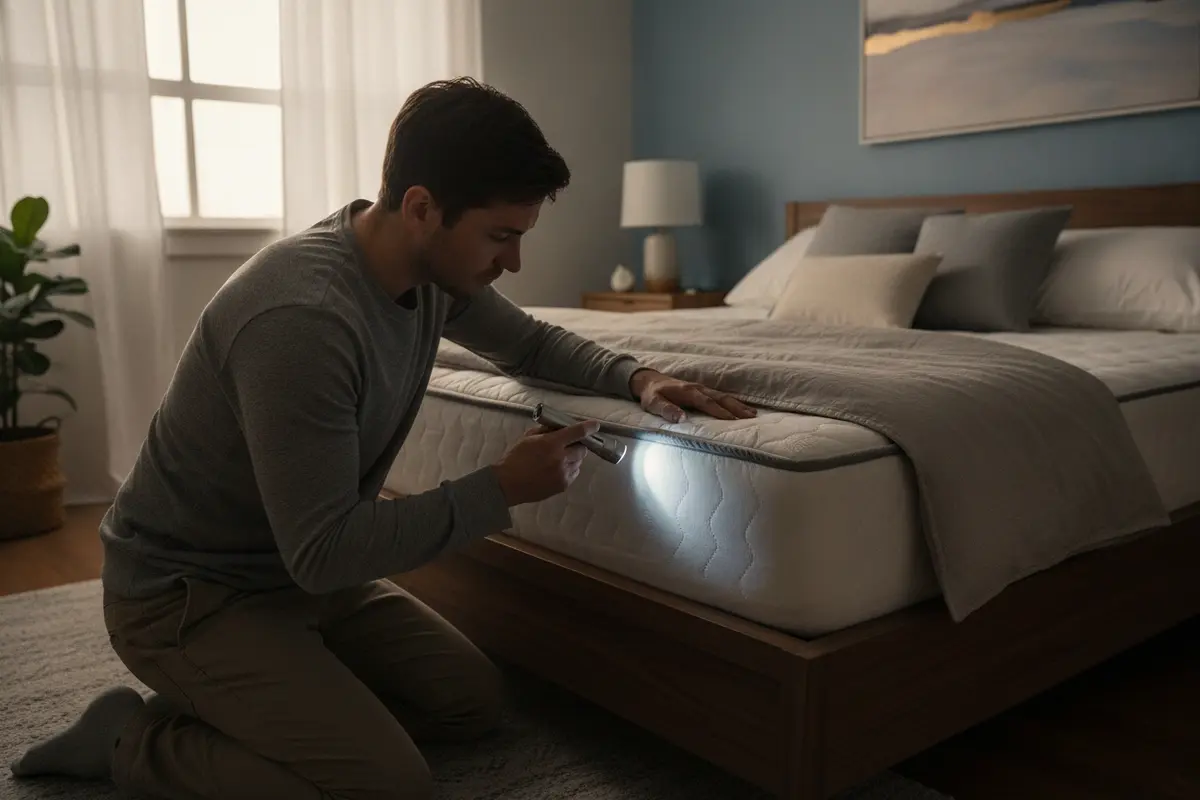
Bed bugs tend to hide close to places where people rest. Inspect the bed area instead of assuming that a clean-looking room is clear. Look along mattress seams, tags, the bed frame, headboard, and nearby furniture. A flashlight can help you see narrow gaps. This is a visual check, not proof that a room is pest-free. For a more detailed walkthrough, use the guide to common bed bug hiding spots and the step-by-step bed bug check.
Arrange the bed so it is not touching the wall or other furniture, and keep sheets and blankets from trailing onto the floor. Reduce clutter around the bed when practical, because piles of belongings make it harder to inspect and manage the area. Do not move potentially infested items to another room; carrying them around can spread the problem.
During a visual check, use a flashlight and work slowly around seams, folds, screw holes, joints, and cracks. Check the headboard and the places where the bed frame meets the floor or wall, without taking apart fixtures or disturbing electrical equipment. If you find a suspicious insect or mark, take a clear photo and note its exact location. Avoid crushing or sweeping evidence away before you have documented it. A careful, repeatable check is more useful than repeatedly searching the same obvious surface while ignoring nearby furniture.
To make this routine systematic, start at one corner of the mattress and follow the piping all the way around. Then check the labels, handles, underside edges, and the frame joints that are visible without dismantling anything. Look at the headboard, bedside table, and upholstered chair nearest the bed. Keep a small notepad or phone note of the date, room, and exact spot checked; if a concern develops, that record can prevent confusion between a new finding and one already photographed. Avoid turning a normal cleaning routine into a search of every item in the home when there is no reason to suspect bed bugs. Focus on sleeping and resting areas first, then expand the check if you find physical evidence.
When changing sheets, check the mattress edges and bed frame for signs such as live insects, shed skins, or dark spotting. These clues call for closer inspection, but no single mark should be treated as a definitive diagnosis. The early signs guide explains what to look for, and a professional bed bug inspection can help assess a suspected issue.
What should you do when staying in a hotel?
Before unpacking, place your suitcase on a hard surface or luggage rack rather than on the bed, carpet, or upholstered chair. If no suitable rack is available, keep the bag closed and set it on a hard, cleared surface. Take a moment to look at the mattress seams, bed frame, and headboard. You do not need to dismantle furniture or disturb the room.
Make the check deliberate, not frantic. Set your bag down only after choosing a surface away from the bed, then inspect the mattress piping, headboard edges, and accessible joints with the room light or a phone flashlight. Check the rack itself before using it, especially at joints or straps. You are looking for possible physical evidence, not trying to prove a negative; a brief look can miss insects hidden out of view. Avoid placing clothes or personal items on the bed during the check, so you do not have to handle everything again if you notice a concern.
If you notice suspicious evidence, avoid putting belongings on or near the bed. Photograph what you saw if useful, then contact hotel staff and request guidance about another room. Do not move to another room with an open suitcase and loose belongings; contain items first and ask how the hotel wants you to proceed. Inspection does not guarantee that a room has no bed bugs, but it can help you spot visible evidence before settling in.
Harvard Health advises travelers to avoid placing luggage on carpets, beds, or upholstered furniture and to use a bathtub while inspecting a room when appropriate. Read its bed bug travel and bite guidance for additional context. The aim is to keep belongings away from likely hiding areas until you have checked the sleeping space.
For a suspected exposure, keep the bag closed and separate from beds and soft furniture when you return. The advice here complements, but does not repeat, a broader guide to common ways bed bugs spread.
How can you protect luggage and clothing?
Use a small set of routines before, during, and after a trip. Keep worn clothes in a separate, closed bag rather than loose in a suitcase. Do not leave luggage open on a hotel bed. At home, unpack in an area where you can inspect items, and avoid placing the suitcase on a bed or sofa until it has been checked. Follow fabric care labels when laundering or using a dryer; not every item can be treated the same way.
When packing, separate clean clothes from laundry in a sealable bag, and close the bag after each use. During the stay, keep the suitcase zipped when you are not taking something out. If you use packing cubes, remember that they organize belongings but are not a treatment or a guarantee that insects cannot enter. On your return, place luggage in a cleared area with a hard floor if available, inspect seams and pockets, and remove contents in a controlled way. Avoid carrying an open suitcase from room to room while sorting.
Heat from a dryer may be appropriate for some washable clothing, but do not assume that a quick wash alone will handle every risk or that delicate items can safely tolerate heat. If you are unsure about an item, keep it contained and get appropriate guidance. The clothing and bed bug guide covers handling clothes, while the moving checklist explains why careful containment matters when belongings are being transported.
Make the post-trip routine manageable by handling one category at a time. Set aside laundry in its closed bag, then check the bag and suitcase rather than emptying everything onto a bed. Follow the garment label for laundering and drying; if an item cannot tolerate the method you are considering, do not improvise with high heat or chemicals. Keep items that need further review apart from clean belongings until you have a safe handling plan. Clean suitcases can be stored in a location away from beds and upholstered furniture, rather than under or beside the bed where future checks become harder.
What changes help in shared housing?
In apartments, dormitories, and other shared buildings, a concern in one room may need coordinated attention. Report suspected signs promptly to the responsible property contact, and keep a note of what you saw and where. Do not discard furniture in a hallway or move it through shared areas without first asking how to contain it. Avoid applying household pesticides to beds, clothing, or people unless the product label specifically allows that use.
Make sleeping and storage areas easier to inspect: keep belongings off the floor where possible, avoid transferring bedding between rooms, and use sealed bags to isolate items that may need review. If you sleep on a sofa or other upholstered furniture, check seams and crevices there too; bed bugs are not limited to mattresses. See the guide to bed bugs in couches for locations to examine.
In a building, a single resident’s bite-prevention routine cannot substitute for finding and addressing a source. Coordinate access and next steps with the property manager or owner. If an inspection or treatment is being considered, ask what preparation is needed and how residents should handle belongings so the response does not scatter items through the building. Keep messages factual: identify the room, date, and location of the evidence, and say whether an item has been moved or contained. This makes it easier for the people assessing the concern to understand what happened without treating a bite pattern as proof. Follow building instructions about access and preparation, and do not apply a treatment in one unit that could conflict with a coordinated plan.
For example, if you find a suspicious mark on a mattress seam, photograph it before changing the room setup, then tell the building contact exactly where it was. Keep potentially affected bedding in place unless you receive instructions to bag or move it. If several residents are concerned, encourage each person to report observations separately rather than passing furniture or loose belongings between units. Clear records and consistent instructions matter more than residents independently trying different sprays or moving possessions into shared spaces. Ask who will coordinate access and what to do with laundry or items that cannot be moved easily, such as a sofa or bed frame.
Which prevention steps are useful in different situations?
| Situation | Practical step | What it can do | What it cannot do |
|---|---|---|---|
| At home | Keep bedding off the floor and inspect seams and bed-frame joints | Makes the bed area easier to check and reduces contact routes | Does not eliminate bugs already hidden in a room |
| Hotel stay | Keep luggage on a hard surface or rack while checking the sleeping area | Reduces the chance of placing belongings beside hiding places | Cannot certify a room as free of bed bugs |
| After travel | Keep luggage contained; handle clothes according to care labels | Helps prevent unchecked items from spreading through the home | Does not replace inspection if you find evidence |
| Shared housing | Report evidence, contain items, and coordinate next steps | Supports a consistent response across rooms or units | Personal habits alone cannot resolve a building-wide source |
Use the table as a guide to what a habit can realistically accomplish. Keeping a bed away from a wall improves separation and visibility; it does not create a sealed barrier. Keeping a suitcase closed limits loose exposure while you are not using it; it does not confirm that the bag is clear. The most useful measures reduce unnecessary contact and make it easier to inspect, contain, and communicate about a concern.
The U.S. Environmental Protection Agency recommends careful approaches to bed bug control and prevention, including reducing clutter and inspecting places where bed bugs may hide. Its top tips for preventing or controlling bed bugs can help you distinguish useful housekeeping and monitoring steps from attempts to treat an infestation without a plan.
What is a practical bed bug bite prevention checklist?
- Check the sleeping area. Look at mattress seams, the bed frame, headboard, and nearby furniture when there is a reason for concern.
- Keep the bed separated. Move it slightly away from walls and keep bedding from touching the floor.
- Make the room easier to inspect. Reduce clutter near the bed and avoid shifting suspect items into another room.
- Keep travel bags off soft surfaces. Use a rack or hard surface while checking a hotel room, and keep luggage closed when not in use.
- Separate travel clothing. Keep worn clothes contained and follow garment care labels when laundering or drying items at home.
- Act on evidence, not bites alone. Note what you find, limit movement of belongings, and arrange an assessment if you see possible bed bug signs.
To put the checklist into practice, choose a simple routine you can repeat. At home, check the bed and nearby furniture when changing sheets or when there is a specific reason for concern; you do not need to repeatedly inspect every room without evidence. During a trip, decide where the suitcase will stay before unpacking. After travel, keep laundry and luggage controlled until you have checked them. In shared housing, add one more action: report physical observations to the right property contact so that the response is coordinated.
Also consider what not to do. Do not rely on a particular sleep position, clothing choice, or strong scent as a dependable barrier. Do not use a fogger or spray as a substitute for identifying the source, and do not apply a pesticide to skin or belongings unless its label allows that use. Avoid throwing away a mattress in a rush; carrying it through a building could spread insects, and removing one item may leave other hiding places untouched. If you are unsure whether a mark or insect is relevant, document it and seek help rather than escalating to disruptive measures.
If you have marks on your skin and are unsure of the cause, avoid trying to identify an insect solely from the appearance of the marks. The bed bug bite care article discusses general next steps, and a health professional can advise you about skin symptoms. This guide is about reducing exposure, not diagnosing a rash or recommending medical treatment.
Use care with insecticides. Never apply a product to skin, clothing, bedding, or furniture in a way that conflicts with its label. Sprays or foggers are not a substitute for identifying hiding places and following a suitable control plan. If you need help determining whether signs point to an infestation, review the company’s bed bug removal information or ask for an assessment. A broader overview of professional bed bug treatment can help you understand what questions to raise.
Request help assessing possible bed bug signs
Frequently Asked Questions
Can you prevent every bed bug bite?
No routine can guarantee that you will not be bitten if bed bugs are present. Keeping beds and luggage away from likely hiding places can reduce opportunities for contact, but finding and addressing the infestation is necessary to resolve the source.
Do bites prove that bed bugs are in the home?
No. Skin marks can have different causes, and their appearance alone cannot confirm bed bugs. Look for physical evidence in the sleeping area and seek an inspection if you find signs or remain concerned.
Will wearing long sleeves stop bed bug bites?
Covering more skin may reduce exposed areas, but clothing is not a reliable way to control bed bugs. Bugs can hide nearby and may still reach accessible skin. Focus on inspecting and addressing the environment rather than relying on clothing as a solution.
Should I throw away a mattress if I suspect bed bugs?
Not automatically. Discarding furniture without a plan can spread bugs through hallways or other rooms and may not address hiding places elsewhere. Keep items in place when possible and ask for an assessment before deciding what to remove.
What should I do first after finding possible signs?
Limit movement of belongings, record where you saw the evidence, and arrange a careful assessment. Avoid using unlabelled or inappropriate pesticides and do not rely on bites alone to decide that bed bugs are present.
Use prevention habits alongside a careful assessment
Simple routines can help reduce contact at home and while traveling: keep luggage off beds, inspect likely hiding places, and handle potentially exposed belongings thoughtfully. If you find physical evidence, treat prevention as one part of a larger response and focus on identifying the source before moving items or attempting treatment.