
Can bed bugs live in a pillow? Yes. Bed bugs can hide in a pillow’s seams, piping, folds, zipper area, and cover, especially when it sits close to an infested mattress or bed frame. A pillow is one possible hiding place, but a suspicious speck or bite does not confirm that bed bugs are present. Inspect methodically, avoid carrying unbagged bedding through your home, and look for evidence around the whole sleeping area.
Contact Ace about a bed bug inspection
Can bed bugs live in a pillow?
Bed bugs can hide on or inside the accessible folds of a pillow. They are flat insects that seek narrow, protected spaces near places where people rest. A pillow has seams and creases that can provide cover. Bugs may also hide in the pillowcase, a removable cover, or the stitching and folds around a zipper.
That does not mean the inside filling is their usual home. Bed bugs typically shelter in protected cracks and seams rather than burrowing through a pillow’s stuffing. If insects are present, they may be on the exterior, between layers of a cover, or tucked into a seam where fabric meets fabric. They can also hide in other nearby places, including mattress seams, a bed frame, a headboard, and nearby furniture.
Bed bugs do not live on a person’s body like lice. A pillow can be a hiding spot because it stays near a sleeping person, but the insects can move between nearby harborages. Checking only the pillow may miss the source. For a broader overview of the signs and next steps, see Ace’s bed bug removal information.
What signs should you look for on a pillow?
Look for evidence rather than relying on one clue. A careful inspection should include both the pillow and its cover, using good light and taking your time around seams. Possible signs include:
- Live insects: small, flat, oval-bodied insects, often brownish, in a seam or fold.
- Shed skins: pale, empty-looking shells that can remain where a bed bug has molted.
- Eggs or eggshells: tiny, pale objects attached in a protected location. They can be difficult to distinguish from lint or other debris.
- Dark spotting: small ink-like spots that may be fecal marks, though dirt, pen marks, and other stains can look similar.
- Rust-colored smears: possible blood marks, which can also have other causes.
A bite or itchy patch is not proof of bed bugs. Skin reactions vary, and many other causes can produce similar marks. Likewise, a single stain, speck, or shed fragment should be treated as a clue to investigate, not a diagnosis. If you find a suspected insect, avoid crushing or discarding it before you can document it. A clear close-up photograph or a safely contained specimen can help an inspector assess what you found.
Compare your observations with a guide to bed bug stains on sheets and identifying shed bed bug skins. Those clues still need to be considered with the surrounding evidence. Bed bug signs often appear in more than one protected location near a sleeping area.
How can you inspect a pillow without spreading the problem?
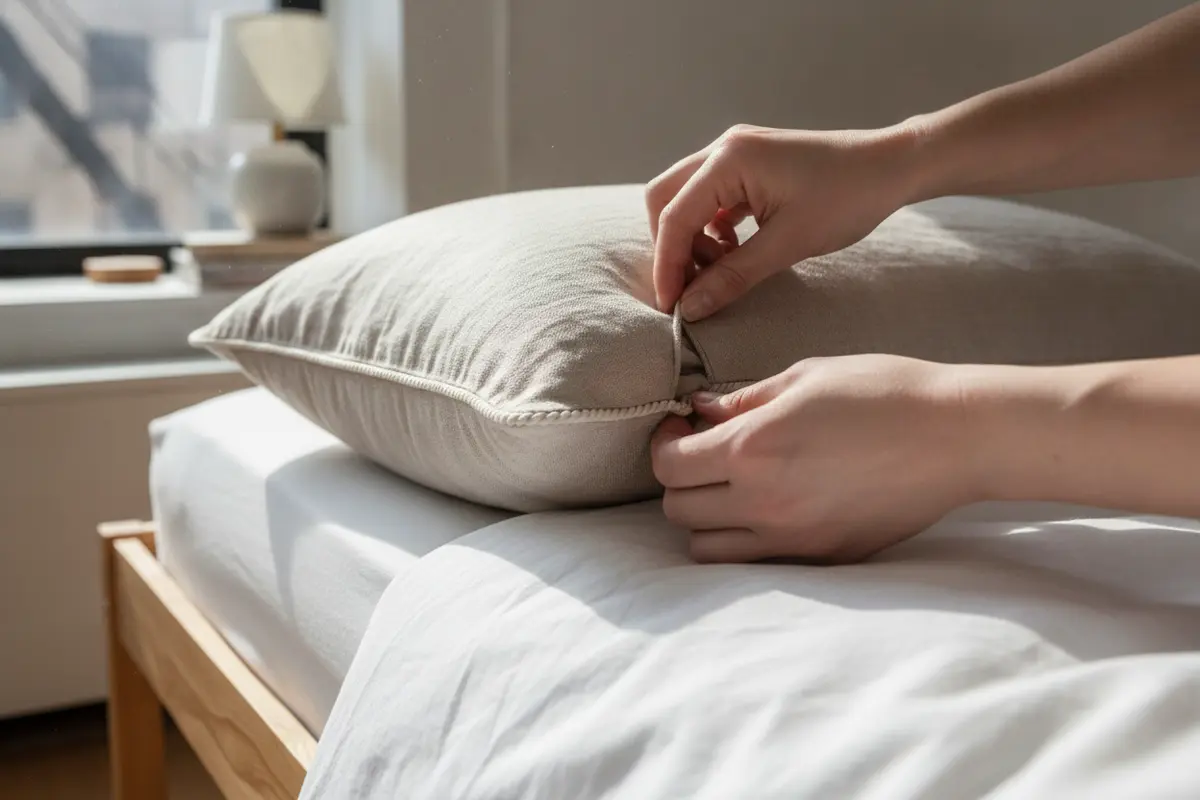
Work slowly and keep the pillow near its original location while you examine it. Moving it to another room, shaking it, or carrying it uncovered can spread suspected insects or debris. You do not need to dismantle your bed or handle any suspected pesticide residue to make an initial visual check.
- Prepare the area. Use a bright flashlight, and keep a clear surface or a large plastic bag nearby. Do not place a suspect pillow on a couch, chair, or another bed.
- Remove the pillowcase carefully. Keep the case contained instead of snapping or shaking it. Check its seams, corners, and any closures before setting it aside.
- Inspect the pillow exterior. Examine the piping, seams, labels, folds, tufting, and zipper area. Turn it gently to check each side and edge.
- Check removable covers. If a cover is designed to come off, follow its care instructions. Look closely at the cover’s seams and closure. Do not cut open or tear the pillow.
- Look at the bed nearby. Check the mattress seams and labels, the bed frame joints, and the headboard edges. A pillow finding can be part of a wider pattern. See this guide to common bed bug hiding spots.
- Record what you see. Photograph a suspicious mark or insect with a close, steady view. Note the date and exact location. Keep any specimen securely contained rather than carrying it loose.
- Contain items you are unsure about. Place a suspect pillowcase or removable cover in a sealed bag until you decide on a cleaning or inspection plan. Keep the bag in the room where the item was found.
Be especially careful in apartments and shared buildings. Do not move bedding through hallways or leave it in a laundry room uncovered. If you are a renter, record where and when you found the evidence and follow your building’s reporting process. A useful inspection is systematic, not rushed. Work from the pillow outward: inspect the case, pillow, mattress edges, bed frame, and headboard, then note whether the signs are concentrated in one area or appear in several. Use a flashlight to illuminate seams from different angles, and take photos before wiping or laundering anything. If you find a small object, avoid handling it with bare fingers; use a sealed container or ask the inspector how they prefer evidence to be collected. Do not pull apart furniture, remove wall plates, or reach into electrical spaces to look for insects. Keep children and pets from handling a suspected specimen or any item that may have pesticide on it. If you share a bedroom, tell the other occupants what you found and agree on a consistent plan for containing and documenting bedding. Moving an item in different directions or treating some belongings while leaving others unexamined can make it harder to understand where the evidence came from. A short written record of the item, room, date, and exact location gives an inspector a clearer starting point. For broader inspection guidance, read Ace’s five-step bed bug check and early signs checklist.
How should you handle a pillow and bedding?
First, check the item’s care label and material. Do not assume that every pillow can be washed or dried using the same settings. Follow the manufacturer’s directions, and use a laundry process that the fabric can safely tolerate. Heat from an appropriate dryer cycle can help treat washable items, but the item must be compatible with the setting and receive the required treatment throughout. When unsure, ask a qualified professional rather than guessing at a temperature or duration.
Keep items contained during transport. Put pillowcases and washable bedding in a sealed bag before taking them to a washer. Empty the bag directly into the machine without shaking the laundry. Dispose of the empty bag in a closed trash container. After laundering, use a clean bag or container to carry treated items back, and store them separately from items that have not been handled.
A decorative pillow, foam pillow, down pillow, or pillow with a delicate cover may need different care. Some cannot be safely washed or put in a hot dryer. Avoid soaking an item, using a household chemical not labeled for that use, or applying a pesticide directly to bedding. The U.S. Environmental Protection Agency advises readers to follow pesticide label directions; see the EPA website for general pesticide information. Never apply a product to a pillow or other sleeping surface unless its label explicitly permits that specific use.
Bagging a pillow may help keep it contained while you plan next steps, but bagging alone is not a treatment. Leaving an item in a bag does not establish that bed bugs are gone, and it does not address hiding places elsewhere in the room. Avoid moving suspected items to a car, storage space, or another apartment. If an item is heavily damaged or has confirmed activity, ask an experienced professional how to handle it before discarding it.
For detailed guidance on handling other belongings, see Ace’s advice about bed bugs in clothes and checking a couch for bed bugs. The aim is to limit unnecessary movement while you gather reliable evidence.
Should you throw away a pillow?
Usually, do not rush to throw it away just because you are worried. A discarded pillow can be carried through shared areas, left where someone else may take it, or replaced without addressing bugs elsewhere. Disposal can also make it harder to inspect and document what prompted your concern.
Instead, keep the pillow in the room where it was found and avoid moving it around. If there is clear evidence on the pillow, keep it contained and ask for an assessment of the pillow and the surrounding bed. If it is damaged or cannot be safely cleaned, a professional can help you decide whether disposal is appropriate and how to do it responsibly. Do not leave an item with suspected bed bugs on the curb or in a shared laundry area without taking steps to prevent its reuse or spread.
Use the same restraint with mattresses and upholstered furniture. Throwing away one item does not prove that the room is clear. A careful assessment should include nearby bed components and other likely hiding places. Ace’s bed bug inspection information explains the role of a focused inspection; its bed bug removal service page describes the next step for people seeking help.
How do pillow findings compare with other bed bug clues?
A pillow is one part of a sleeping area. Compare the location and type of evidence before deciding how to respond. No single clue in this table confirms an infestation by itself.
| Finding | What it may indicate | Useful next step |
|---|---|---|
| Live insect in a pillow seam | A possible bed bug hiding place; identification matters. | Photograph or contain it securely, then inspect nearby bed seams and arrange an assessment if appropriate. |
| Dark spots on a pillowcase | Possible fecal spotting, but other marks can look similar. | Record the location and inspect the pillow, mattress, and frame for corroborating evidence. |
| Small pale shell or egg-like object | Could be a shed skin or egg, but lint and debris can be mistaken for either. | Take a close photo and avoid sweeping it away before identification. |
| Itchy marks with no physical evidence | Skin marks alone cannot identify their cause. | Check the bed methodically and consider other possible explanations; seek medical advice for health concerns. |
| Evidence at several bed locations | A broader issue may be present beyond the pillow. | Keep belongings in place and arrange a professional inspection of the sleeping area. |
What should you avoid doing?
When a pillow raises concern, hurried actions can create more work and make it harder to trace the source. Avoid these common mistakes:
- Do not shake bedding. Shaking does not identify or solve an infestation and may scatter debris or insects.
- Do not carry the pillow uncovered. Keep it in the room until you have a reason and a safe plan to move it.
- Do not spray a household insecticide on bedding. A product’s label determines where it may be used. Never treat a pillow unless that exact use is allowed on the label.
- Do not rely on a bite pattern. Skin reactions vary and do not confirm the insect responsible.
- Do not discard the only evidence immediately. A photograph or contained specimen can support identification and help guide the next step.
- Do not treat only the pillow. If bed bugs are present, inspect the sleeping area and connected furniture instead of assuming one item is the whole problem.
- Do not use a fogger or improvised heat source as a shortcut. Such measures can be unsafe or ineffective if used incorrectly and may not reach concealed insects.
If you are unsure whether a mark is a bed bug sign, take a photo and avoid disturbing the area. You can also compare the evidence with information on what bed bugs look like and bed bug odor. Neither a smell nor an appearance alone is a substitute for identification.
When should you arrange a professional inspection?
Consider an inspection when you find a live, suspected bed bug; multiple suspicious signs; or recurring evidence near the bed. An inspection can help distinguish bed bugs from other insects or ordinary stains, identify likely hiding places, and determine whether treatment is warranted. This matters because applying products or removing belongings without confirming the issue may waste time and complicate the response.
For a New York City apartment, tell the inspector where the pillow was, whether it had a removable case, and what other signs you found. Mention whether similar evidence appeared on the mattress, bed frame, sofa, or in another room. If you rent, notify the appropriate building contact and keep a record of communications and observations. Do not move suspected belongings to a neighbor’s unit or shared space.
Ace Bed Bug Exterminating focuses on bed bug inspections and treatment in the NYC area. Its process includes assessment, a treatment plan based on findings, and follow-up. The appropriate approach depends on the property and inspection; a pillow finding alone does not determine which treatment is needed. Read the New York bed bug removal guide for additional context or learn more about Aprehend bed bug treatment.
Review Ace’s bed bug removal options
Frequently asked questions
Can bed bugs live inside the filling of a pillow?
They can hide in seams, folds, covers, and the areas around closures. The filling itself is not typically the primary hiding place. Inspect the full exterior and check the nearby mattress, frame, and headboard as well.
Can I tell from bites whether bed bugs are in my pillow?
No. Bites or itchy marks cannot confirm that bed bugs are present or show where they are hiding. Look for physical evidence and seek identification if you find a suspected insect or other signs.
Should I wash a pillowcase if I suspect bed bugs?
Check the care label and keep the case contained while moving it to the laundry. Use only a washing and drying process that the item can safely tolerate. Do not shake it or carry it uncovered through the home.
Does putting a pillow in a sealed bag get rid of bed bugs?
No. A sealed bag can contain an item temporarily, but bagging alone is not a confirmed treatment and does not address other possible hiding spots. Ask a qualified professional how to handle a suspected item.
Do I need to replace my pillow if I find a suspicious mark?
Not based on a mark alone. First document and assess the evidence. If a pillow is confirmed to have activity or cannot be cleaned safely, get advice on treatment or responsible disposal before moving it.
Use evidence to choose the next step
Bed bugs can hide in pillow seams and covers, but one mark or bite does not establish that they are there. Inspect the pillow and nearby bed carefully, keep questionable items contained, and avoid unapproved products or hurried disposal. If you find credible physical evidence or are unsure what you are seeing, a professional inspection can help you decide what to do next.